Removing a gene reduced age-related bone loss in mice
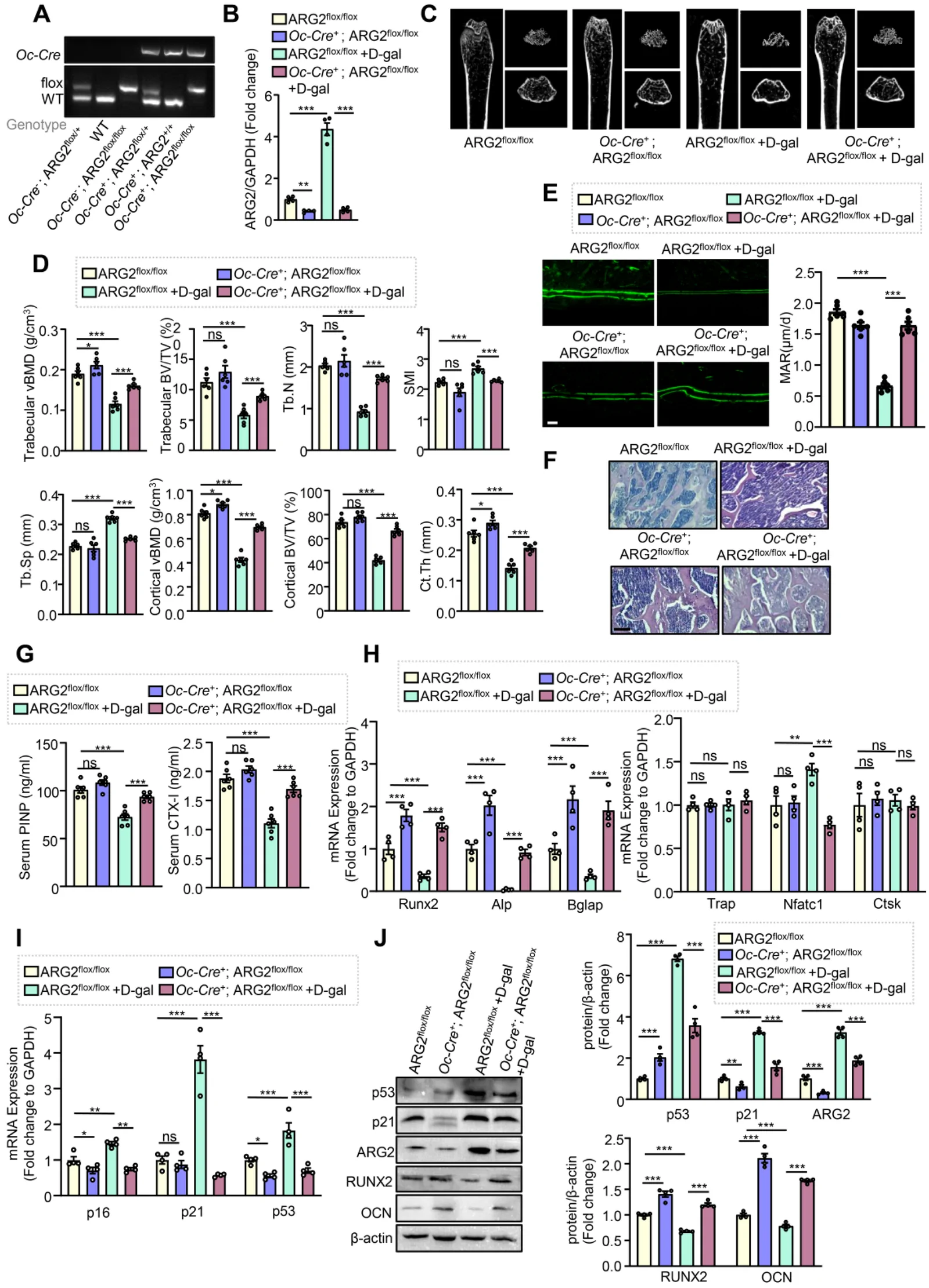
In experiments with 12 mice per group, deleting the gene in bone-building cells reduced bone loss after 12 weeks of chemically induced aging.
Randomized, blinded
Limit: Gene-deletion experiments measured chemically induced bone loss, not bone loss during natural aging
Edited by Boris Djordjevic · AgingResearch.News
In an experiment in male C57BL/6 mice, researchers deleted ARG2, the gene for the enzyme arginase 2, specifically in osteoblasts, the cells that build bone. Groups contained 12 mice. Mice given D-galactose injections for 12 weeks served as a model of age-related bone loss. The study also examined naturally aged, 20-month-old mice.
Deleting ARG2 reduced bone loss and improved the structure of spongy bone in D-galactose-treated mice. It also reduced osteoblast senescence, a state in which cells stop dividing. In mouse bone-building cells grown in the lab, raising arginase 2 levels impaired mitophagy, the process that removes damaged mitochondria, the cell’s energy-producing structures. It also promoted senescence.
Why it matters
Age-associated osteoporosis involves impaired bone-building activity. The findings suggest that targeting arginase 2 may offer an approach to preventing or treating this condition.
Caveats
These experiments in mice and mouse cells did not establish whether targeting arginase 2 would prevent or treat osteoporosis in people.
The paper
Ministry of Education of the People's Republic of China
Theranostics, Sep 18, 2026, Open access


