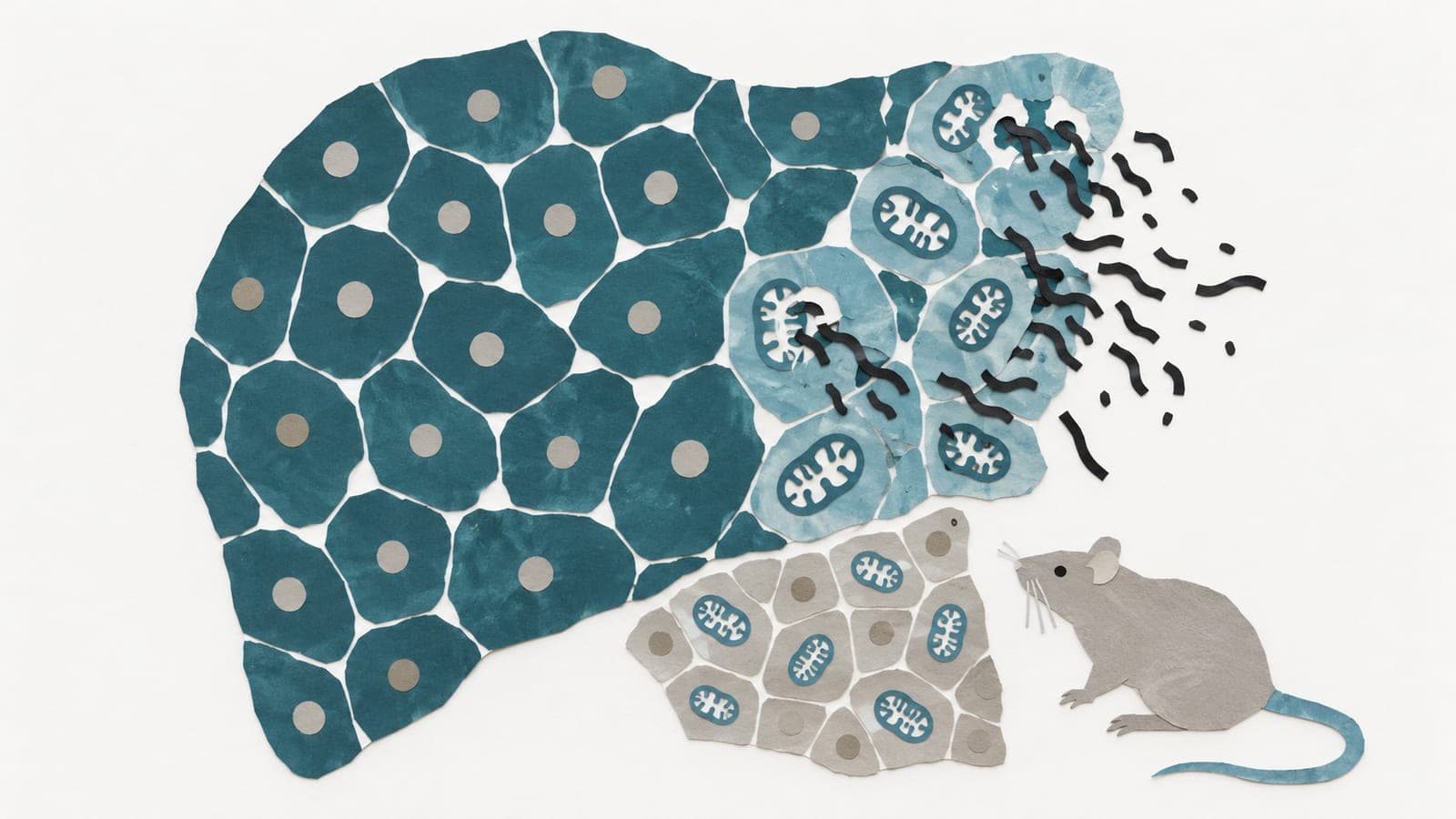
A protein promotes an irregular heartbeat in animals
Animal experiments found that raising levels of the protein MAPK15 worsened heart muscle cell senescence and promoted atrial fibrillation, an irregular heartbeat.
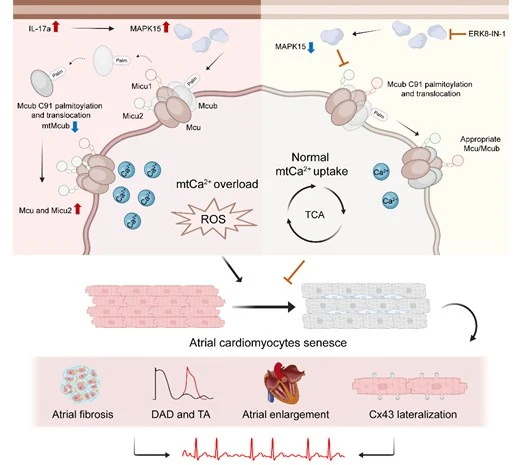
Limit: Forced MAPK15 overexpression may not reflect the effects of naturally occurring protein levels
Edited by Boris Djordjevic · AgingResearch.News
In animal experiments, researchers raised or lowered levels of MAPK15, a protein, specifically in the heart and tested small-molecule inhibitors. They also studied cells grown in the lab and examined human tissue from the heart’s upper chambers.
Increasing MAPK15 worsened senescence, a persistent state of cell dysfunction, in heart muscle cells and promoted atrial fibrillation, an irregular heartbeat. The experiments indicated that MAPK15 promoted a fatty modification of Mcub, a protein that limits calcium entry into mitochondria, the cell’s energy-producing structures. This modification disrupted that control, leading to excess calcium and cellular senescence. Changing the modification site or inhibiting the modification reversed these effects. Senescent heart muscle cells also showed abnormal electrical activity and changes that favored atrial fibrillation. The authors reported supporting findings in the human tissue samples.
Why it matters
Atrial fibrillation becomes more common with age, and cell senescence contributes to it. The pathway may offer a target for future efforts to treat senescence-associated atrial fibrillation.
Caveats
Animal and cell experiments do not establish whether targeting this pathway would treat atrial fibrillation in people. The abstract did not specify the animal species, sample sizes, doses or study duration.
The paper
Fujian Medical University
Cardiovascular Research, Oct 23, 2026