Immunosenescence in colorectal cancer: Interplay of microbiota, inflammaging, and metabolic reprogramming
Abstract
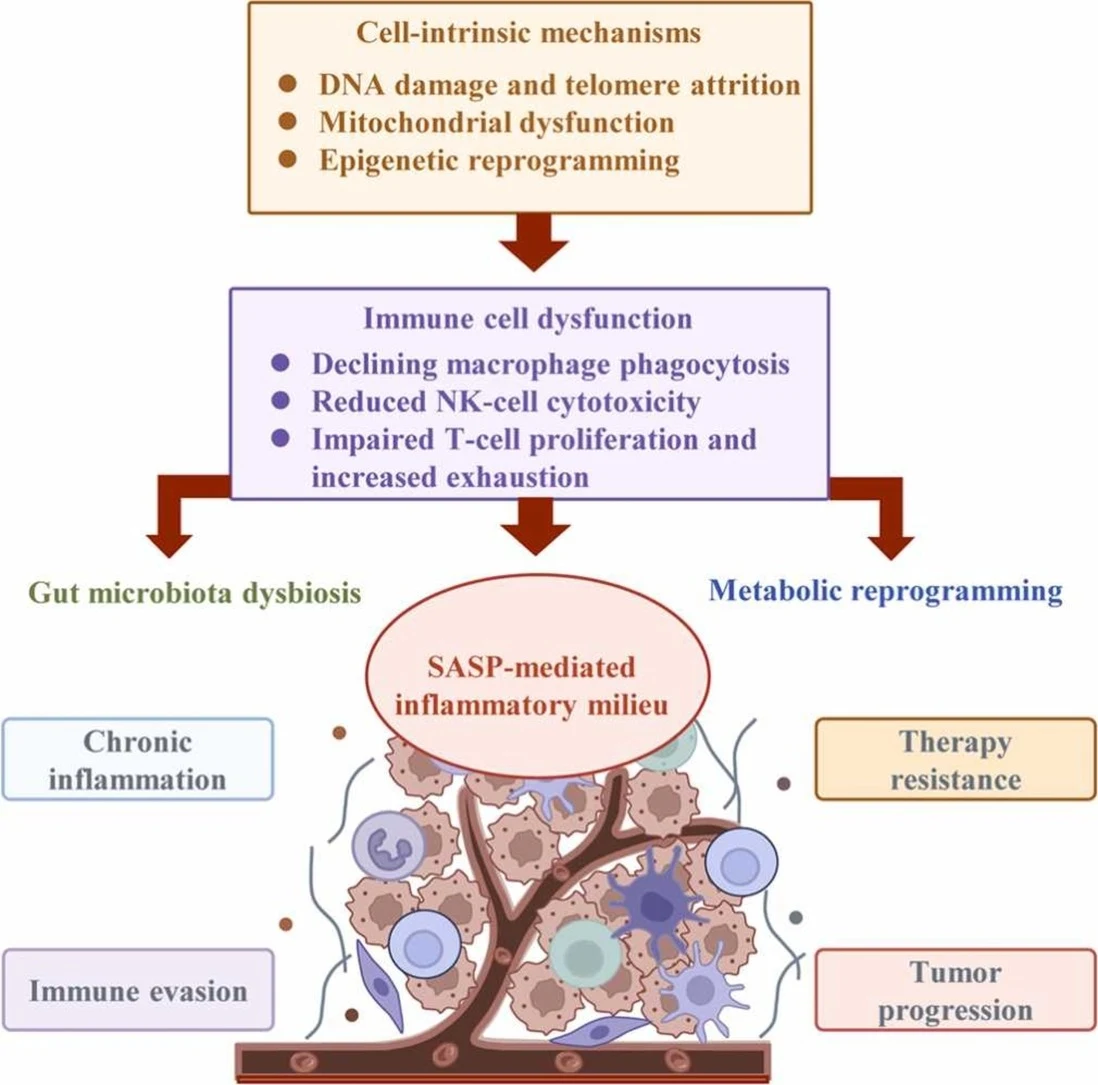
Colorectal cancer (CRC) represents a major cause of cancer-associated morbidity and mortality worldwide, with significantly higher incidence and lethality in elderly individuals. Growing evidence implicates immunosenescence, the age-dependent functional decline of the immune system, as a key contributor to CRC initiation, progression, and therapeutic resistance. In this review, telomere attrition, impaired DNA repair, mitochondrial dysfunction, oxidative stress, and epigenetic remodeling are discussed as interconnected molecular processes that contribute to immunosenescence. These processes disrupt immune homeostasis and promote chronic inflammation. Moreover, functional alterations in macrophages, natural killer cells, neutrophils, and T lymphocytes further enable immune evasion and immunosuppressive niche formation. Furthermore, the senescence-associated secretory phenotype (SASP) orchestrates inflammaging and reprograms the CRC microenvironment via pro-inflammatory cytokines, chemokines, and growth factors. Gut-specific factors, including microbiota dysbiosis, intestinal barrier dysfunction, and microbial metabolites, further accelerate immune aging and tumorigenesis. In addition, metabolic reprogramming interacts bidirectionally with immunosenescence. By integrating molecular, cellular, microbial, and metabolic insights, this review offers a comprehensive understanding of immunosenescence in CRC.
- Cellular senescence
- Immune response
- Inflammation
- Microbiome composition
- Senescence-associated secretory phenotype (SASP)
- Colorectal cancer
The paper
Longgang Central Hospital
Cytokine & Growth Factor Reviews, 14 Oct 2026


