Blood-cell telomerase delays premature aging in zebrafish
Boosting telomerase in blood-forming cells extended lifespan in immune-deficient zebrafish and partly restored gut health, operating without major changes in telomere length.
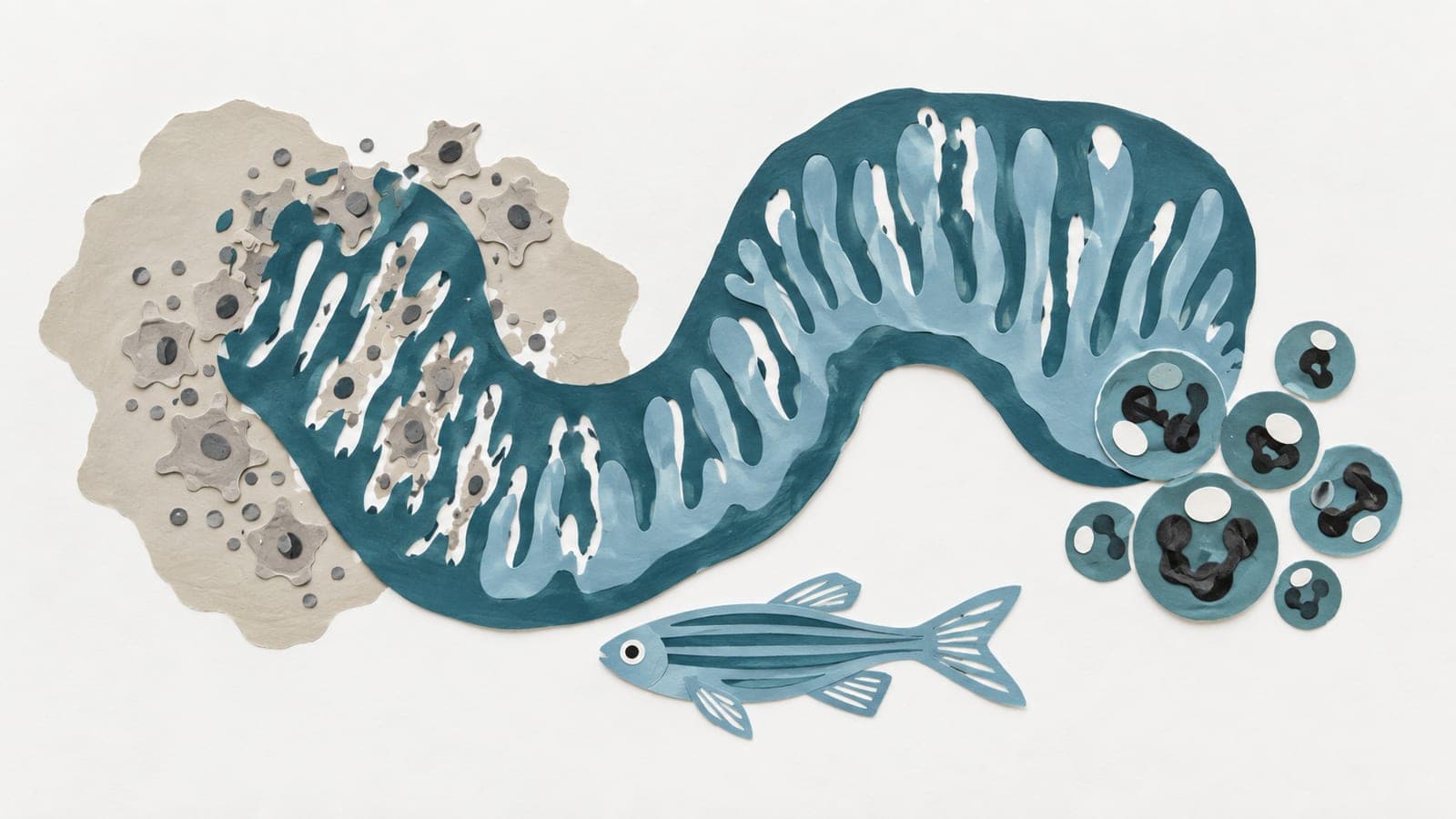
In an animal experiment, researchers studied zebrafish lacking Rag1, a gene needed for adaptive immunity. These fish develop premature aging marked by gut degeneration, systemic inflammation, and an imbalance in gut bacteria. Depleting the gut bacteria rescued survival and reduced inflammation. Transferring microbes from the mutant fish into healthy zebrafish transmitted mutant-like molecular features, establishing the bacterial imbalance as a causal amplifier of the condition. The team also tested telomerase, an enzyme that maintains chromosome caps called telomeres. Genetic loss of telomerase accelerated death. In contrast, increasing telomerase specifically in blood-forming cells extended lifespan. It reprogrammed gene activity in blood cells and partly restored gut, liver, and bacterial balance, without major changes in telomere length.
Why it matters
The work outlines how immune decline, gut microbes, and telomerase interact to shape systemic inflammation and aging. It suggests telomerase may influence tissue health through roles independent of lengthening chromosome ends.
Caveats
The findings come from genetically altered zebrafish, so whether similar mechanisms operate in humans remains unknown. The paper is also a preprint that has not yet been peer-reviewed.
The paper
Murcian Institute for Biomedical Research (IMIB)-Pascual Parrilla
Research Square, 9 Oct 2026, Preprint, not peer-reviewed