Exercise reshaped gene activity across tissues in mice
An 8-week wheel-running experiment in mice examined 22 tissues and plasma, finding the largest gene-activity changes in skeletal muscle.
8 weeks
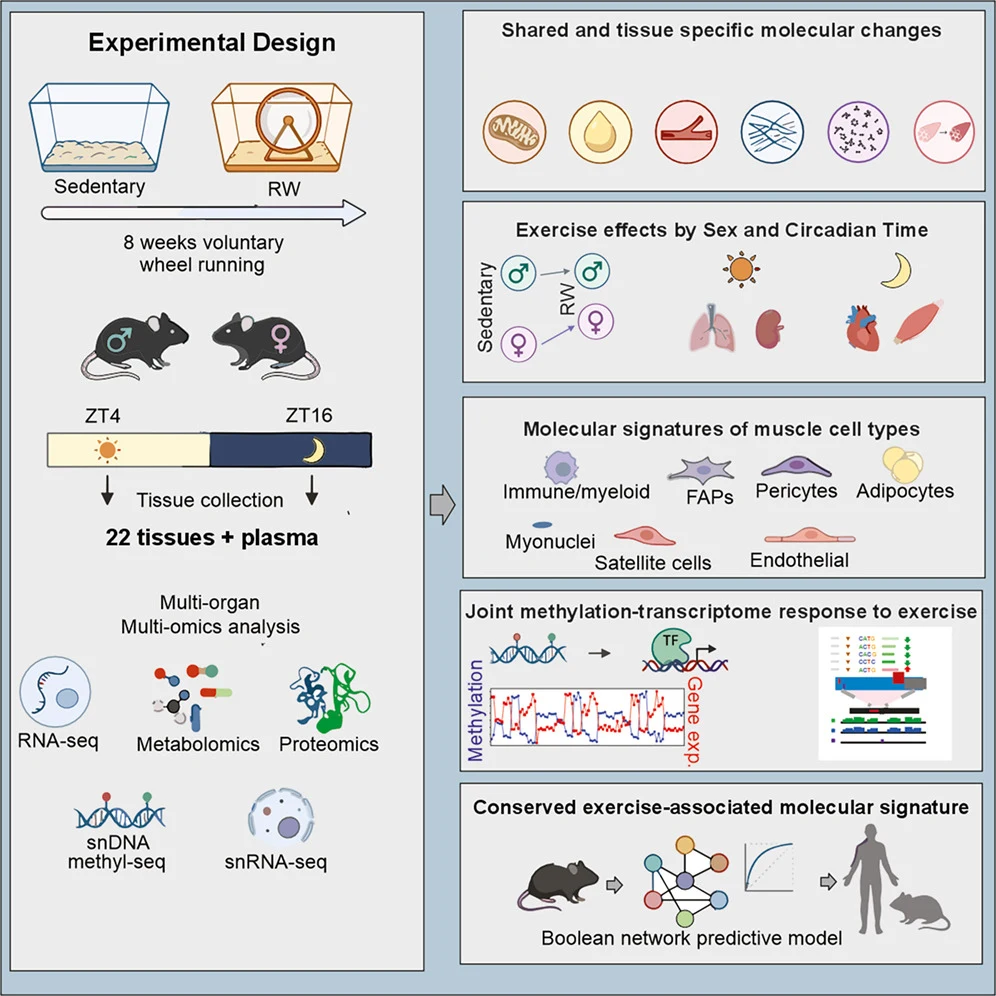
Mice underwent 8 weeks of voluntary wheel running in an animal experiment. Researchers collected 22 tissues and plasma, the liquid part of blood, during active and inactive phases. They measured gene activity, proteins, small molecules and methylation, a type of chemical marking on DNA.
Exercise produced changes that differed by tissue, with the largest gene-activity changes in skeletal muscle. Most tissues changed more during the active phase. Female mice showed broader changes in gene activity. Analysing individual cell nuclei revealed cell-type-specific methylation changes that bulk measurements missed. In specific muscle cell nuclei, removal of methylation marks within genes and coordinated changes in gene activity tracked with shifts in muscle fibre type.
Why it matters
Because exercise reduces mortality, mapping its molecular effects may help guide research into how physical activity relates to lifespan.
Caveats
The reported outcomes were molecular changes, not lifespan or health during aging. The experiment was in mice and does not establish the same responses in people.
- Voluntary wheel running
- Single-cell omics
- Circadian clock
- DNA methylation
- Cell-type-resolved DNA methylation
- Mice
The paper
Multi-omics atlas of chronic exercise
The Salk Institute for Biological Studies
Cell, 15 Oct 2026