DNA marks in King penguin blood may record stem-cell aging
An observational analysis of 126 whole-blood DNA profiles identified 409 genes with age-linked changes in chemical marks throughout life.
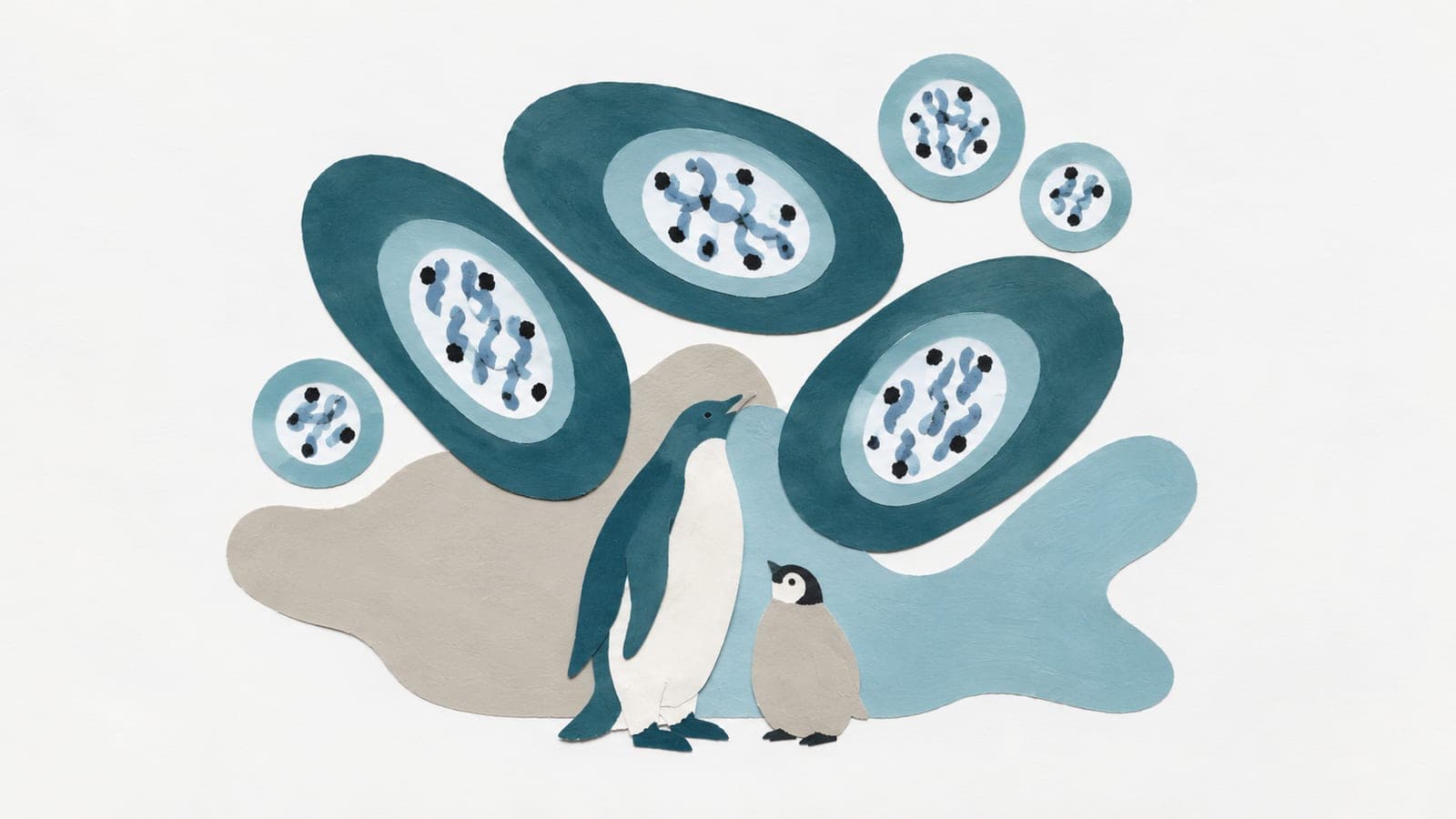
In an observational study of King penguins of known ages, researchers analysed 126 whole-blood profiles of DNA methylation, chemical marks on DNA. Red blood cells containing DNA dominate penguin blood, limiting the influence of differences in white blood cell types.
The researchers identified 409 genes whose methylation changed with age throughout life. This set was rich in genes regulating blood-forming stem and precursor cells, which produce blood cells, and communication with their surroundings. Many of the strongest age signals involved genes inactive in mature red blood cells, consistent with marks persisting from earlier blood-forming cells. Comparison with DNA methylation profiles from 1,501 humans found some shared aging-linked genes. An age model using only human counterparts of penguin aging genes predicted people’s ages with high accuracy and remained largely insensitive to the mix of blood cell types.
Why it matters
The work addresses whether age-linked DNA marks in blood reflect cellular aging programmes or changes in the mix of cells—a distinction important for interpreting blood-based aging signatures.
Caveats
The observational data do not establish that the age-linked marks came from earlier blood-forming cells. The paper is a preprint and has not yet been peer-reviewed.
- Modelling and theory
- DNA methylation
- Chromatin and 3D genome organisation
- Human epigenetic age model
- Chromatin
- Humans
The paper
An epigenetic palimpsest: the King penguin's blood methylome reveals conserved hematopoietic ageing
University of Helsinki
bioRxiv, 13 Oct 2026, CC BY-NC-ND, Preprint, not peer-reviewed