Kidney tubular epithelial cells drive accelerated epigenetic aging in disease
A cross-species single-cell atlas links injured human kidney cells and aged mouse kidneys to shared chromatin reorganization and impaired repair.
Nature Aging
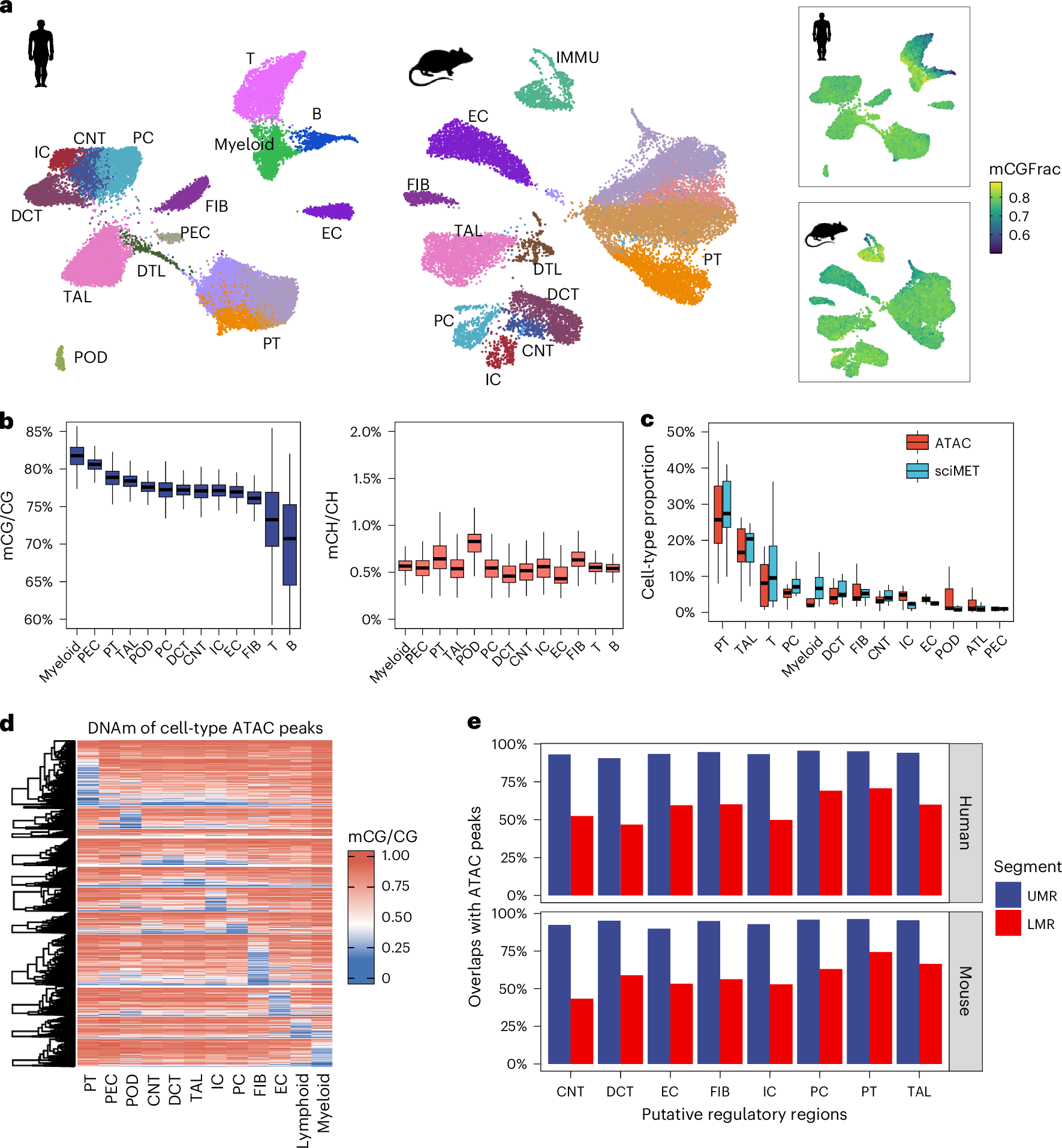
Analyzing healthy and injured human kidneys alongside aged mouse kidneys, researchers created a cross-species single-cell multiomics atlas spanning DNA methylation, chromatin accessibility, and transcription. They discovered that tubular epithelial cells in diseased kidneys undergo pronounced accelerated epigenetic aging. This pathological state reflected transcriptional patterns observed in natural aging and stemmed from the dysregulation of lineage-specific genes lacking CpG islands. Spatially, these alterations localized to specific tissue niches of unresolved repair. By jointly profiling single-cell DNA methylation and three-dimensional genome architecture, the team determined that damaged epithelial cells experience higher-order genomic reorganization and activate genes linked to renal decline. Overall, diminished methylome integrity and a breakdown of epigenetic repression within coordinated three-dimensional chromatin structures compromise tubular epithelial cell identity and hinder tissue repair.
Why it matters
The findings show how loss of epigenetic repression and altered chromatin structure drive aging-like states in specific cell types during chronic disease.
Caveats
The study is observational across human and mouse tissues, and the abstract does not assess whether intervening in these epigenetic states can rescue tissue repair.
The paper
Show 8 more authors
Xuwen Li, Qi Yan, Debora L. Gisch, Madhurima Kaushal, Stephanie Reinert, Michael T. Eadon, Joseph P. Gaut, Sanjay R. Jain,Gwangju Institute of Science and Technology · Altos Labs
Nature Aging · 24 Sep 2026