Harnessing cGAS-STING in neurodegeneration: From mitochondrial DNA leakage and microglial reactivity to species-specific translational barriers
Abstract
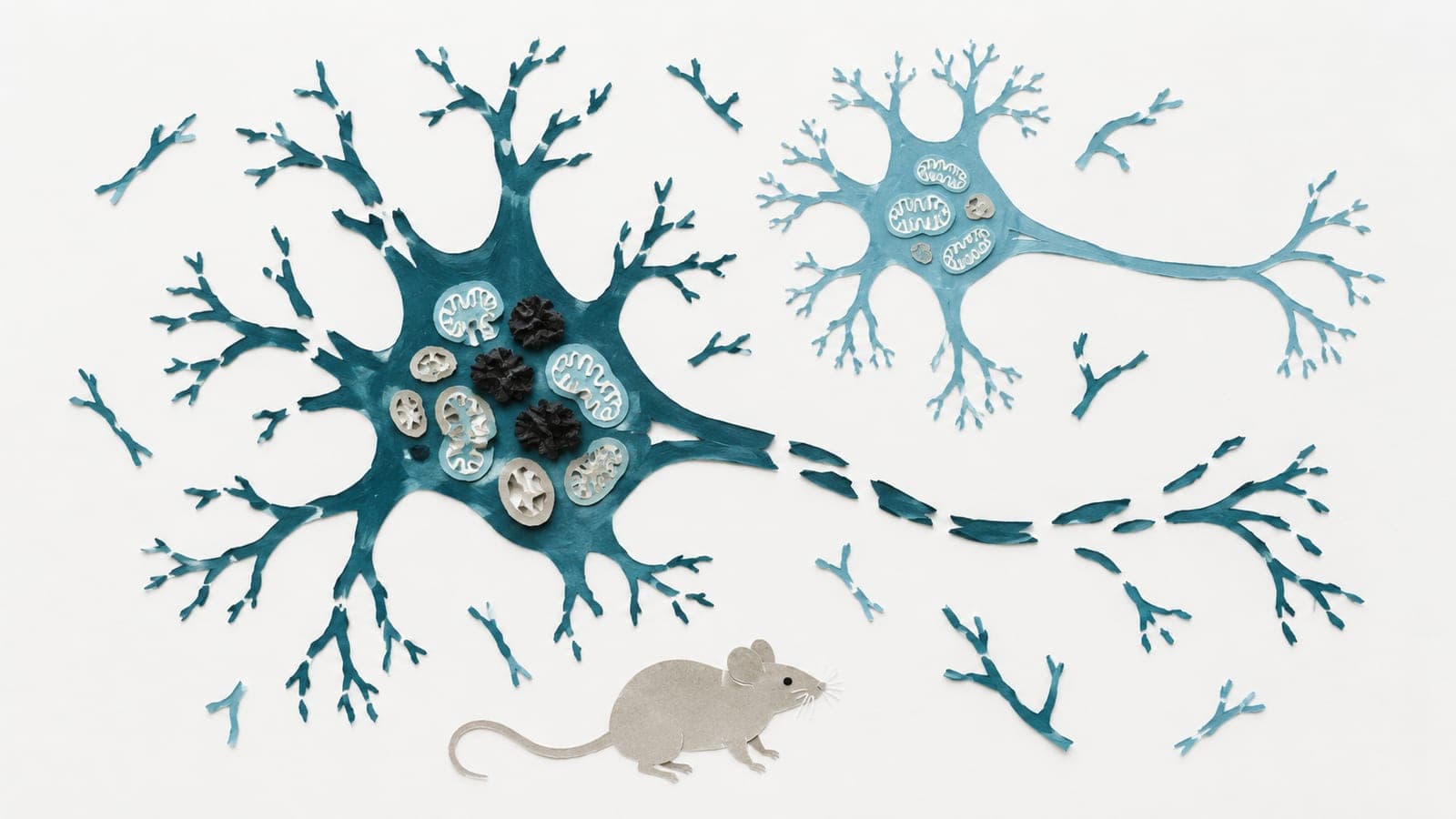
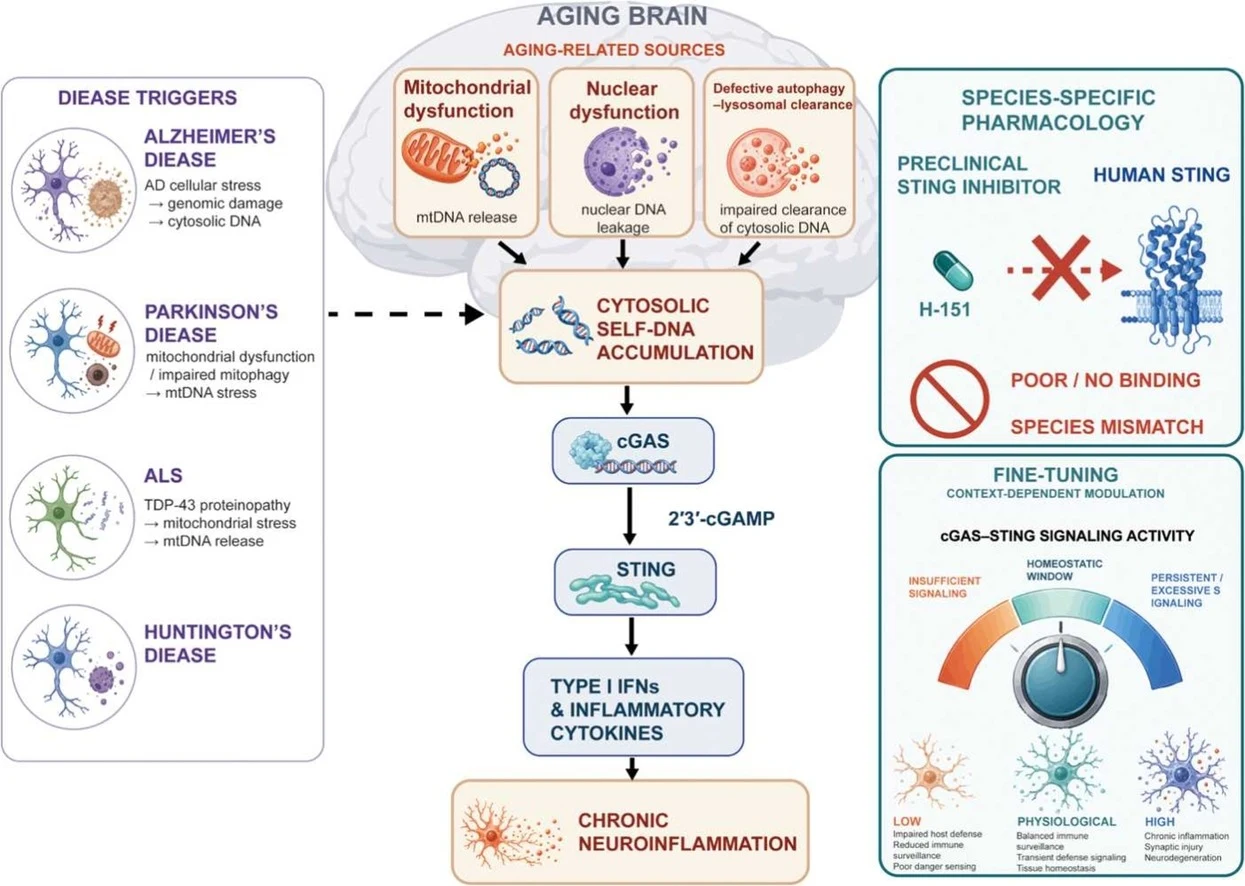
The cyclic GMP-AMP synthase (cGAS)-stimulator of interferon genes (STING) pathway, a cornerstone of innate immunity, has emerged as a critical driver of sterile neuroinflammation in the aging brain. Age-related decline in mitochondrial quality control, coupled with nuclear and lysosomal erosion, fosters the aberrant accumulation of cytosolic self-DNA, establishing a permissive environment for chronic cGAS-STING activation. This review synthesizes recent breakthroughs elucidating how major neurodegenerative diseases-Alzheimer's disease, Parkinson's disease, amyotrophic lateral sclerosis, and Huntington's disease-converge on this pathway through distinct, disease-specific triggers, ranging from PINK1/Parkin deficiency-driven mitochondrial DNA leakage to TDP-43 proteinopathy-associated retrotransposon de-repression. Critically, we evaluate the translational landscape, highlighting the profound challenge posed by species-specific pharmacology, as exemplified by the failure of the covalent inhibitor H-151 to engage human STING. We argue that the future of therapeutic intervention lies not in wholesale pathway ablation, but in nuanced, context-dependent fine-tuning that disentangles its detrimental chronic effects from its indispensable homeostatic functions. This review positions the cGAS-STING axis as a promising yet delicate frontier for combating age-related neurodegeneration.
The paper
Lanzhou University
Cytokine & Growth Factor Reviews, 13 Oct 2026