Mitochondrial DNA and age shape retinal changes in mice
Experiments in mice with matching nuclear DNA but different mitochondrial DNA linked aging to changes in retinal energy-producing proteins and immune signalling.
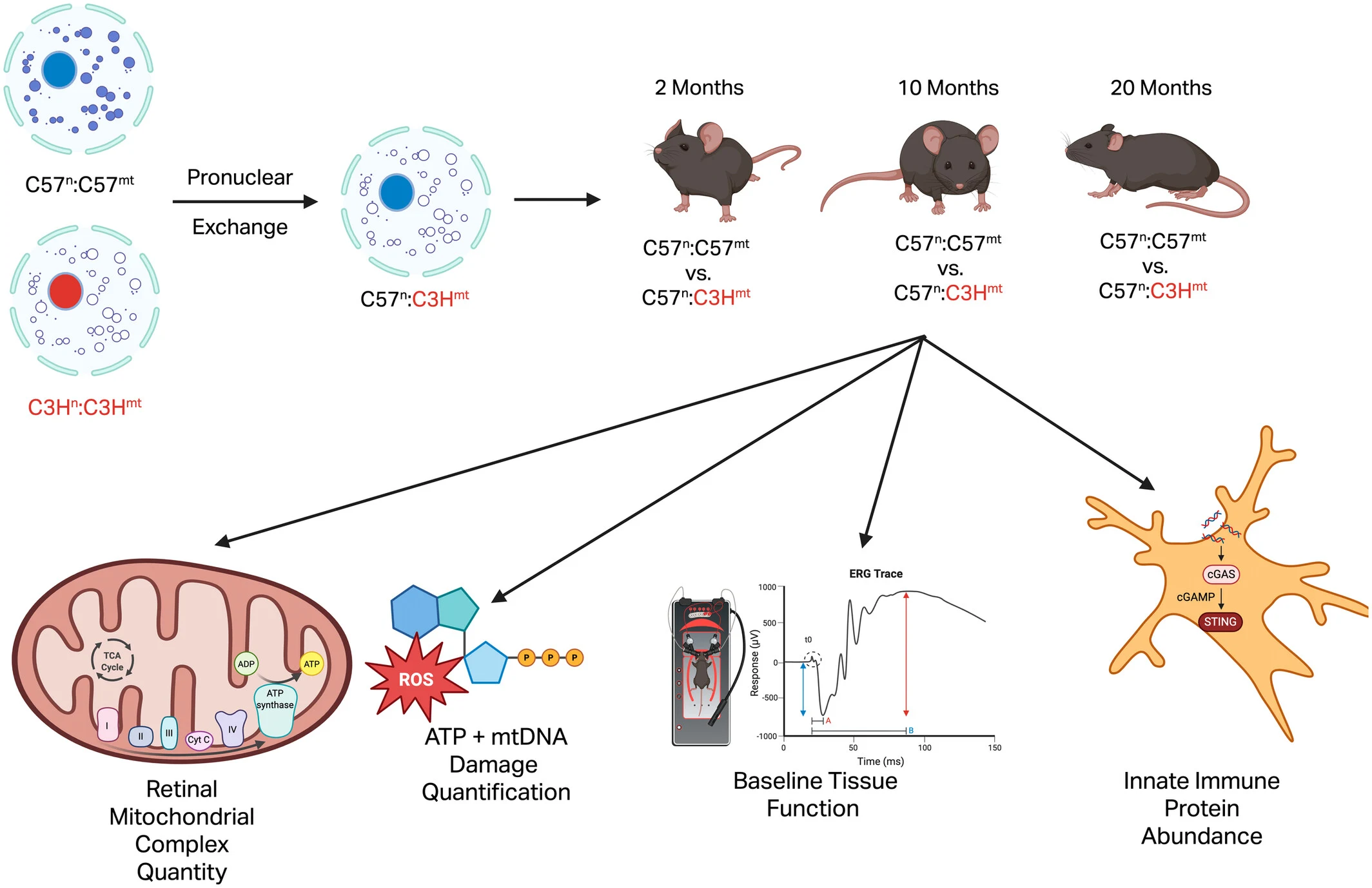
In an animal experiment, researchers studied mice with identical DNA in the cell nucleus but different mitochondrial DNA, carried by cells’ energy-producing structures. They examined the retina, the light-sensitive tissue at the back of the eye, across the lifespan.
Aging was associated with more mitochondrial DNA damage and changes in the mix of protein complexes involved in energy production. Electrical responses associated with bipolar cells, which relay visual signals, differed by mitochondrial DNA background. Responses associated with light-detecting cells and retinal ganglion cells, which send visual signals towards the brain, were preserved at early ages. Levels of STING, a protein involved in immune signalling, increased with age in microglia, the retina’s resident immune cells. The findings identified mitochondrial DNA variation as a modifier of this age-associated increase.
Why it matters
Retinal energy production and immune signalling offer ways to investigate how the eye changes with age. The study addresses whether mitochondrial inheritance helps account for differences in those processes.
Caveats
The experiment used mice with two mitochondrial DNA backgrounds and the same nuclear genome. It did not establish whether the same relationships occur in people.