Immune protein has opposing roles in bone as animals age
Animal experiments found that loss of an immune-signalling protein harmed early bone development but protected against age-related bone loss from middle age onward.
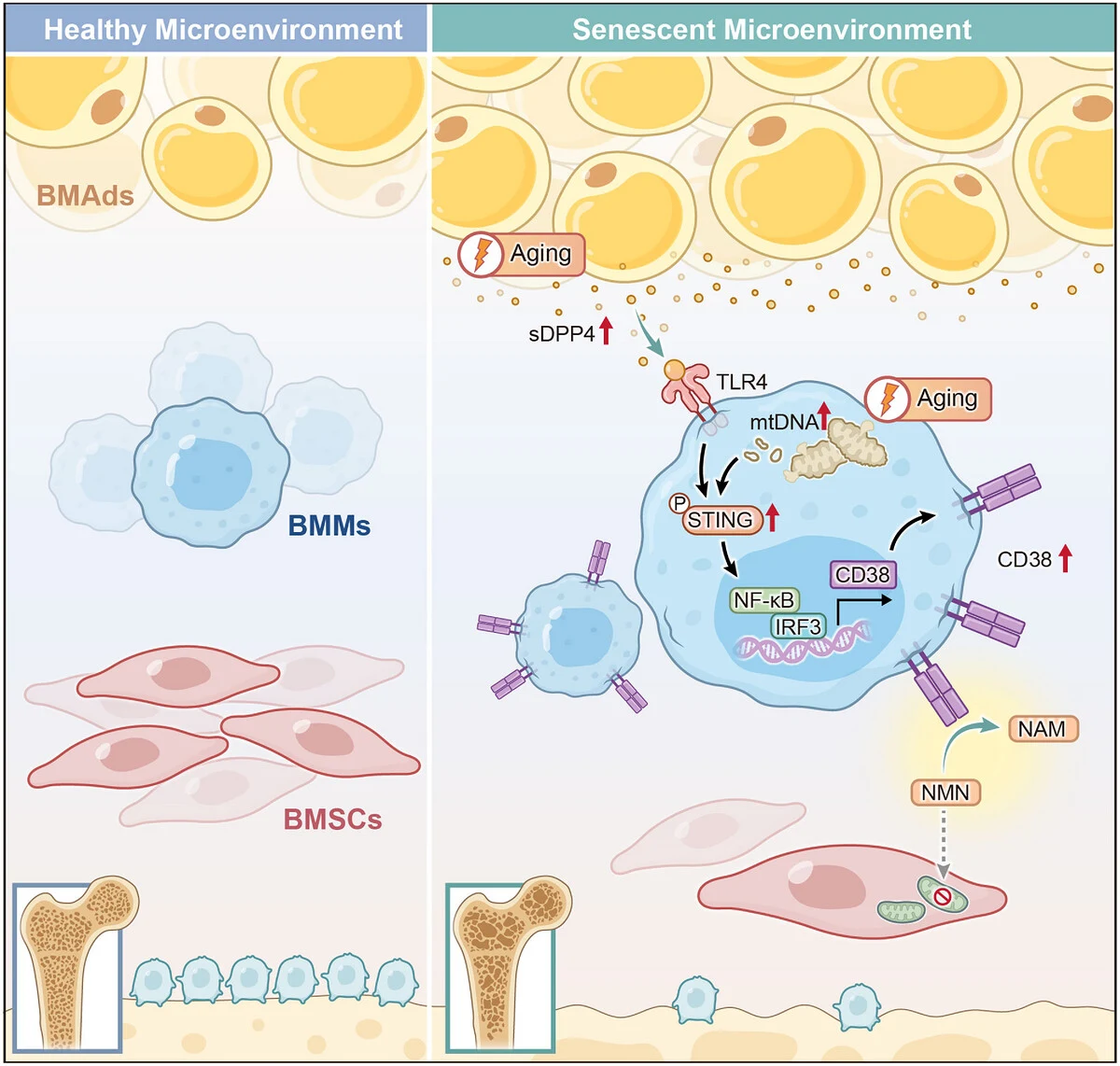
In animal experiments, researchers studied STING, an immune-signalling protein, in bone marrow macrophages, immune cells found inside bones. The absence of STING in these cells impaired early bone development and maturation, but protected against age-related bone loss from middle age onward.
Accumulating marrow fat cells released a protein that helped activate STING in macrophages. This activation raised levels of another protein that amplified inflammation and depleted nicotinamide mononucleotide, a molecular building block. Neighbouring marrow stem cells needed this substance to make nicotinamide adenine dinucleotide, a molecule involved in cellular energy metabolism. Reduced availability of the building block impaired their ability to form bone. Combining a drug that inhibited STING with nicotinamide mononucleotide supplements reduced bone loss in preclinical models.
Why it matters
The bone marrow environment changes with age. The researchers proposed this immune pathway as a potential target for managing those changes.
Caveats
These were preclinical experiments, not studies in people. The abstract did not specify animal species, sample sizes, drug doses or treatment duration.
The paper
Center For Translational Medicine Research and Development; First College of Clinical Medicine
Advanced Science, 15 Oct 2026