Beyond Hemodynamics: Uremic Toxins, Post-Translational Modifications, and Inflammatory-Metabolic Remodeling in Uremic Cardiomyopathy
Abstract
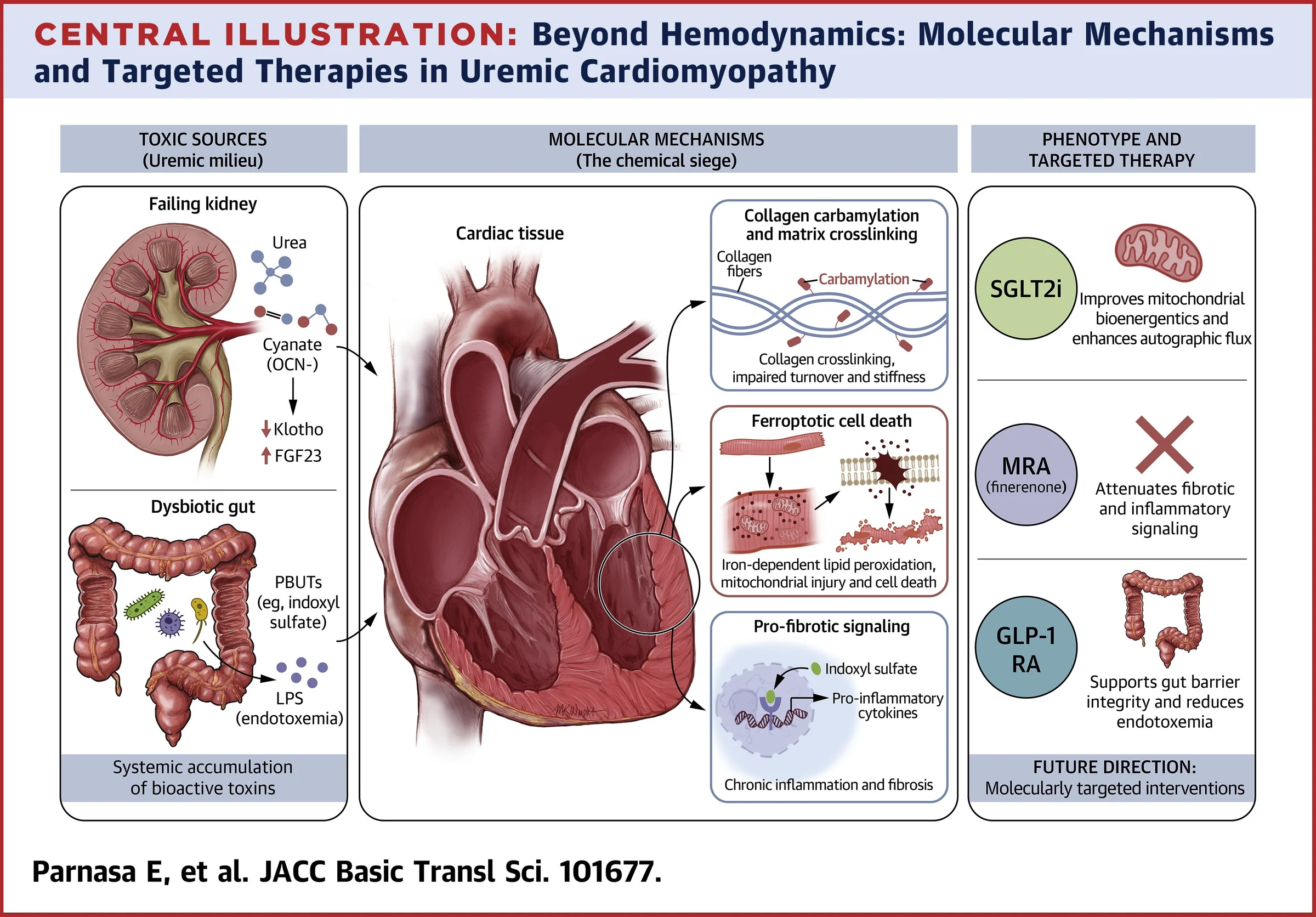
Uremic cardiomyopathy has traditionally been attributed to pressure overload, volume overload, hypertension, and neurohormonal activation in chronic kidney disease. However, growing experimental and clinical evidence indicates that nonhemodynamic mechanisms also contribute to myocardial remodeling in uremia. These mechanisms include retention of uremic toxins and protein-bound solutes, mediators of mineral metabolism, gut-derived metabolites, inflammatory signaling, mitochondrial dysfunction, and post-translational protein modifications. In this review, we discuss uremic cardiomyopathy as a systemic inflammatory-metabolic disorder in which kidney failure reshapes myocardial structure and function through interacting biochemical and interorgan pathways. We first define the major classes of uremic toxins, including small water-soluble solutes, middle molecules, protein-bound uremic toxins, and reactive chemical intermediates. We then focus on post-translational modifications, particularly urea-derived cyanate-mediated carbamylation, a well-characterized uremia-associated mechanism that can alter collagen, extracellular matrix turnover, plasma proteins, lipoproteins, and potentially long-lived cardiac proteins. Additional injury pathways, including oxidative modifications, ferroptosis, fibroblast growth factor 23/Klotho imbalance, aryl hydrocarbon receptor activation by indoxyl sulfate, gut-derived adrenergic metabolites, endotoxemia, and inflammasome signaling, are discussed as complementary and partially overlapping mechanisms. Because much of the current mechanistic evidence comes from preclinical models, circulating biomarkers, or associative human studies, we distinguish established evidence from plausible mechanistic hypotheses throughout the review. Finally, we discuss therapeutic implications, including enhanced toxin removal, sodium-glucose cotransporter 2 inhibitors, mineralocorticoid receptor antagonists, glucagon-like peptide 1 receptor agonists, and future strategies targeting uremic toxins, proteostasis, ferroptosis, inflammasome activation, and toxin-induced post-translational modifications.
The paper
Hebrew University of Jerusalem
JACC Basic to Translational Science, 15 Oct 2026