Ketogenic diet improved heart function in aged mice
An eight-week experiment in 22-month-old mice found comparable benefits in males and females given a ketogenic diet rather than standard chow.
Experimental Gerontology
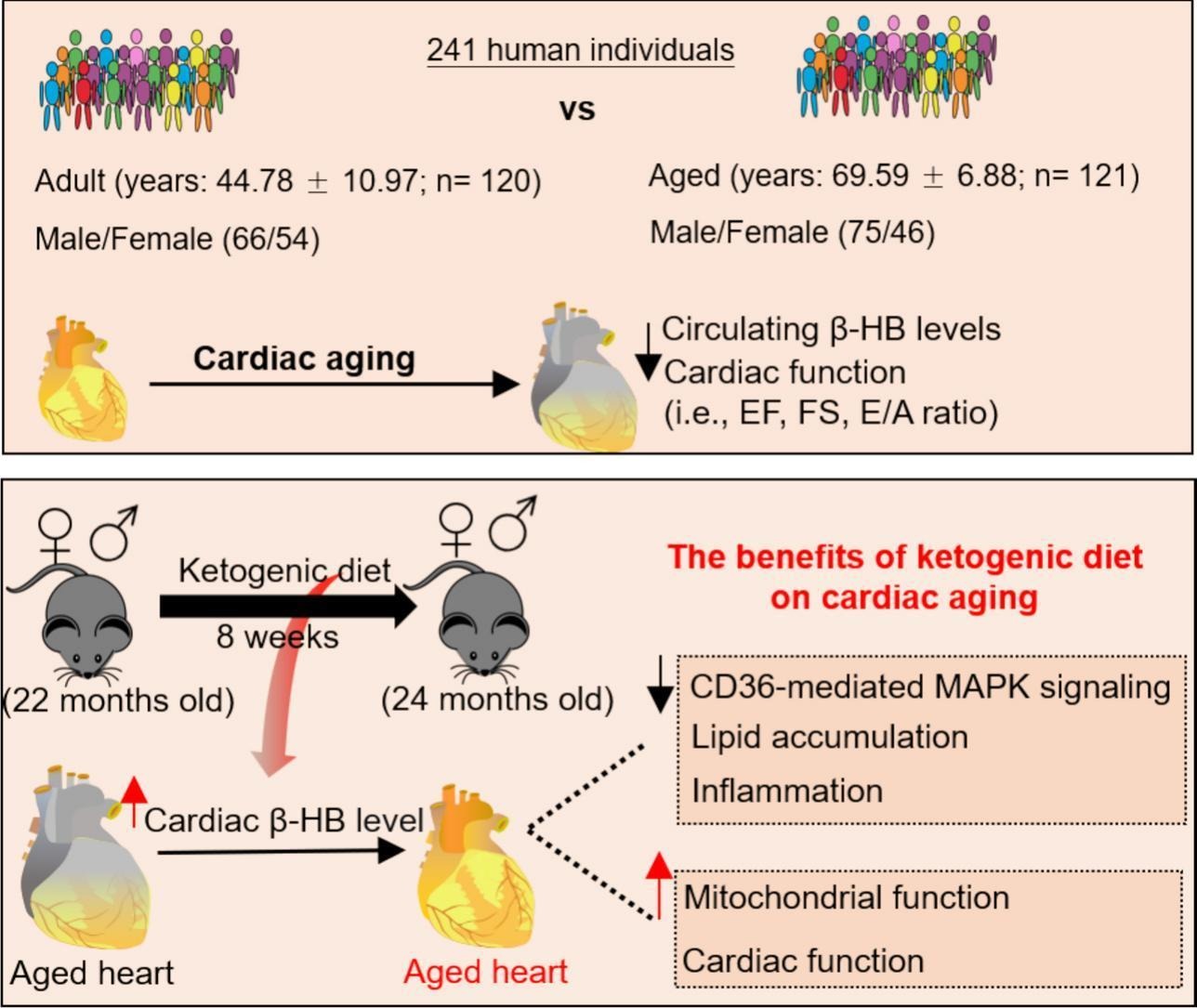
In an animal experiment, 22-month-old male and female mice received a ketogenic diet, a high-fat, very low-carbohydrate diet, or standard chow for eight weeks. The ketogenic diet increased heart levels of beta-hydroxybutyrate, a ketone the body uses as fuel. It improved the heart’s pumping and filling function and reduced fat accumulation in heart muscle. It also limited changes to heart structure and preserved the function of mitochondria, the cells’ energy-producing structures. Benefits were comparable in both sexes.
In a separate observational study of 120 adults and 121 older people, older participants had lower blood levels of beta-hydroxybutyrate. Higher levels were associated with better measures of heart pumping and filling.
Why it matters
The study addressed whether replenishing ketones through diet could counter age-related heart dysfunction, and whether sex altered that response.
Caveats
The dietary benefits were tested in mice, not people. The human study measured associations and did not show that higher ketone levels caused better heart function.
- Ketogenic diet
- Extracellular matrix remodelling
- Lipid and ceramide metabolism
- Beta-hydroxybutyrate
- Cardiomyopathy
- Mice
The paper
Show 5 more authors
Guanglei Chang, Linqiang Zhang, Shujin Wang, Xi Li, Dazhi Ke,Chongqing Medical University · People's Hospital of Jiulongpo District
Experimental Gerontology · 7 Oct 2026