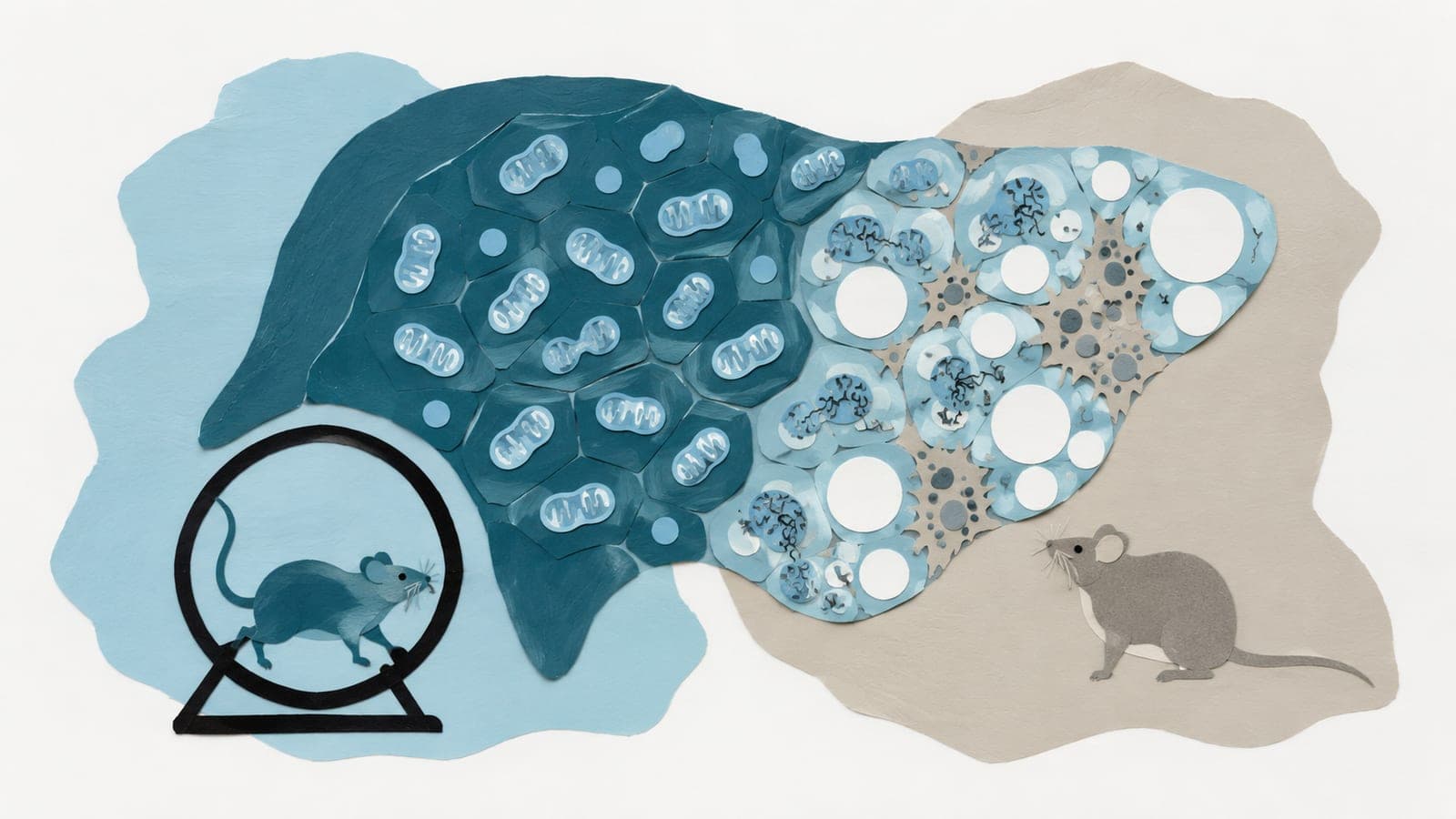
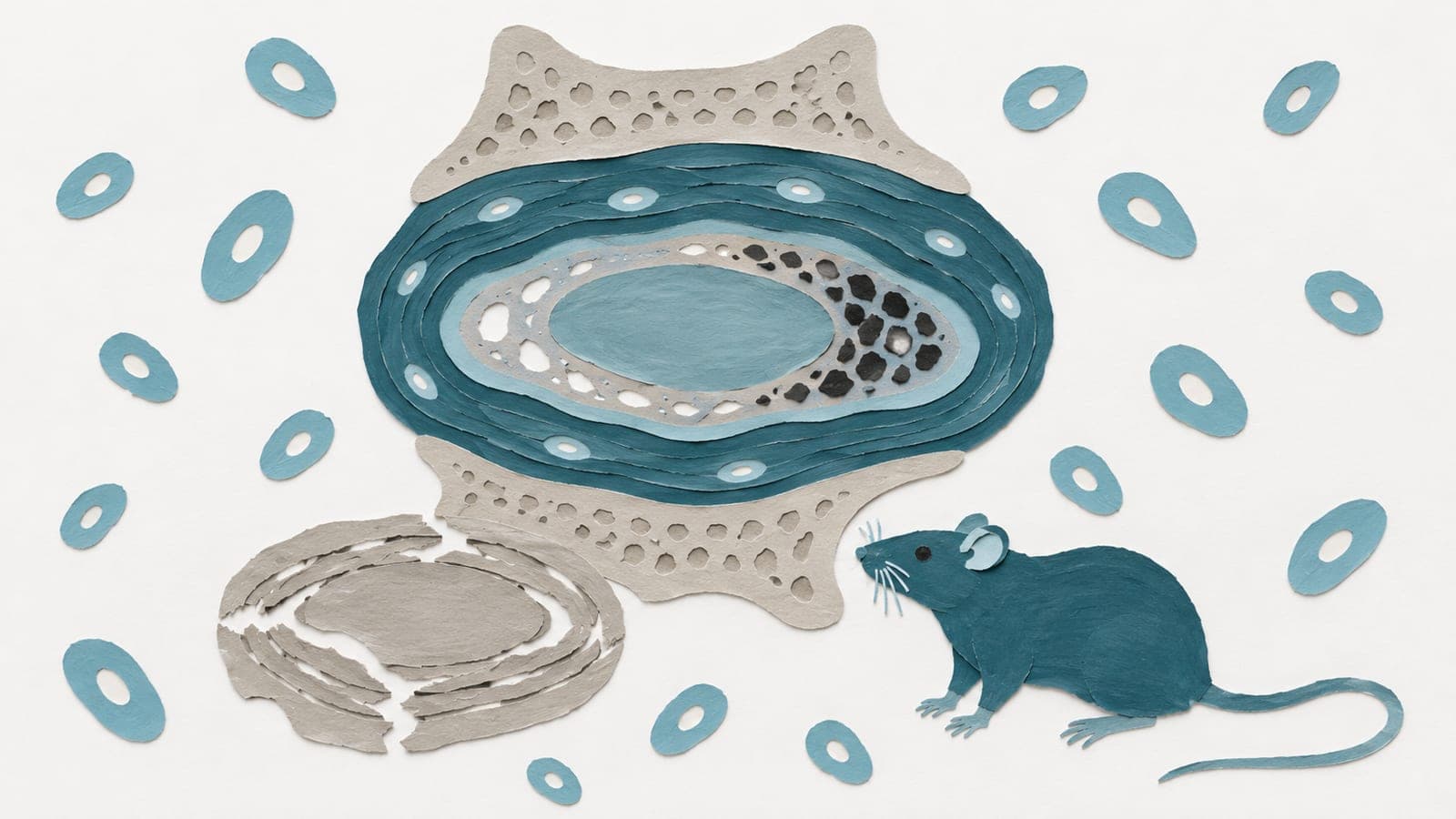
Targeted particles preserved disc structure in rats
An experiment in rats with puncture-induced disc degeneration tested iron-binding particles designed to target senescent cells, which have stopped dividing.
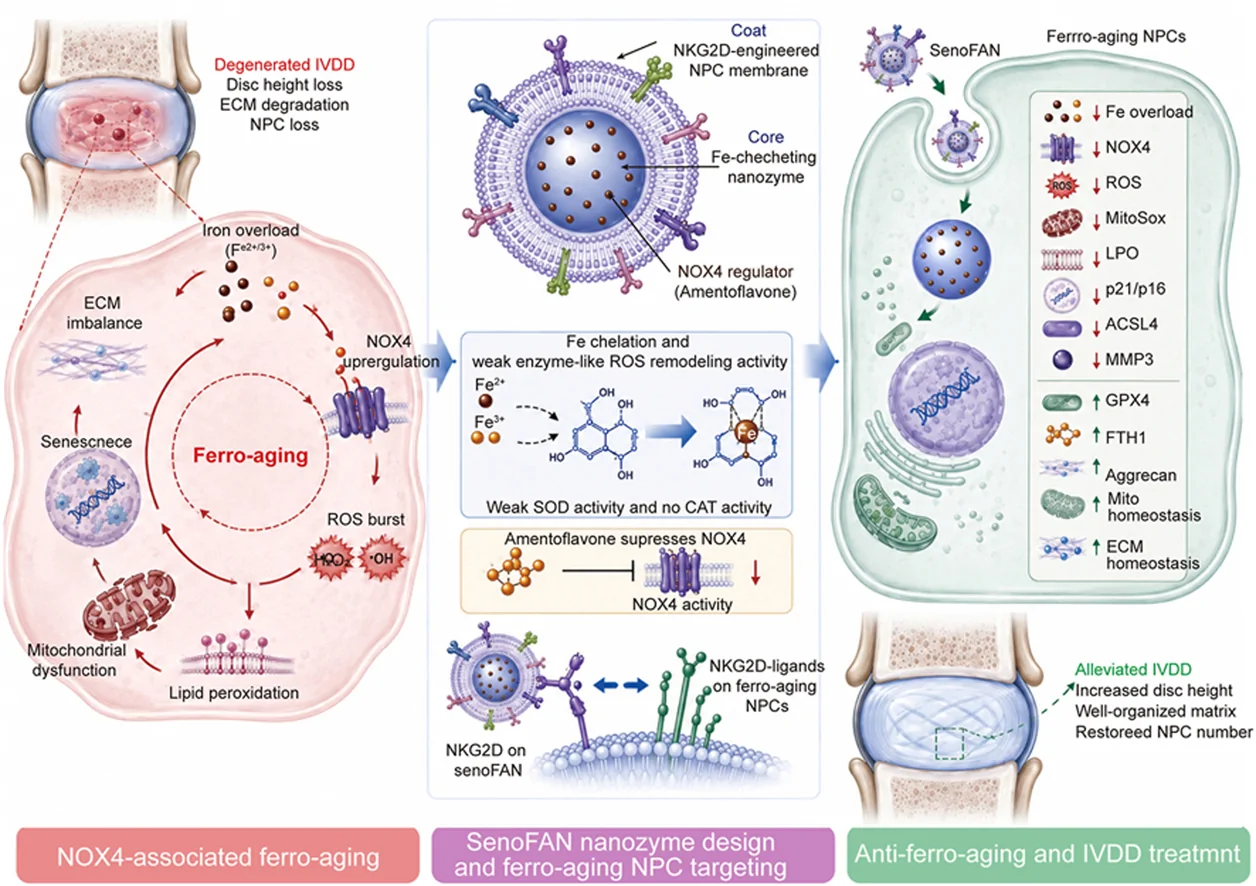
In rats with puncture-induced degeneration of the discs between spinal bones, researchers tested engineered particles called SenoFAN. The particles combined iron-binding material with amentoflavone, a compound selected through screening. They designed the particles to target senescent cells in the discs’ centres.
In the rat experiment, SenoFAN remained within discs for a prolonged period, reduced iron deposits and senescence, and preserved disc structure. In disc cells grown in the lab, it reduced available iron and oxidative stress, an imbalance that can damage cells. It also suppressed damage to fats and senescence. Separate cell experiments identified NOX4, an enzyme involved in producing reactive oxygen molecules, as an upstream regulator of several iron-linked changes.
Why it matters
Disc degeneration contributes to chronic low back pain. The work points to linked iron overload, oxidative stress and cell senescence as a potential target for therapies aimed at this disease.
Caveats
The treatment findings came from cells grown in the lab and a puncture-induced rat model, not a trial in people. The authors reported favourable safety findings in rats, but the abstract gave no details.
The paper
Second Military Medical University
Bioactive Materials, 4 Oct 2026, Open access