Porphyromonas gingivalis lipopolysaccharide induces osteoblast senescence and defective mineralization associated with indoleamine 2,3-dioxygenase 1-kynurenine-aryl hydrocarbon receptor signaling
Abstract
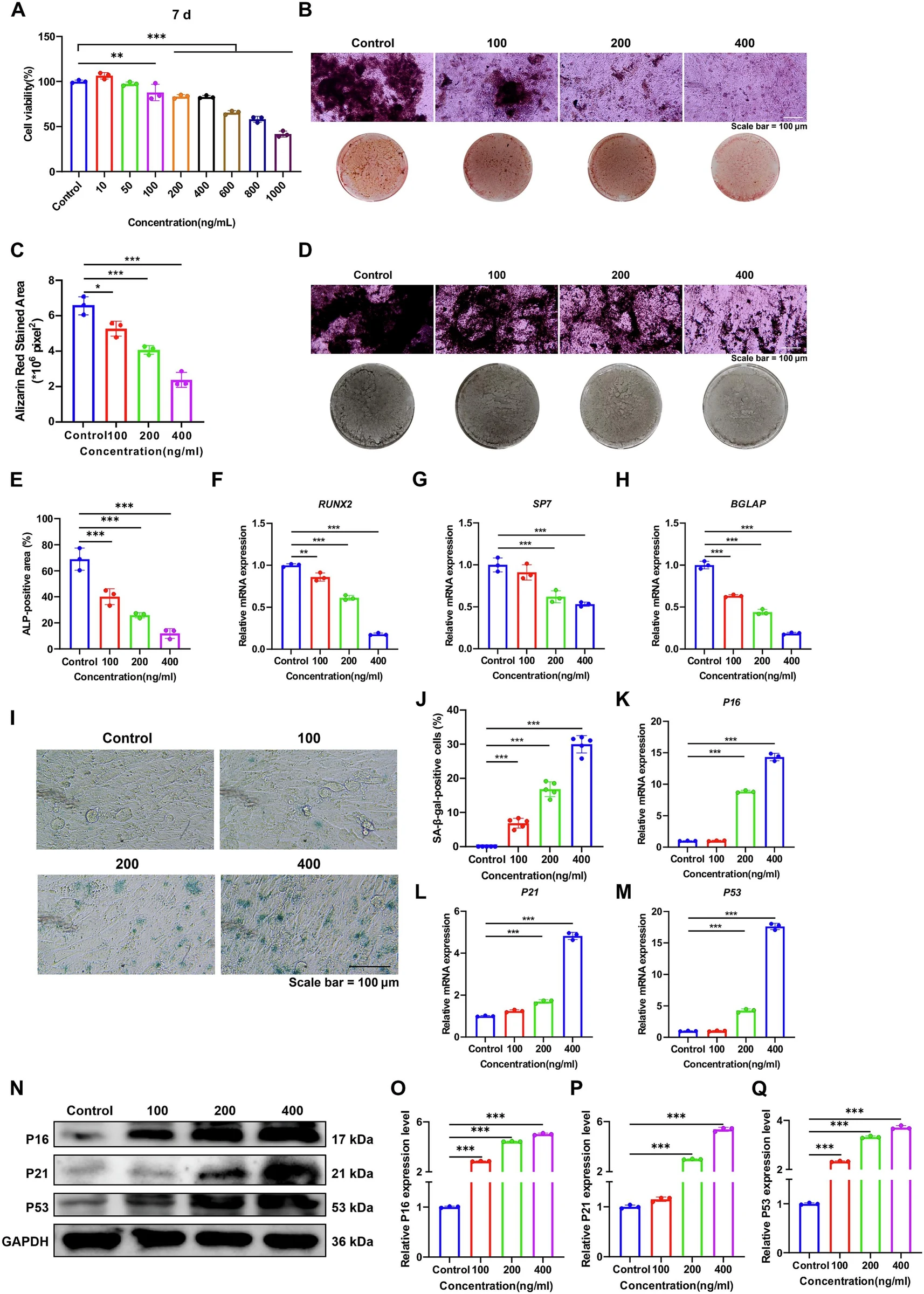
AIM: To determine whether Porphyromonas gingivalis-derived lipopolysaccharide (P.g-LPS) is associated with osteoblast senescence and defective mineralization involving inflammation-related indoleamine 2,3-dioxygenase 1 (IDO1)-kynurenine (Kyn)-aryl hydrocarbon receptor (AhR) pathway and to examine its upstream regulation. METHODS: hFOB1.19 human osteoblasts and zebrafish were exposed to P.g-LPS. Osteogenic differentiation, senescence, IDO1/Kyn/AhR signaling, Toll-like receptor 4 (TLR4)/nuclear factor kappa B (NF-κB)/RELA regulation, and rescue by the IDO1 inhibitor epacadostat or AhR inhibitor CH223191 were assessed using staining, qPCR, western blotting, ELISA, gene silencing, and dual-luciferase reporter assays. RESULTS: P.g-LPS reduced osteogenic differentiation and mineralization and increased senescence-associated markers in hFOB1.19 cells and zebrafish. P.g-LPS increased IDO1 expression and Kyn levels; epacadostat attenuated osteogenic impairment and senescence-associated changes. Exogenous Kyn increased AhR-responsive gene expression and produced similar phenotypes, which were attenuated by CH223191. TLR4 knockdown reduced P.g-LPS-induced IDO1, NFKB1, and RELA expression, and RELA overexpression enhanced wild-type IDO1 promoter activity, with loss of this response after mutation of the predicted NF-κB site. CONCLUSION: P.g-LPS-induced osteogenic impairment and senescence-associated changes involve IDO1-Kyn-AhR-related signaling, alongside TLR4-associated responses and RELA-dependent IDO1 promoter activity. Inhibition of IDO1 or AhR attenuated these phenotypes in the experimental models.
The paper
Jiangnan University Medical Center
Life Sciences, 14 Oct 2026