Air pollution linked to inflammation markers, mainly in women
A three-year observational study of 226 middle-aged people at increased Alzheimer’s risk linked traffic pollution to rising markers of brain-support cells and inflammation.
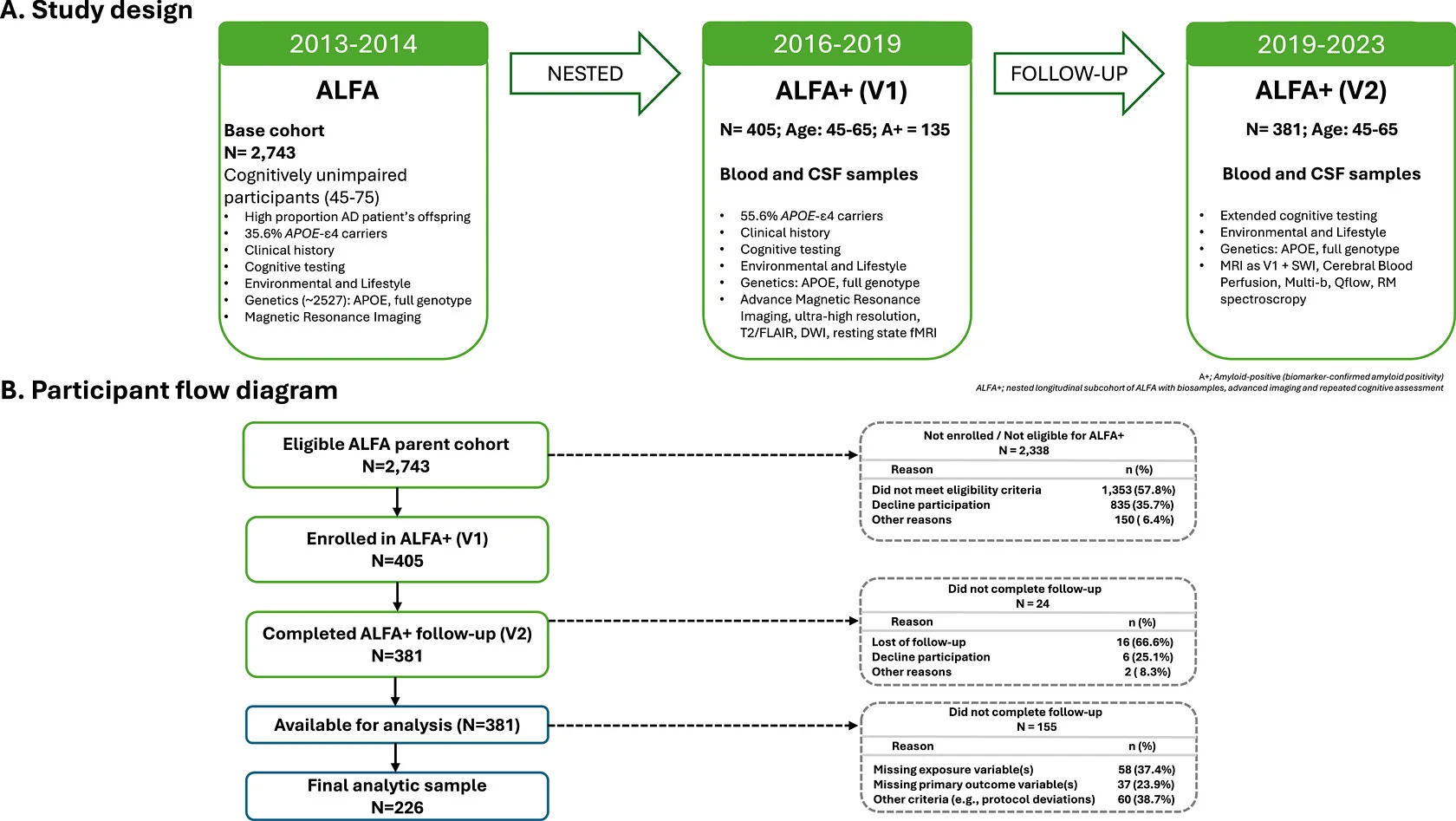
Registered NCT02485730
The observational study followed 226 middle-aged people without cognitive impairment who were at increased risk of Alzheimer’s disease. Researchers estimated long-term exposure to traffic-related air pollution at participants’ homes using models. They measured proteins in cerebrospinal fluid, the fluid surrounding the brain and spinal cord, at the start and three years later.
Higher pollution exposure was associated with increases in glial fibrillary acidic protein, a protein found in brain-support cells called astrocytes, and interleukin-6, an immune-signalling protein involved in inflammation. These associations appeared primarily in women. Further statistical analyses suggested that the astrocyte protein partly accounted for associations between pollution exposure and worsening executive function—skills used to plan and manage tasks—and attention.
Why it matters
The work addresses how traffic pollution may relate to processes involved in Alzheimer’s disease before cognitive impairment appears.
Caveats
This observational study could not establish cause and effect, and fluid markers are not direct measurements of brain inflammation. The findings may not apply to people at lower Alzheimer’s risk or those who already have cognitive impairment.
The paper
Barcelonaβeta Brain Research Centre (BBRC)
Alzheimer's & Dementia, 1 Oct 2026