Protein-targeting system improved learning and memory in mice
An experiment in Alzheimer's disease mice found that the system also restored new neuron formation in a brain region involved in memory.
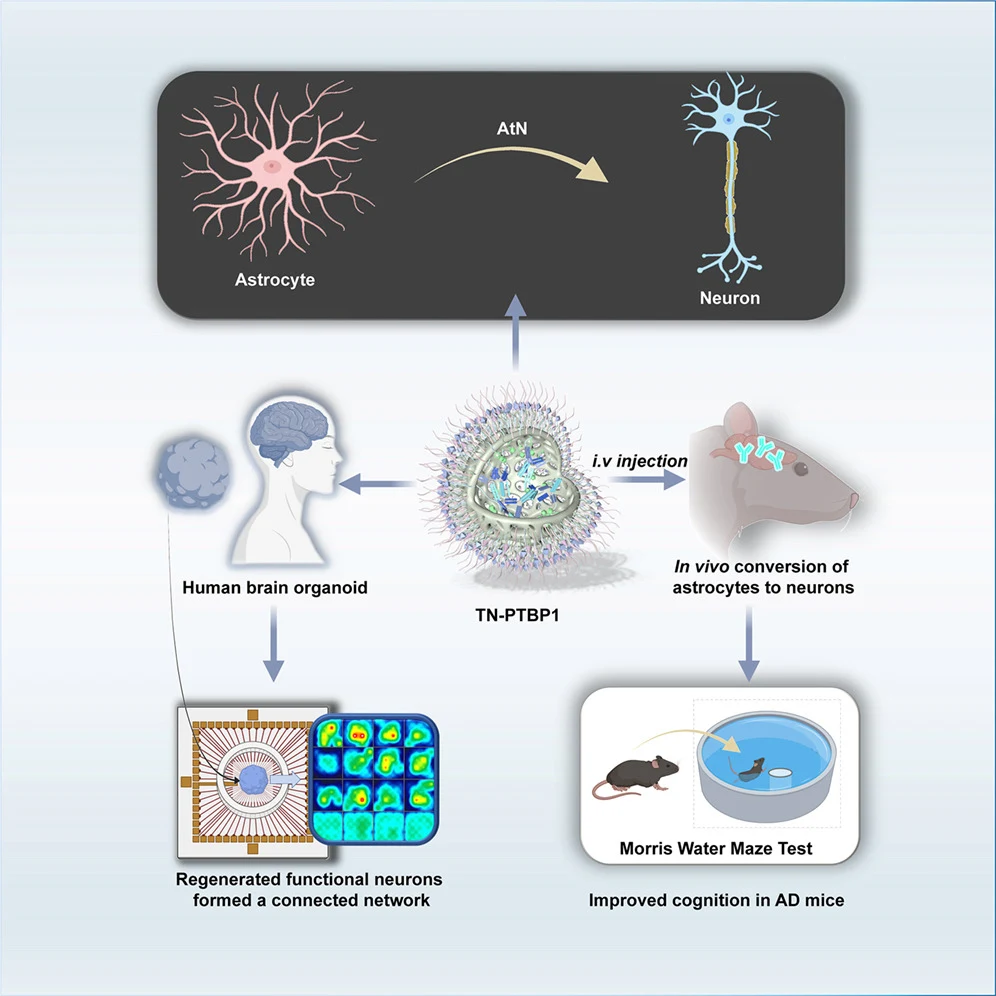
In an animal experiment in mice with Alzheimer's disease, researchers tested a delivery system that removes a protein from brain support cells. The system crossed the blood–brain barrier, which limits what enters the brain from the blood. It delivered antibodies into astrocytes, cells that support neurons, and triggered the breakdown of a target protein. Removing that protein induced these support cells to become neurons.
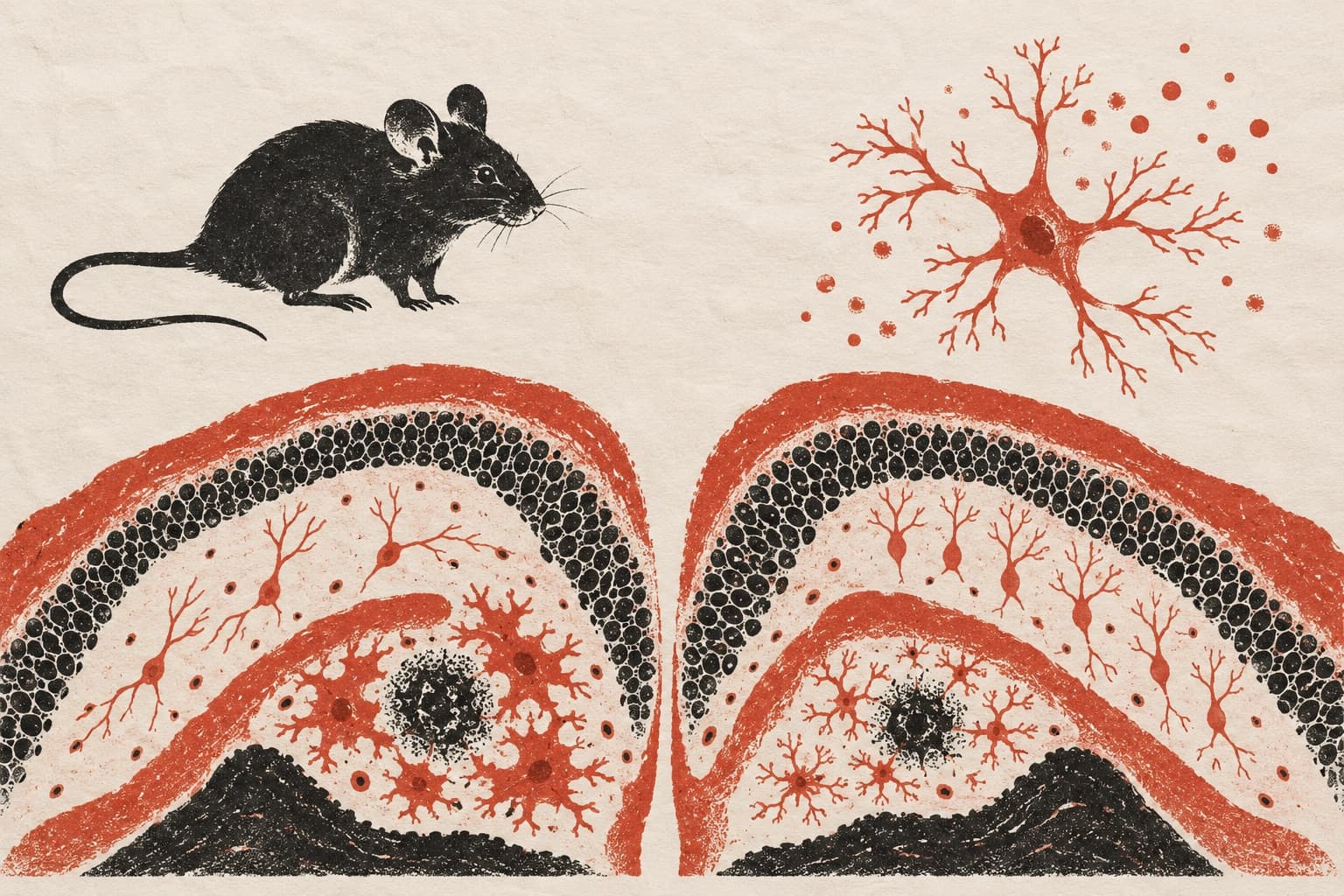
In the mice, the system restored new neuron formation in the hippocampus, a brain region involved in memory. The researchers also reported improvements in thinking, learning and memory. In separate laboratory experiments, the approach generated functioning neurons in cells grown in the lab and in human brain organoids, three-dimensional models of brain tissue.
Why it matters
Alzheimer's disease involves the loss of neurons. The work explores whether generating replacement neurons could help rebuild brain circuits damaged by this age-related disease.
Caveats
Animal and laboratory experiments do not establish whether the approach would work in people. The abstract did not report sample sizes, dose, treatment duration or harms.