Arc-engineered exosomes ease Alzheimer's pathology in animals
Intranasal delivery of neural stem cell exosomes engineered with Arc targeted damaged neurons, reactivated autophagy, and curbed amyloid buildup in an animal model.
Nanomedicine
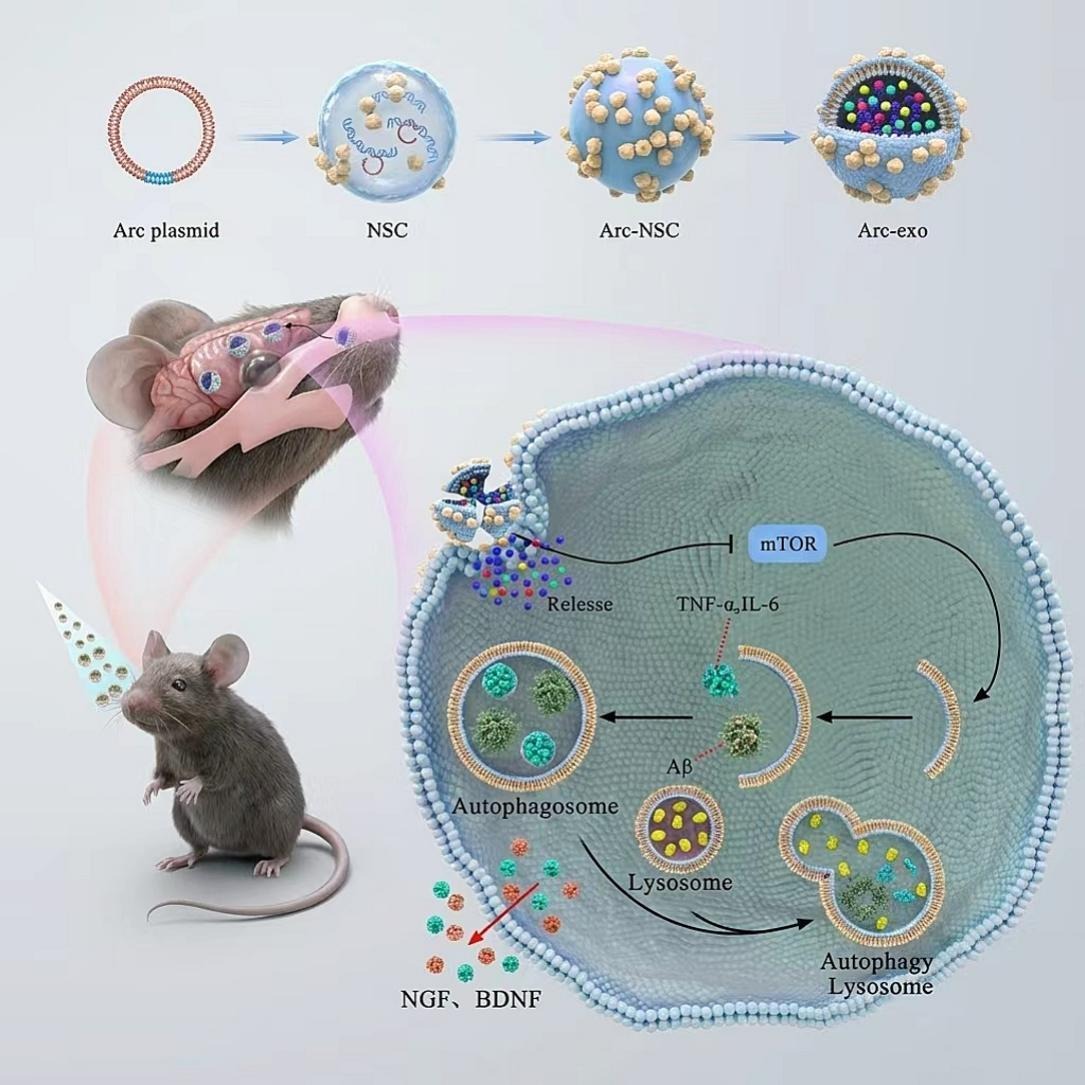
In an animal model of Alzheimer's disease, intranasally delivered exosomes engineered with the scaffolding protein Arc alleviated disease symptoms and reduced neuronal damage. The researchers first analyzed 143,214 nuclei using single-nucleus RNA sequencing. This profiling identified excitatory neurons as a primary site of cellular injury, showing marked dysregulation in pathways tied to proteostasis and autophagy. To address these defects, the team engineered neural stem cell-derived exosomes to overexpress Arc. Administered intranasally, the engineered exosomes accumulated in the central nervous system and targeted neurons. In the animals, the therapy reduced β-amyloid deposition, suppressed neuroinflammation, and repaired damaged neurons. Further investigation showed the intervention restored cellular homeostasis by inhibiting mTOR signaling and reactivating autophagy.
Why it matters
Declines in neuronal proteostasis and autophagy are central features of brain aging and neurodegeneration. Targeted exosomes offer a potential approach to reactivating clearance pathways and mitigating amyloid pathology in vulnerable neurons.
Caveats
The therapeutic results were obtained in an animal model, and the abstract does not report sample sizes, treatment durations, or specific quantitative effect sizes for the pathological changes. Whether these engineered nanoplatforms act similarly in human patients remains untested.
The paper
Show 8 more authors
Xiaoyu Gao, Xiwen Cheng, XinMei Huo, Zhongci Hang, Liping Zhou, Yingxian Li, Cencan Xing, Enli Luo,Beijing Research Institute of Mechanical and Electrical Technology · University of Science and Technology Beijing
Nanomedicine · 25 Sep 2026