Research progress on the mechanisms by which gut microbiota dysbiosis remodels the bone marrow neuroimmune microenvironment to drive age-related osteoporosis
Abstract
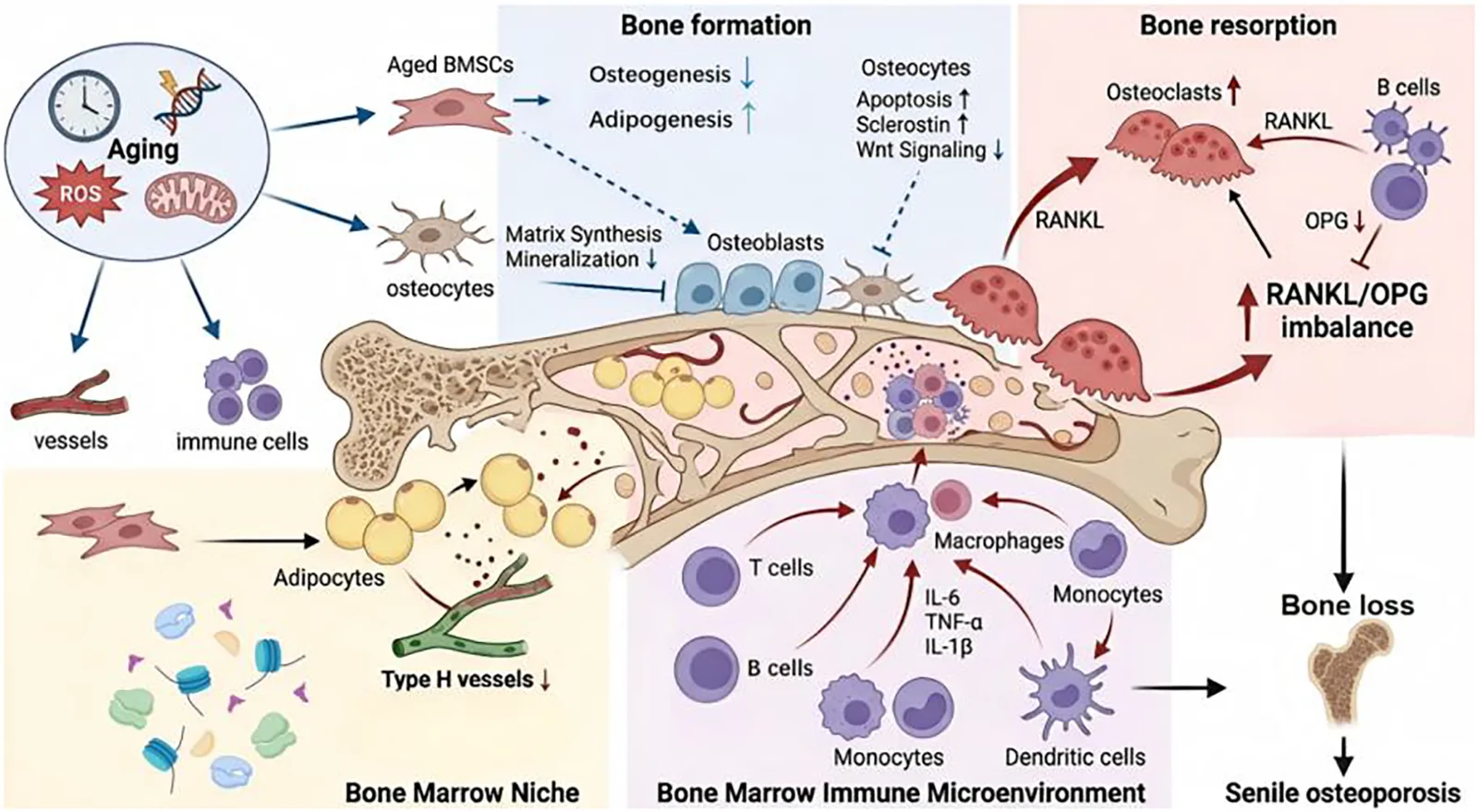
Age-related osteoporosis arises from the interplay between impaired bone remodeling, immune remodeling, and chronic low-grade inflammation during aging. Beyond local degeneration in bone tissue, alterations in the gut microbiota, mucosal barrier, and autonomic nervous regulation may reshape the bone marrow immune environment and amplify osteoclastogenic responses. This review integrates evidence linking the gut, neural regulation, and the bone marrow immune microenvironment. It summarizes their potential contributions to age-related bone loss and provides a conceptual framework for understanding disease mechanisms, improving risk stratification, and optimizing intervention strategies.
The paper
Gansu University of Traditional Chinese Medicine
Frontiers in Immunology, 29 Sep 2026, Open access