Loss of a matrix enzyme triggers adult bone loss in mice
Mice lacking the enzyme MMP14 in bone-forming cells initially gained bone mass when young, but later developed severe bone loss driven by immune cells.
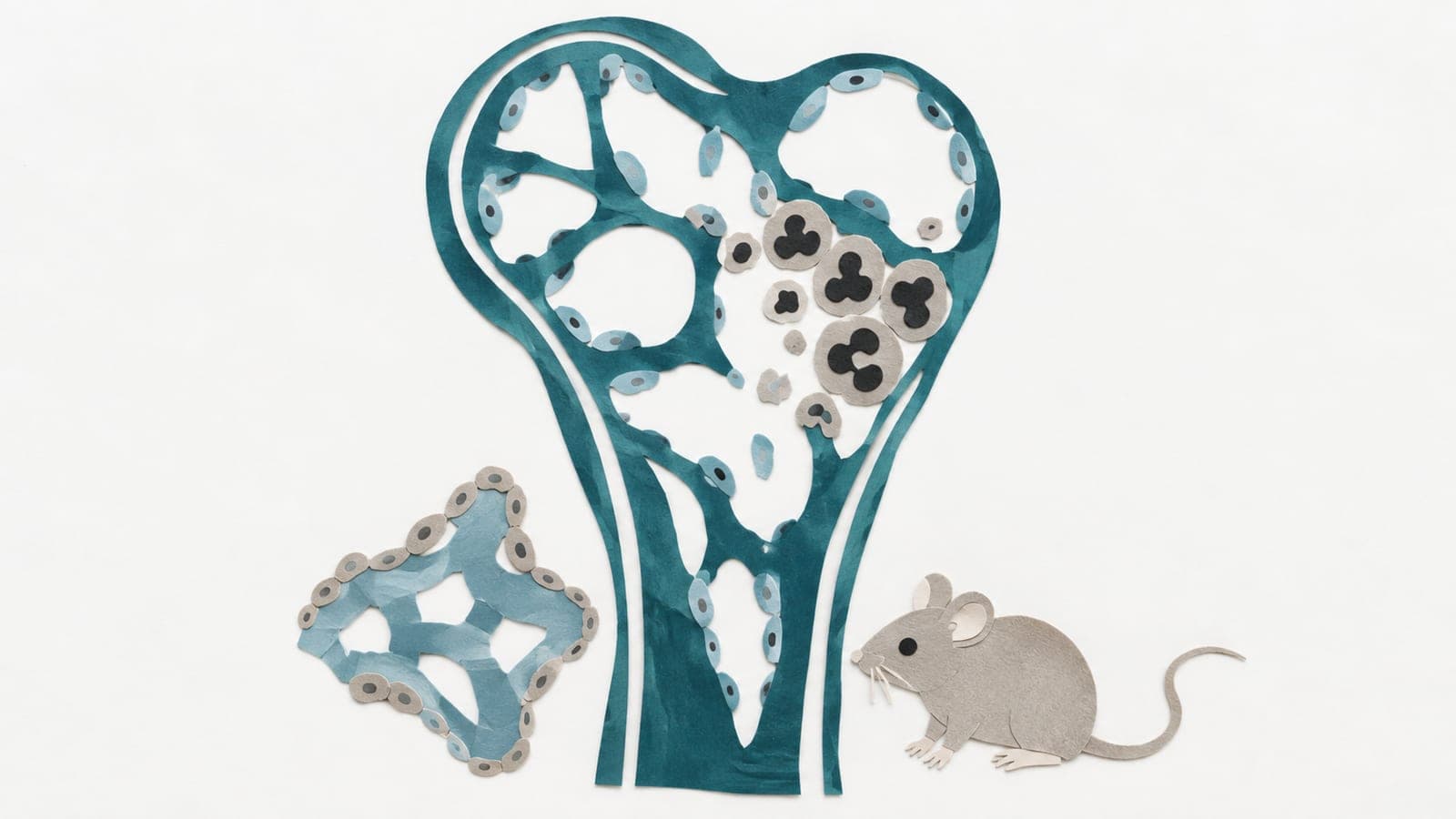
In an experiment described in a preprint, researchers studied genetically modified mice lacking an enzyme called MMP14 in their bone-forming and cartilage-forming cells. The enzyme helps regulate the extracellular matrix, the structural meshwork that surrounds cells.
Young mice lacking this enzyme initially gained bone mass because of elevated parathyroid hormone signalling. By adulthood, however, this unexpectedly shifted to severe osteopenia, a condition of low bone density. The team identified two linked mechanisms behind the decline: a gradual depletion of skeletal progenitor cells and harmful communication with the immune system. Without the enzyme, bone-forming cells called osteoblasts altered their ephrin signalling pathways. This attracted immune cells called neutrophils, which destroyed the osteoblasts.
Why it matters
The findings bear on inflammaging, the chronic low-grade inflammation that develops with age, and show how the cellular environment protects bone-forming cells. They suggest that stopping neutrophils from targeting osteoblasts could offer a way to preserve bone mass.
Caveats
The study was conducted in genetically altered mice rather than people. The paper is also a preprint that has not yet been peer-reviewed.
The paper
The university of Hong Kong; The University of Hong Kong
Research Square, 9 Oct 2026, Preprint, not peer-reviewed