Chrononutrition in the aging era: Circadian regulation of metabolism, resilience, and healthy longevity
Abstract
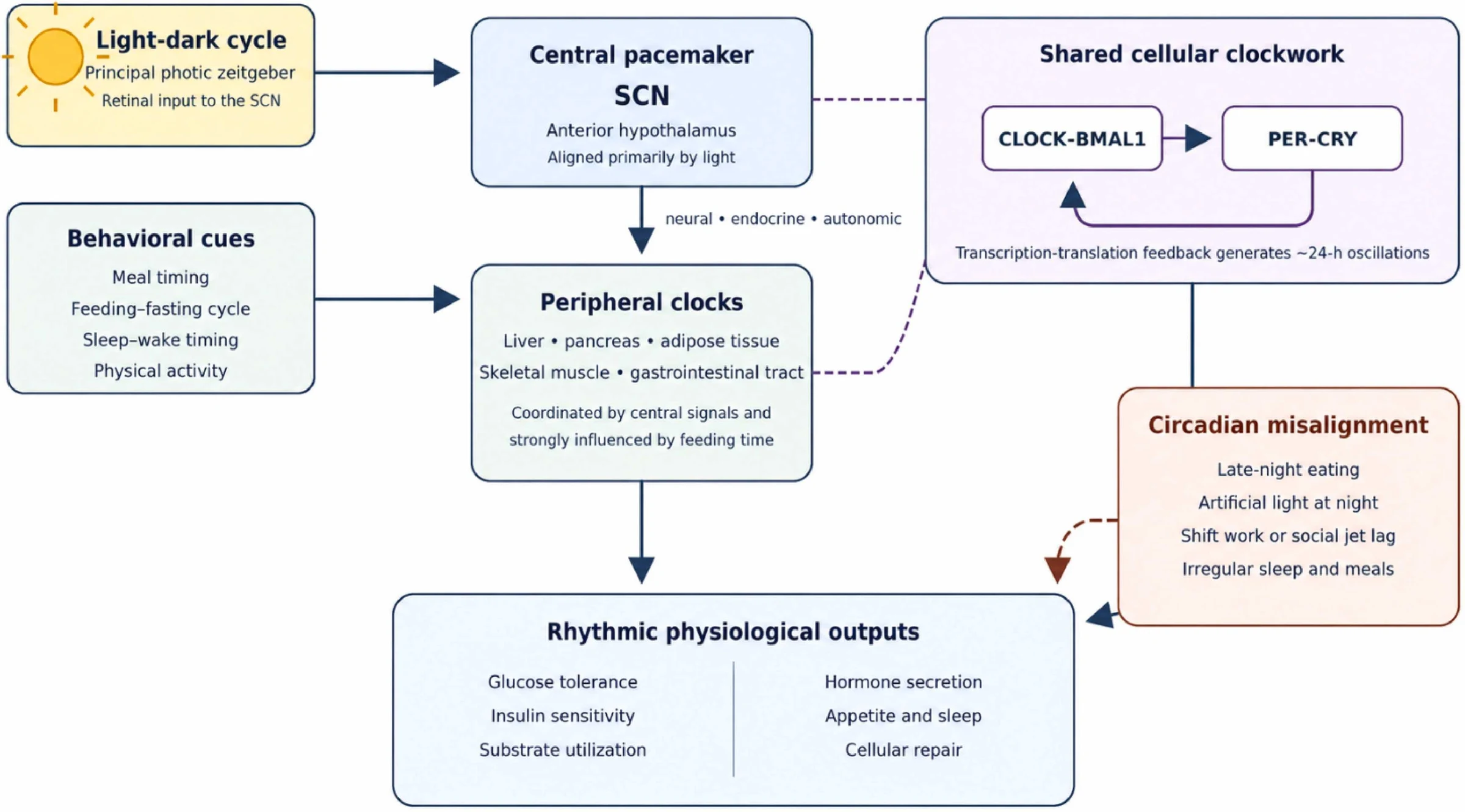
The increasing prevalence of obesity, type 2 diabetes, cardiovascular disease, and age-related disorders has been linked to a growing mismatch between modern lifestyles and the biological rhythms that regulate human physiology. Chrononutrition, which explores the interaction between meal timing, circadian rhythms, and metabolism, has emerged as a promising strategy to improve metabolic health and support healthy aging. This review examines the molecular and physiological foundations of chrononutrition, focusing on the interplay between central and peripheral circadian clocks, metabolic regulation, and aging processes. We discuss the role of environmental and behavioural zeitgebers, including light exposure, feeding schedules, sleep, and physical activity, in maintaining circadian alignment and metabolic homeostasis. Attention is given to Time-Restricted Eating (TRE) and related meal-timing interventions. Current evidence indicates that aligning food intake with endogenous circadian rhythms improves insulin sensitivity, metabolic flexibility, lipid metabolism, blood pressure regulation, and inflammatory balance, often independently of weight loss. Mechanistically, chrononutrition may also modulate key biological processes associated with aging, including mitochondrial function, autophagy, nutrient sensing, oxidative stress, and inflammaging. By restoring temporal organization across physiological systems, chrononutrition may enhance metabolic resilience and contribute to healthspan extension. Future studies should clarify its long-term effects on biological aging, resilience, and healthy longevity, while defining personalized interventions based on circadian phenotypes.
The paper
University of Perugia
Ageing Research Reviews, 13 Oct 2026