3D minichannel-morphed adipose stem cell-cartilage granule reconstituted tough grafts for repairing segmental tracheal defects in preclinical models
Abstract
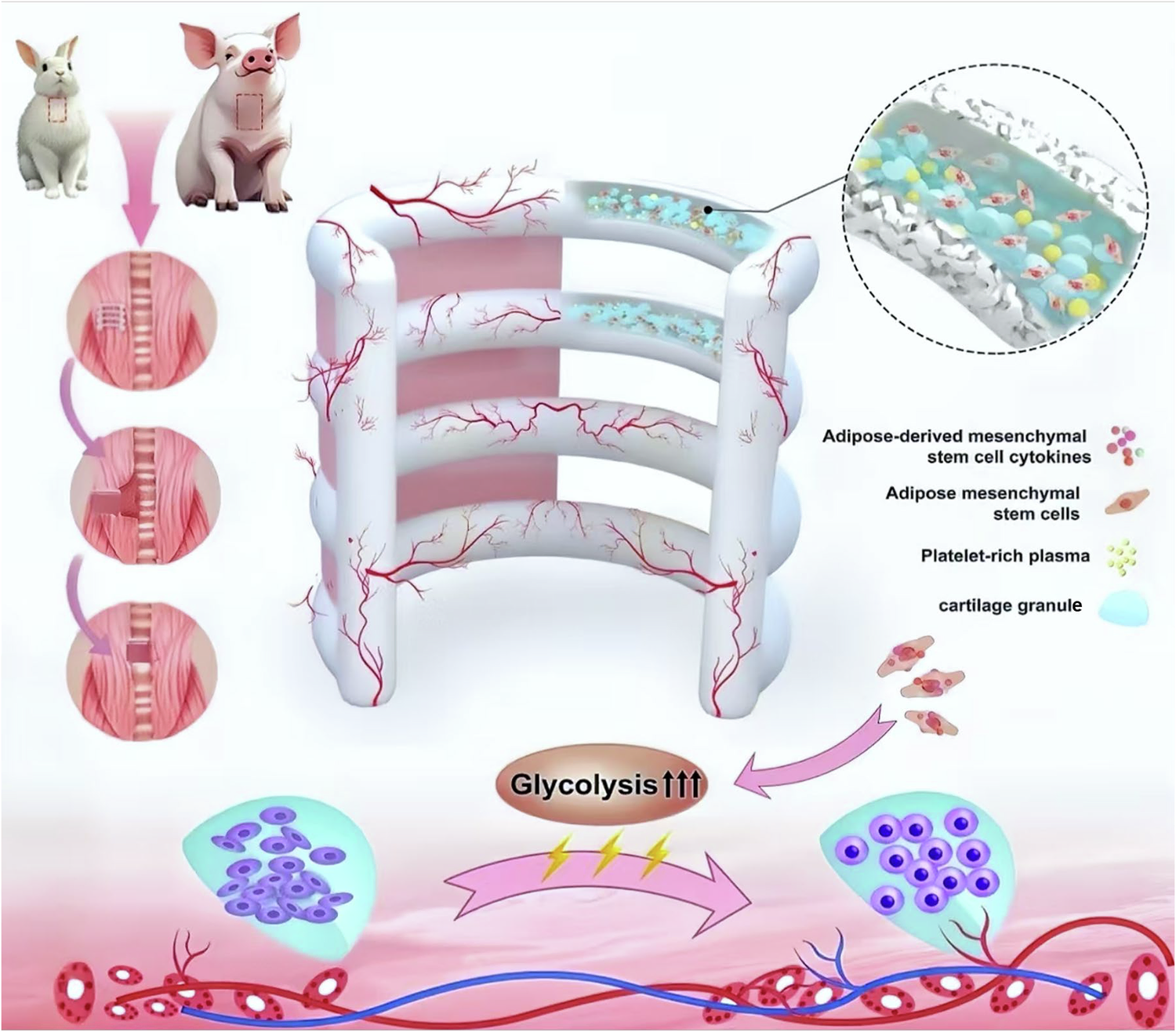
Segmental tracheal reconstruction requires biomimetic substitutes that replicate both the rigid stenting of cartilage rings and the nutritional support of vascularized fascia. However, conventional tissue engineering is hampered by scarce donor chondrocytes and lengthy cell expansion. Here, we show a rapid tracheal reconstruction strategy using three-dimensional printed porous minichannel scaffolds filled with cartilage granules, platelet-rich plasma, and adipose-derived stem cells. Short-term ectopic incubation enables the grafts to acquire native-like mechanical resilience and transmural vascularization within two weeks. Upon orthotopic transplantation to repair segmental tracheal defects in rabbit and porcine models, these bioengineered grafts maintain airway patency and support preclinical animal survival for up to 115 days. Mechanistically, adipose-derived stem cells enhance cartilage granule survival within the hypoxic minichannels by upregulating glycolytic activity in chondrocytes. By eliminating the need for cell isolation and expansion, this approach offers a translatable solution for bioengineered airway repair.
From the paper
- Events by group
In contrast, the CGPA group demonstrated superior outcomes, achieving survival rates of 91.67% (11/12) at 2 weeks and 77.78% (7/9, excluding scheduled two-week harvests) at 8 weeks, with the longest survival reaching 67 days.
Results, In situ repair of segmental tracheal defects in rabbits via 3D minichannel grafts
Quoted word for word from the full text on nature.com.
- Adipose-derived stem cells
- Bioengineered tracheal grafts
- Angiogenesis
- Glycolysis
- Segmental tracheal defects
- Pigs
The paper
Stomatology Hospital
Nature Communications, 11 Sep 2026