Mitochondrial transfer restored bone structure in animals
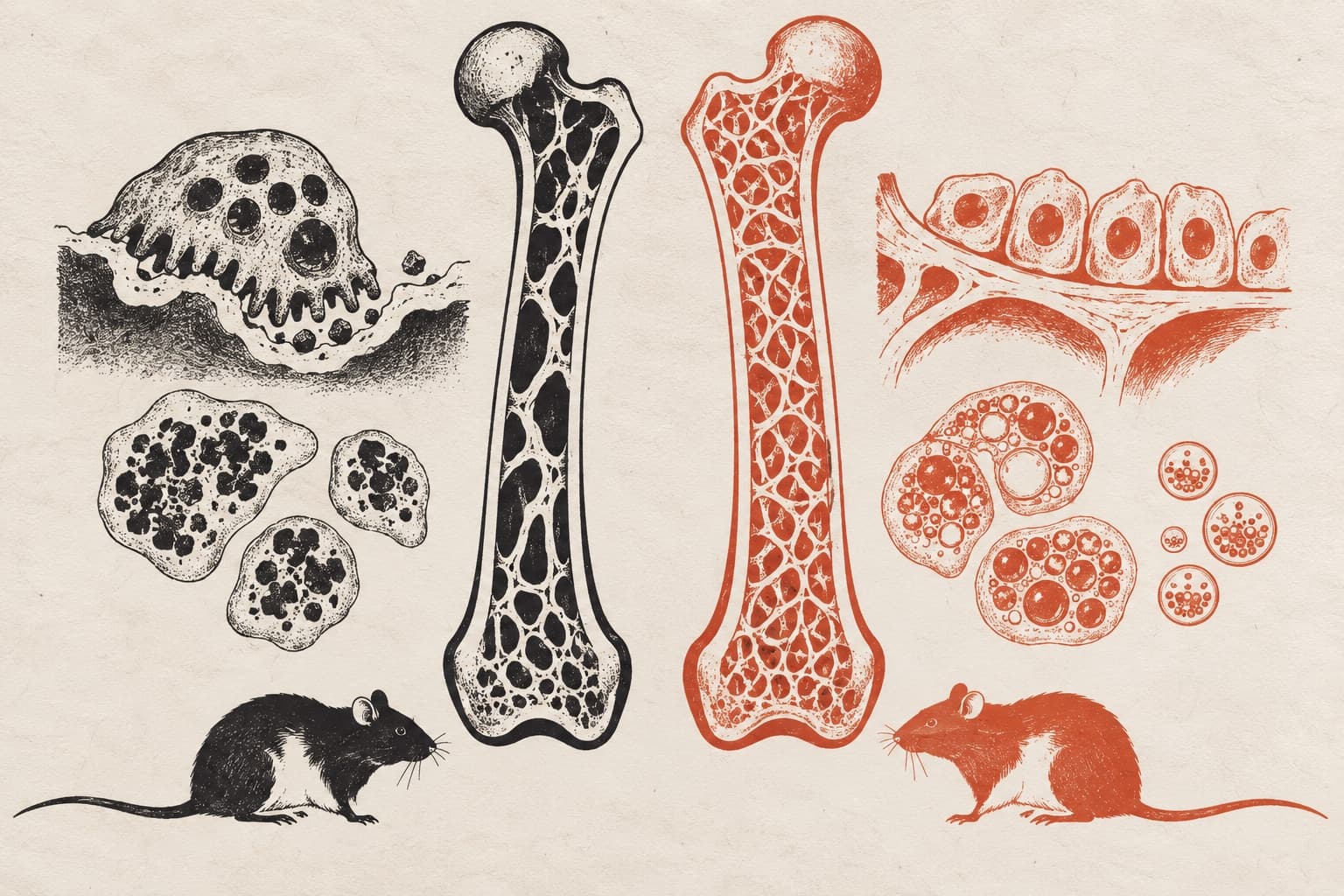
In an osteoporosis animal model, mitochondria from treated stem cells promoted blood vessel formation and restored the structure of spongy bone.
Advanced Functional Materials
Researchers tested a strategy for transferring mitochondria—energy-producing structures inside cells—in an animal model of osteoporosis induced by removing the ovaries. In cell experiments, they treated bone mesenchymal stem cells, which can develop into bone-forming cells, with a nanoscale material containing dexamethasone and metformin.
The material induced what the authors described as a rejuvenation-like state in the cells’ mitochondria. It reorganised the cells’ internal supporting framework and reduced mitochondrial splitting. Mitochondria from these treated cells could transfer to vascular endothelial cells, which line blood vessels. This enhanced the recipient cells’ multiplication and ability to form blood vessels. In the animal model, the mitochondrial transfer strategy promoted blood vessel formation and restored the internal architecture of spongy bone.
Why it matters
Osteoporosis is an age-related disease that weakens bone. The study explored mitochondrial regulation as a possible target for coordinating blood vessel growth and bone formation during regeneration.
Caveats
These animal and cell experiments did not establish whether the strategy would work in people. The abstract did not identify the animal species or report sample sizes.
The paper
Tongji University
Advanced Functional Materials · 27 Aug 2026