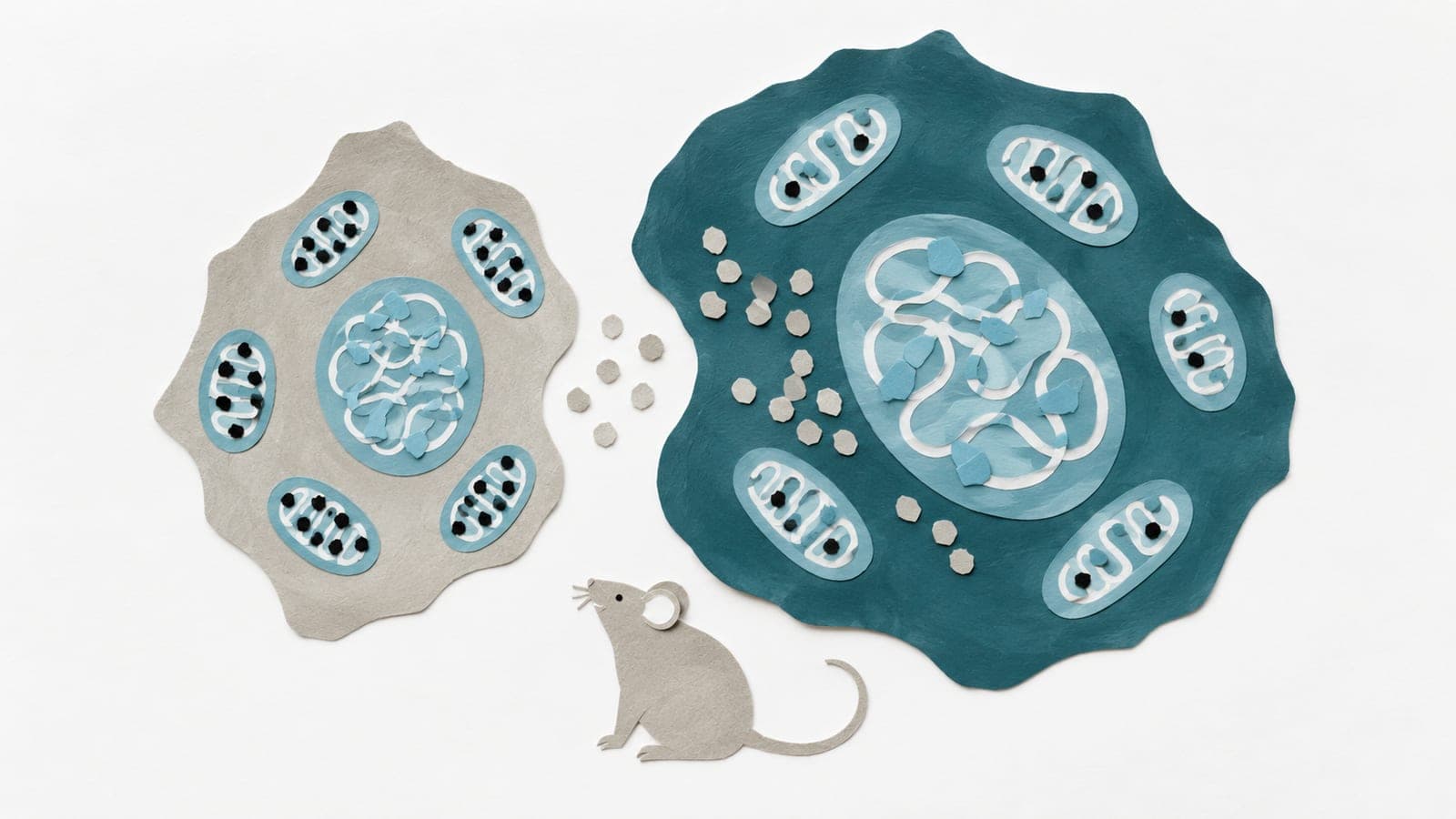
Bazi Bushen eased stress-induced signs of aging in mice
A 12-month chronic stress experiment in mice found that the compound medicine eased signs of aging and reduced inflammation across several tissues.
12 months
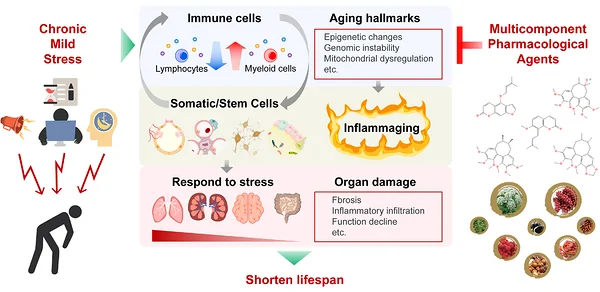
In mice, researchers used a 12-month experiment involving unpredictable chronic mild stress to study its effects on aging. Chronic stress worsened inflammation throughout the body, caused widespread tissue damage and shortened lifespan. Analysis of gene activity in individual cells from several tissues suggested changes in immune cell populations. The lungs and kidneys showed particularly pronounced stress responses.
The researchers also tested Bazi Bushen, a compound medicine, and another compound called beta-nicotinamide mononucleotide. Both eased stress-induced signs of aging. Bazi Bushen also restored balance in the immune system and reduced stress and inflammation across various tissues.
Why it matters
Chronic stress may raise the risk of age-related diseases. This work points to early intervention in chronic stress as a possible route to preventing or delaying those diseases.
Caveats
This was an experiment in mice, not evidence of benefits in people. The abstract did not report group sizes or treatment doses.