4-Octyl itaconate restores parotid gland function in aging mice
The itaconate derivative reduces fibrosis and lipid buildup while curbing oxidative stress through AMPK signaling pathways.
FASEB Journal
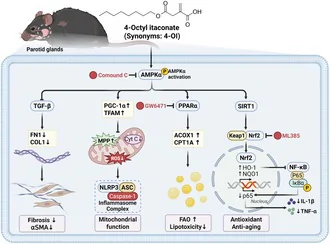
In 13-month-old male mice, daily treatment with 4-octyl itaconate for four weeks restored salivary secretion in aging parotid glands. Researchers administered 25 mg/kg of 4-octyl itaconate or vehicle to assess salivary flow rate and gland morphology. Molecular docking identified AMPKα as a direct target of the compound. Functional assays demonstrated that 4-octyl itaconate increased salivary flow and upregulated AMPKα phosphorylation. The compound reduced lipid droplet accumulation, suppressed collagen fibrosis, and increased fatty acid oxidation through AMPKα and PPARα pathways. Pharmacological inhibition of AMPKα or PPARα abolished these beneficial effects. In addition, treatment prevented age-related oxidative reactions, enhanced mitochondrial biogenesis, and activated the protective Nrf2 signaling pathway.
Why it matters
Parotid gland dysfunction frequently impairs saliva production in older individuals, and targeting metabolic and antioxidant pathways may help preserve glandular function during aging.
Caveats
This study was conducted exclusively in male mice over a four-week treatment period, and the findings have not been evaluated in humans.
The paper
Hunan University of Traditional Chinese Medicine
FASEB Journal · 30 Sep 2026