Sport participation is linked to healthier aging in older adults
In a study of 6,482 older adults, sport participants scored 0.638 on a healthy aging index compared with 0.577 for non-participants.
Frontiers in Public Health
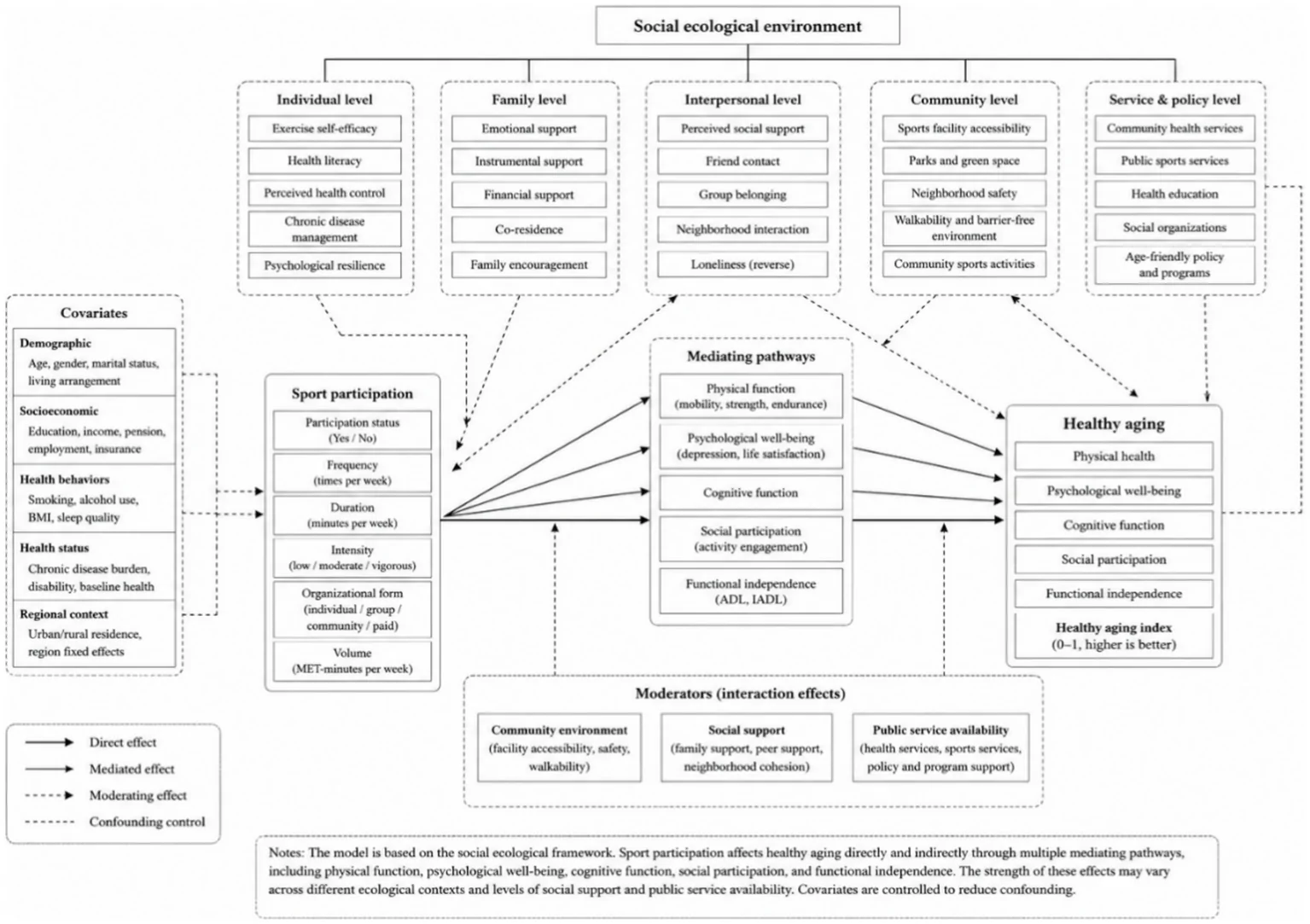
Researchers analyzed data from 6,482 adults aged 60 years and above in China to evaluate how sport participation relates to a multidimensional healthy aging index covering physical, psychological, cognitive, social, and functional domains. Overall, 44.3% of respondents reported participating in sport or regular exercise.
Sport participation was positively associated with healthy aging after adjusting for demographic, socioeconomic, health-related, and community factors. The relationship followed a dose-response pattern, with scores rising as weekly activity frequency increased from less than one day up to daily participation. Mediation analysis indicated that physical function, social support, and psychological resources explained 29.5%, 24.6%, and 19.7% of the total association, respectively. The association was stronger among adults aged 80 and older, those living alone, and participants with greater access to community sports facilities.
Why it matters
Maintaining functional independence and psychological well-being is critical to sustaining healthspan in late life. These findings highlight how regular exercise interacts with social and environmental resources to support multidimensional healthy aging.
Caveats
Because the study used an observational design, it cannot prove that sport participation causes improvements in healthy aging. The analyses also relied on self-reported activity data within a single national population in China.
The paper
Hunan Normal University
Frontiers in Public Health · 17 Sep 2026