Higher fitness links to lower cognitive impairment in frail adults
In prefrail and frail adults, top-quartile cardiorespiratory fitness was tied to lower odds of cognitive impairment (OR 0.15) versus the lowest quartile.
GeroScience
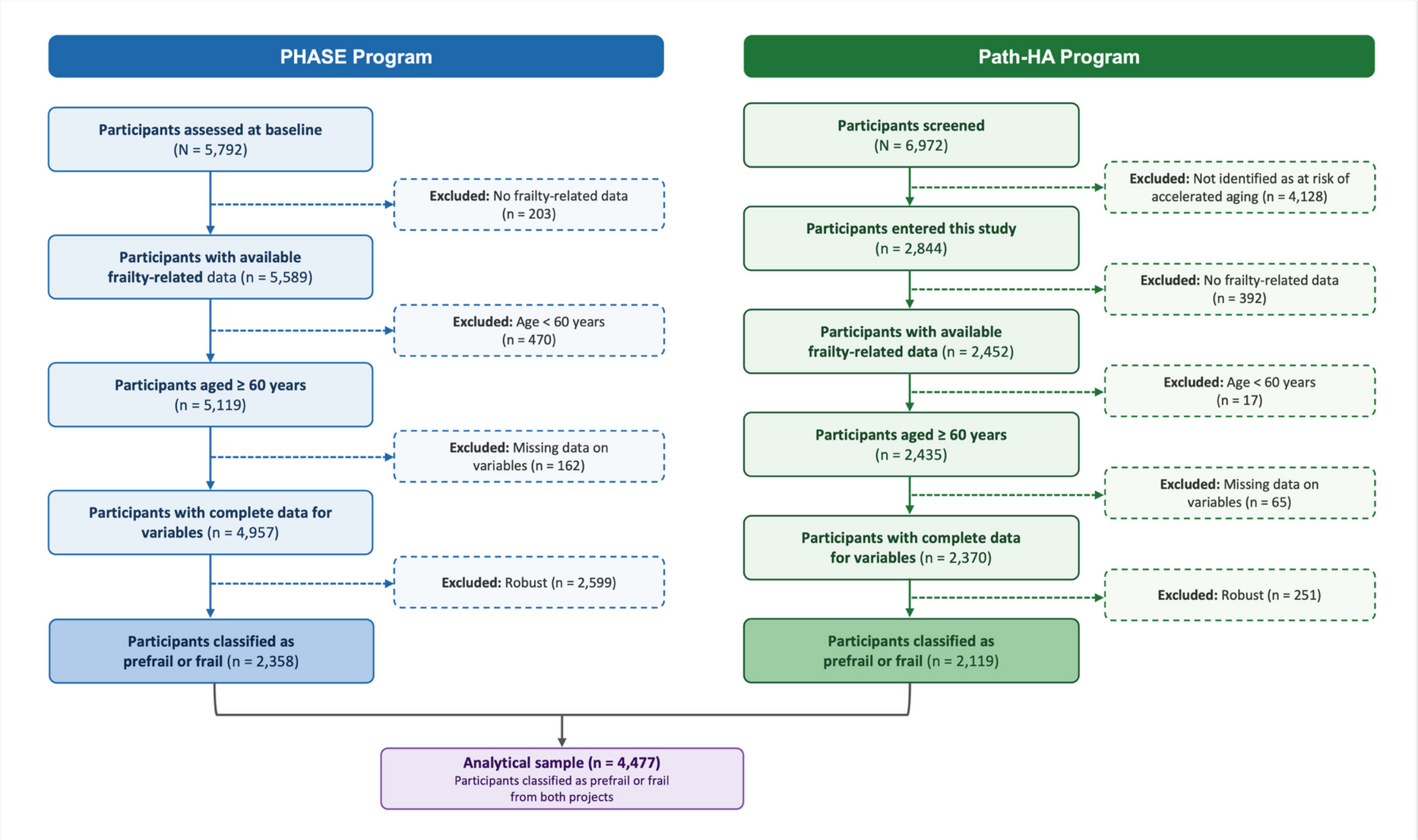
Researchers analyzed data from 4,477 prefrail and frail older adults with a mean age of 72.2 years, of whom 72.5% were female. The cross-sectional study evaluated cardiorespiratory fitness using a 2-minute walk test and muscle strength via handgrip strength. Cognitive impairment, identified in 315 participants (7.0%) using the Montreal Cognitive Assessment 5-minute protocol, served as the primary outcome.
Higher cardiorespiratory fitness was independently associated with lower odds of cognitive impairment, comparing the highest to the lowest quartile (OR = 0.15, 95% CI 0.08–0.29). Muscle strength showed an attenuated association after adjusting for fitness (Q4: OR = 0.66, 95% CI 0.45–0.97). Participants with both high fitness and high strength had the lowest odds of impairment compared to those low in both measures (OR = 0.38, 95% CI 0.26–0.56).
Why it matters
Cognitive decline is a critical challenge in vulnerable aging populations with reduced vitality. The findings suggest that targeting cardiorespiratory capacity may provide stronger cognitive protection than focusing on muscle strength alone.
Caveats
Because the study used a cross-sectional design, it demonstrates associations but cannot prove that higher cardiorespiratory fitness directly prevents cognitive impairment.
The paper
University of Hong Kong
GeroScience · 1 Oct 2026