High-intensity walking improves frailty in older adults
Frailty category improved in 69.6% of high-intensity walkers compared with 46.4% of casual-speed walkers over a 16-week intervention.
PLOS One
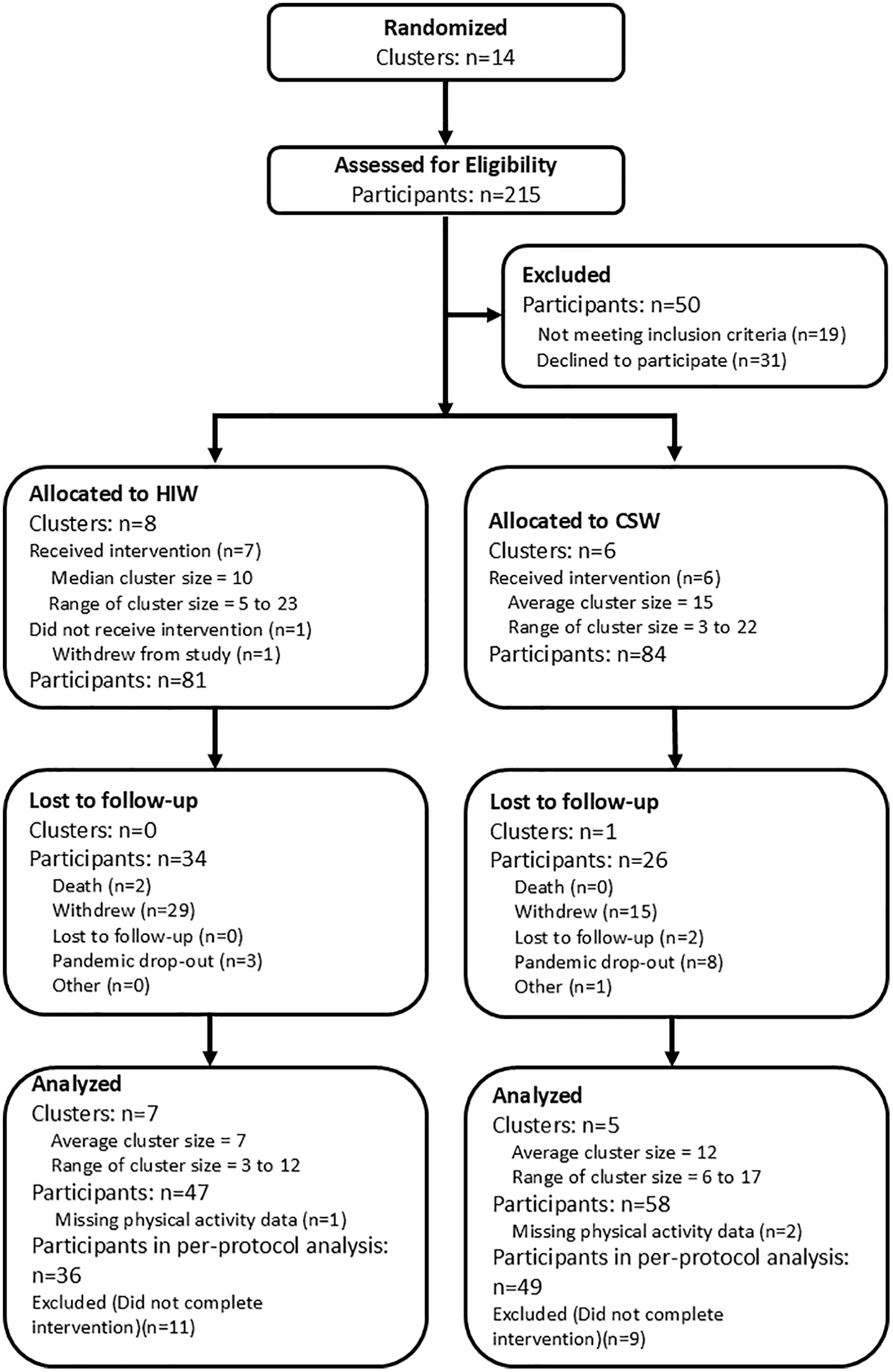
In a cluster-randomized trial of 105 prefrail and frail older adults aged 60 and older living in retirement communities, researchers tested whether walking intensity influenced frailty and physical function. Fourteen retirement communities were randomized to either high-intensity walking, targeting 70% of maximum heart rate, or casual-speed walking below 60% of maximum heart rate. Participants attended supervised 45-minute sessions three times weekly for 16 weeks.
At 16 weeks, 32 of 46 (69.6%) high-intensity walkers improved by at least one frailty category on the SHARE-FI index compared with 26 of 56 (46.4%) casual-speed walkers (OR = 2.91, 95% CI 1.19–7.13, p = 0.02). The high-intensity group also achieved greater improvements in usual gait speed (mean difference = 0.08 m/s) and six-minute walk distance (mean difference = 48.99 m), though changes in continuous frailty scores did not differ significantly between groups.
Why it matters
Frailty is a primary driver of functional decline and disability in late life, but the optimal exercise intensity for frail populations has remained uncertain. These findings show that higher cardiovascular training intensities can be tolerated and yield functional benefits in prefrail and frail adults.
Caveats
Thirty-four participants in the high-intensity group and 26 in the casual group did not complete the intervention, and conservative sensitivity analyses adjusting for missing data yielded non-significant differences. In addition, the cohort was predominantly female (79%) and non-Hispanic White (75%).
The paper
Northwestern University
PLOS One · 30 Sep 2026