Spousal loss is tied to poorer memory and executive function
In a meta-analysis of 18,551 older adults across six countries, widowed individuals scored lower in memory (β = -0.07) and executive function (β = -0.08).
Epidemiology and Psychiatric Sciences
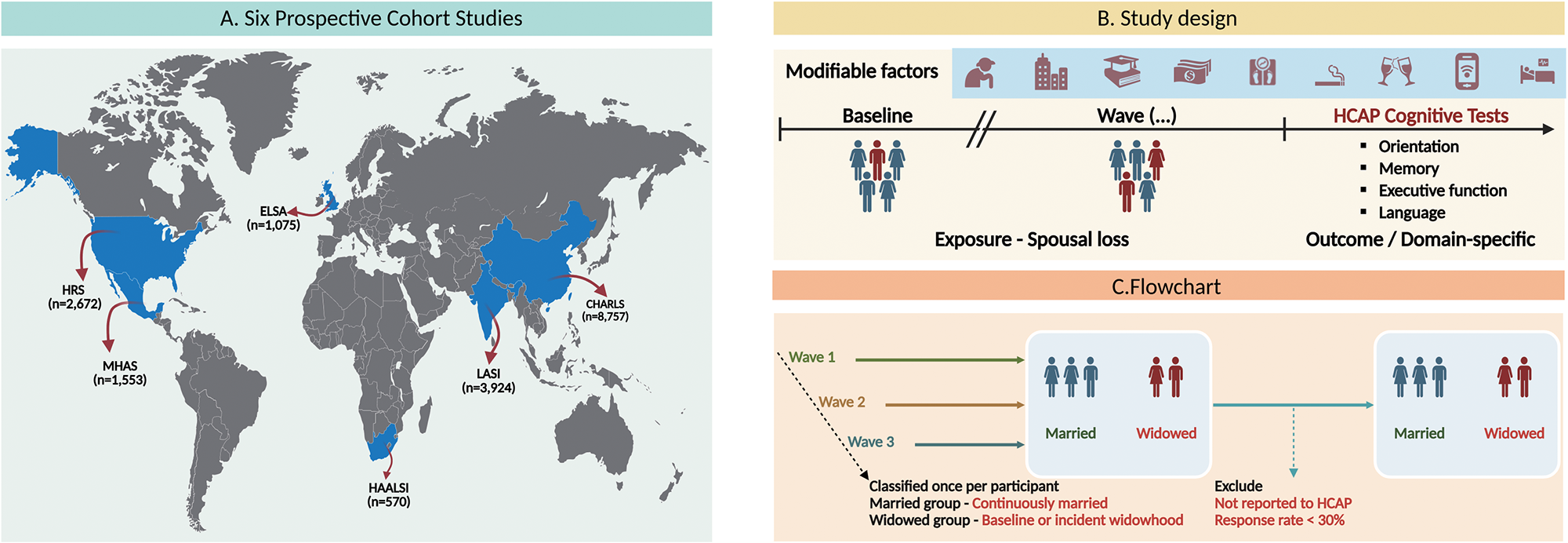
Researchers analyzed data from 18,551 older adults across six prospective cohort studies in the United States, England, Mexico, China, India, and South Africa. Mean cohort ages ranged from 61.39 to 71.06 years, and widowhood prevalence spanned from 14.1% in China to 53.9% in South Africa. The team assessed orientation, memory, executive function, and language.
Meta-analyses showed spousal loss was associated with poorer memory (multivariable-adjusted β = -0.07) and executive function (β = -0.08), with no significant links to orientation or language. Sex-stratified analyses linked widowhood to lower executive function in men (β = -0.14) and lower memory in women (β = -0.07). In widowed individuals, higher education, internet use, and higher body mass index were negatively associated with cognitive decline risk.
Why it matters
The findings suggest major late-life social stressors such as partner bereavement are associated with domain-specific cognitive deficits. Understanding these ties can help researchers identify which aspects of cognitive aging are most sensitive to social disruption.
Caveats
The observational design demonstrates associations rather than direct cause and effect. In addition, findings varied across countries, with the English cohort displaying positive associations that conflicted with the other five cohorts.
The paper
Loss of a spouse and risk of cognitive decline: insights from six prospective cohort studies
Peking University · Aarhus University
Epidemiology and Psychiatric Sciences · 30 Sep 2026