Linguistic features from recall tests detect cognitive impairment
In 710 older adults, delayed recall linguistic scores predicted cognitive impairment with an AUC-PR of 0.77, compared with 0.81 for traditional scoring.
Journal of the International Neuropsychological Society
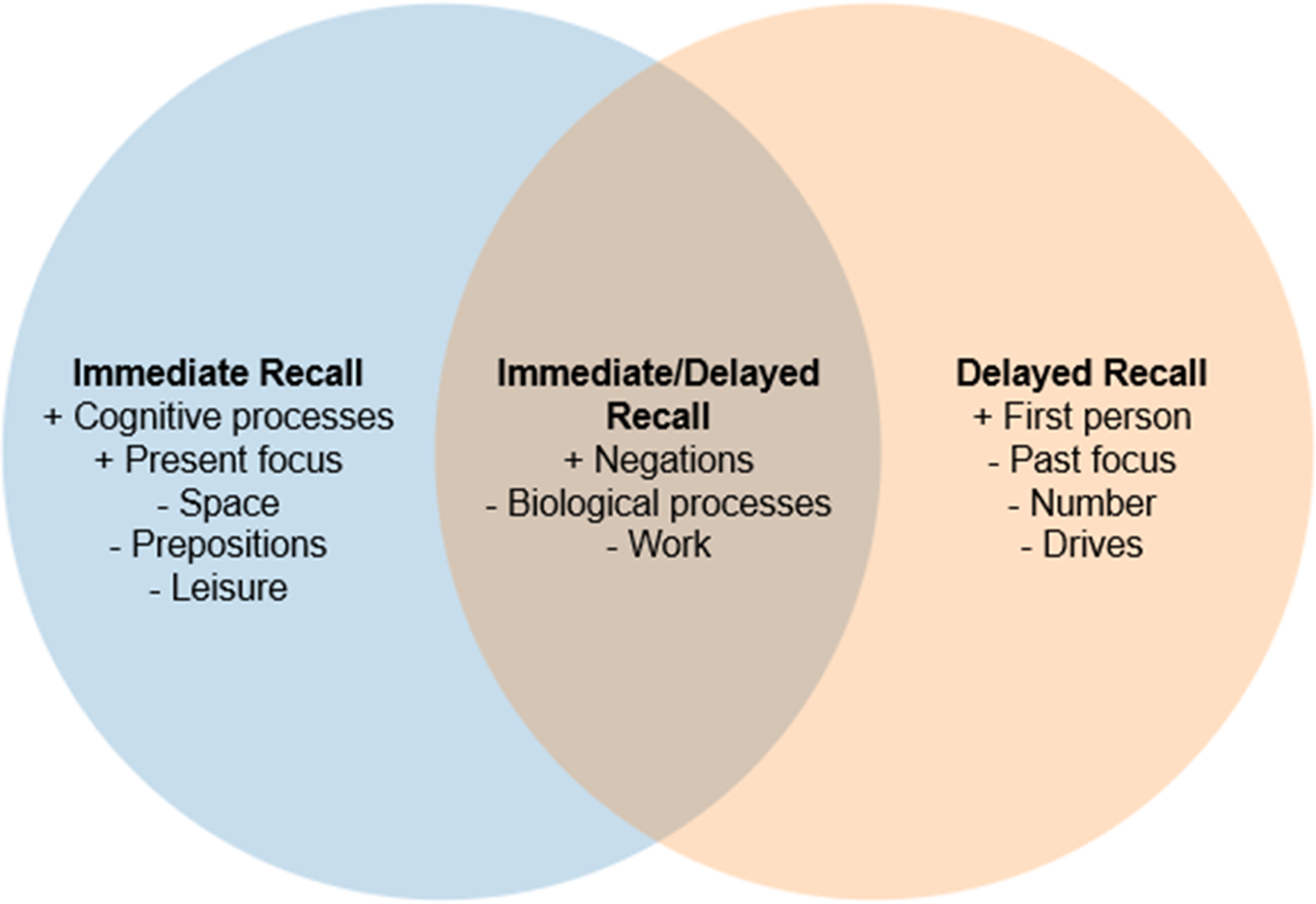
In 710 older adults from the Long Life Family Study, researchers analyzed digital voice recordings from logical memory tests. The cohort included 598 individuals with normal cognition and 112 with cognitive impairment. Investigators built linguistic polyfeature scores from weighted sums of speech characteristics captured during immediate and delayed paragraph recall.
Twelve linguistic features and higher summary scores were associated with cognitive impairment, with odds ratios of 1.05 for immediate recall and 1.07 for delayed recall. The delayed recall score approached the classification accuracy of traditional scoring, yielding an AUC-PR of 0.77 compared to 0.81. Higher delayed recall scores were also associated with lower cognitive screener performance over an average of 7 years of follow-up.
Why it matters
Quantifying language patterns from spoken memory tasks could support automated screening pipelines to detect age-related cognitive decline.
Caveats
The study was observational and conducted within a family study cohort, meaning the findings require validation in broader community and clinical populations.
The paper
Linguistic features from paragraph recall are markers of cognitive impairment
Show 6 more authors
Sanford H. Auerbach, Thomas T. Perls, Stephanie Cosentino, Rhoda Au, David J. Libon, Paola Sebastiani,Boston University
Journal of the International Neuropsychological Society · 30 Sep 2026