GLP-1 receptor agonists link to lower stroke and Alzheimer risk
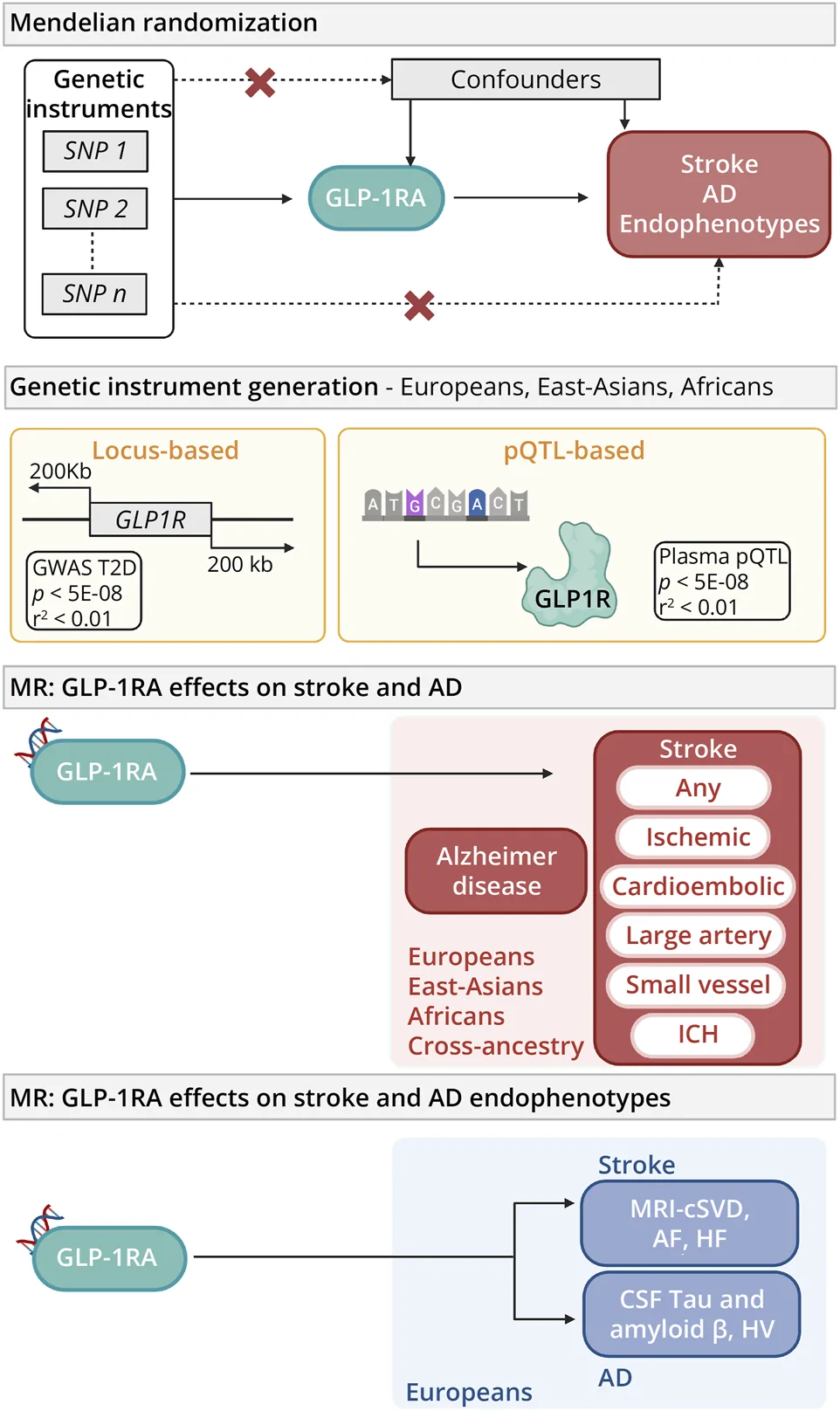
A cross-ancestry Mendelian randomization study of up to 1,812,017 individuals linked genetically proxied GLP-1 receptor agonist exposure to reduced risk of stroke and Alzheimer disease.
Neurology Genetics
The study evaluated human data from participants of European, East-Asian, and African ancestry using large-scale genome-wide association studies encompassing 3,026 to 1,812,017 individuals. Researchers conducted a two-sample Mendelian randomization study using both locus-based and protein quantitative trait loci approaches to model genetically proxied glucagon-like peptide-1 receptor agonist (GLP-1RA) exposure. Genetic instruments were based on type 2 diabetes-associated variants within the GLP1R gene and pQTLs for circulating GLP-1R protein levels. In European participants, locus-based analyses identified significant protective associations between GLP-1RA exposure and both any stroke and ischemic stroke. Overall, the cross-ancestry analyses indicated that GLP-1RAs may provide protective effects against stroke, particularly ischemic and cardioembolic subtypes, as well as Alzheimer disease.
Why it matters
Stroke and dementia are leading drivers of late-life disability, and evidence that GLP-1 receptor signaling associates with lower risk across diverse ancestries highlights metabolic pathways as potential targets to protect the aging brain.
Caveats
The findings rely on genetically proxied drug effects from observational genetic data rather than clinical drug administration. Experimental models and randomized clinical trials are needed to confirm brain health benefits and establish the underlying mechanisms.
The paper
Show 19 more authors
Callistus A. Akinleye, David‐Alexandre Trégouët, Rufus Akinyemi, Daichi Shigemizu, Motunrayo Mojoyin Coker, Joshua Odunayo Akinyemi, Hemant K. Tiwari, Daniel I. Chasman, Bruce I Ovbiagele, Hugues Chabriat, Vincent Mooser, Thierry Couffinhal, Aniket Mishra, Carlos C Cruchaga, Christiane Reitz, Brian W. Kunkle, Yoichiro Kamatani, Mayowa Ojo Owolabi, Kamel Mohammedi,Université de Bordeaux · Centre National de la Recherche Scientifique
Neurology Genetics · 25 Sep 2026