Physical activity links to lower dementia risk in hypertension
In an accelerometer cohort, the highest quartile of moderate activity showed a dementia hazard ratio of 0.41 compared with the lowest quartile.
Frontiers in Aging Neuroscience
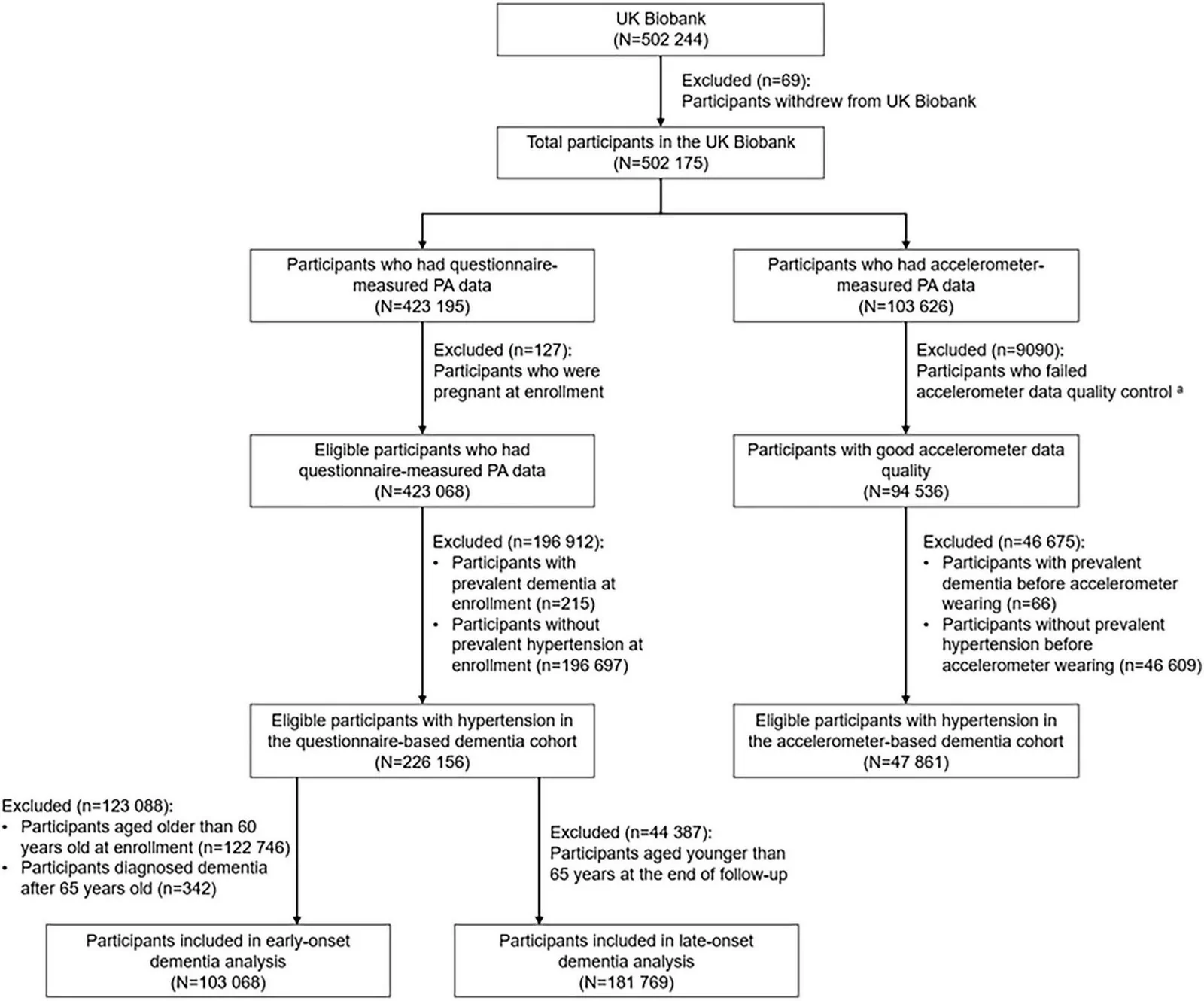
In a study of UK adults with hypertension, researchers analyzed associations between physical activity and incident dementia using UK Biobank data. The team examined 47,861 hypertensive participants who wore wrist accelerometers for seven days, alongside 226,156 participants who completed physical activity questionnaires.
Over a median follow-up of 8.1 years in the accelerometer cohort, 574 participants developed dementia. Compared with the lowest quartile, the highest quartiles of moderate activity (HR 0.41), vigorous activity (HR 0.34), and total activity (HR 0.63) showed lower dementia risks. In the questionnaire cohort, tracked over a median of 13.7 years, leisure-time exercise and housework also tied to lower dementia risks. Moderate activity showed a stronger relative risk reduction for early-onset than late-onset dementia.
Why it matters
Hypertension is a key vascular risk factor for neurodegeneration in older adults. These findings suggest that higher-intensity daily movement could help mitigate cognitive decline in high-risk cardiovascular populations.
Caveats
The observational design demonstrates associations rather than causal effects. Furthermore, the reliance on hospital inpatient and death records likely missed milder cases of dementia.
The paper
Association between physical activity and incident dementia among individuals with hypertension
Chinese Academy of Medical Sciences & Peking Union Medical College
Frontiers in Aging Neuroscience · 15 Sep 2026