Rapamycin reduced plaque inflammation in aged mice
Macrophages, a type of immune cell, occupied 0.73 versus 0.95 times 100,000 square micrometers of plaque area in rapamycin-treated and control mice.
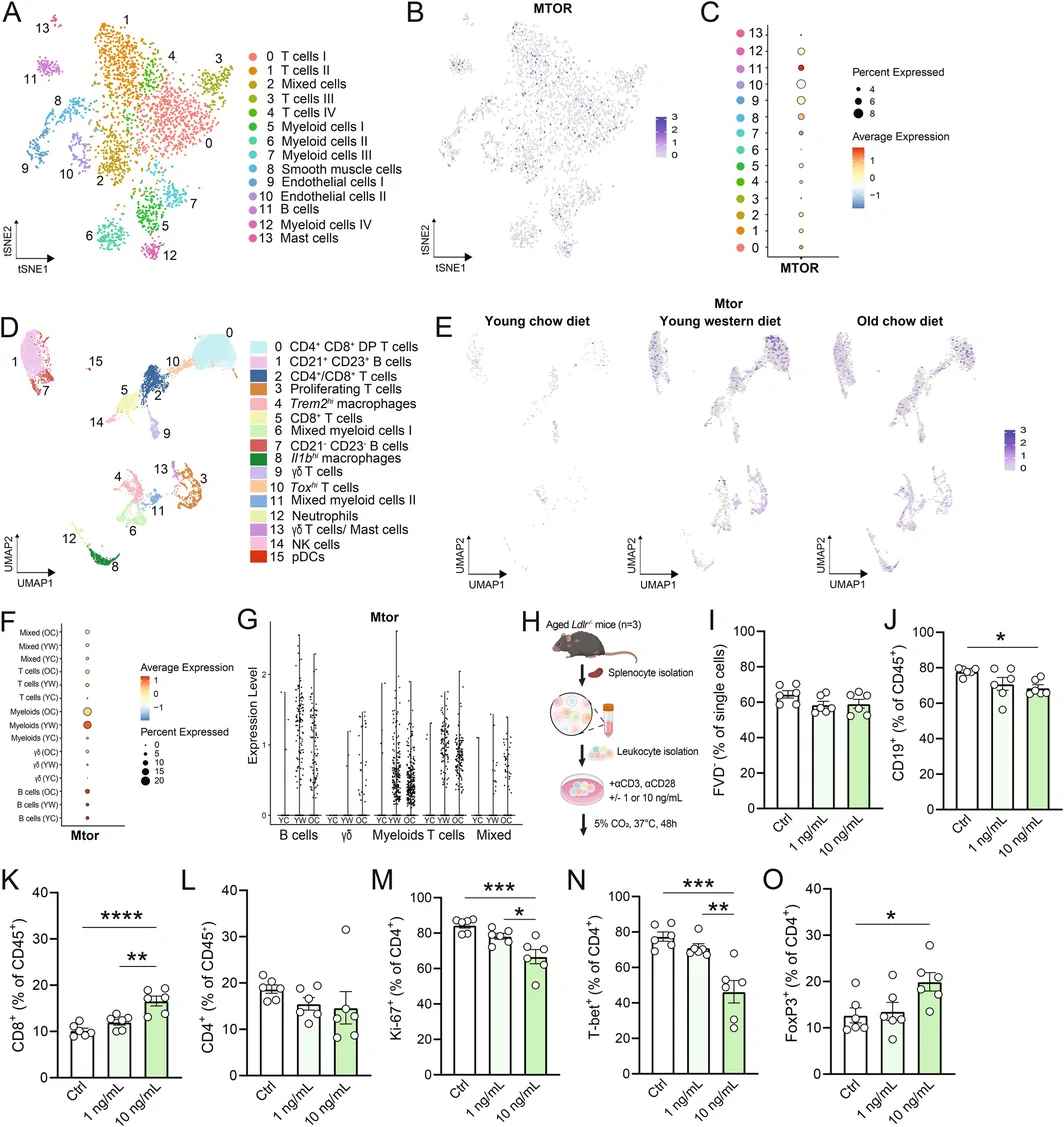
Limit: Lesion size was not measured in the aortic arch used for immune profiling
Edited by Boris Djordjevic · AgingResearch.News
Male mice aged 80–90 weeks with established artery plaques underwent a randomized animal experiment. They lacked the low-density lipoprotein receptor, a protein that helps cells take up cholesterol. Researchers assigned 16 mice per group to rapamycin or control solvent. They injected rapamycin into the abdomen at 1 milligram per kilogram three times weekly for eight weeks.
Rapamycin reduced the plaque area occupied by macrophages, a type of immune cell. It also reduced T-cell numbers in arteries and immune tissues. Regulatory T cells, which restrain immune responses, made up a larger share. Antibody levels also fell. Plaque size did not change. Total cholesterol rose to 322.7 milligrams per deciliter, compared with 258.4 in controls.
Why it matters
Aging changes immune activity and raises the risk of atherosclerosis, the buildup of artery plaques. The authors suggest that targeting immune aging may help limit the inflammation involved in this disease.
Caveats
The experiment assessed plaque and immune changes in genetically modified male mice, not benefits in people. Researchers excluded four mice with tumors from all analyses: three given rapamycin and one control.
From the paper
- Limitation
Although plaque burden in the aortic root was unaffected by rapamycin treatment, lesion size was not assessed in the aortic arch, as we used this tissue for detailed immune profiling using scRNAseq.
Quoted word for word from the full text on PubMed Central.


Comments
Be the first to comment.