Protein loss in vessel-lining cells increased plaque area in mice
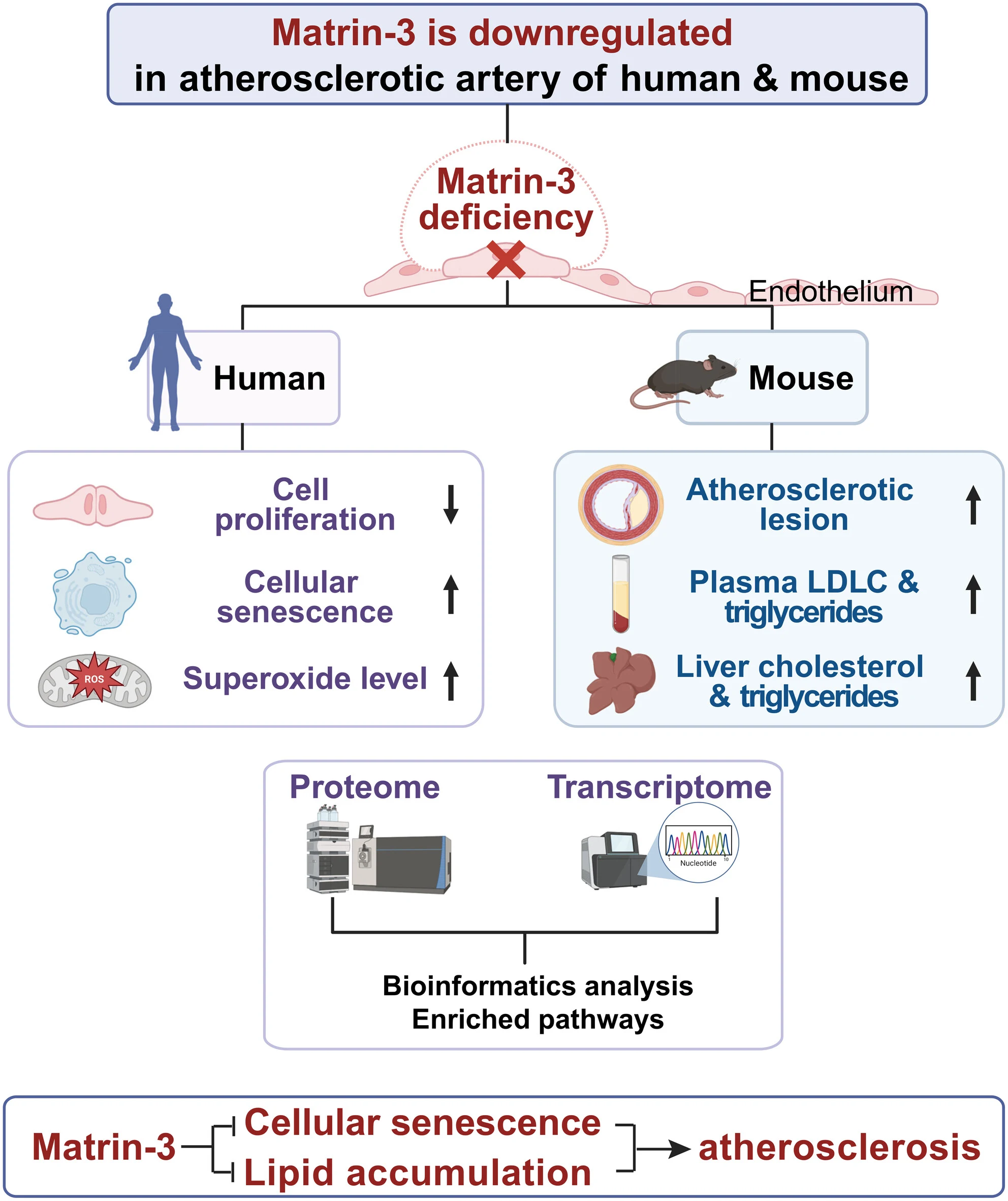
Mice lacking Matrin-3 in vessel-lining cells had a 1.41-fold increase in artery plaque area compared with mice without the deficiency.
Limit: Local vessel effects and liver-driven lipid changes were not separated experimentally
An animal experiment used mice lacking a receptor for cholesterol-carrying particles. Researchers removed Matrin-3, a protein that binds DNA and RNA, from cells lining blood vessels. Mice with this deficiency had more artery plaque. The deficiency was associated with higher cholesterol and triglycerides, another type of fat, in blood and liver. It also induced liver fat buildup, scarring and inflammation.
In human vessel-lining cells grown in the lab, reducing Matrin-3 induced senescence, a state in which cells stop dividing. It also impaired the function of mitochondria, the cells’ energy-producing structures.
Why it matters
Cellular senescence is relevant to how tissues change with age. The work points to Matrin-3 as a possible link between this process and disrupted fat regulation in artery disease.
Caveats
The experiments used genetically modified mice and cells grown in the lab. They did not test whether changing Matrin-3 could treat artery disease in people.
The paper
University of Nebraska-Lincoln
FASEB Journal, Oct 18, 2026