Sugar-loaded nanoparticles reduced skin aging signs in mice
In young female mice exposed to ultraviolet light for six weeks, sugar-loaded nanoparticles reduced skin aging signs more than the sugar alone.
Limit: Mice were sacrificed after 6-week UV irradiation, preventing assessment of lasting benefits
Edited by Boris Djordjevic · AgingResearch.News
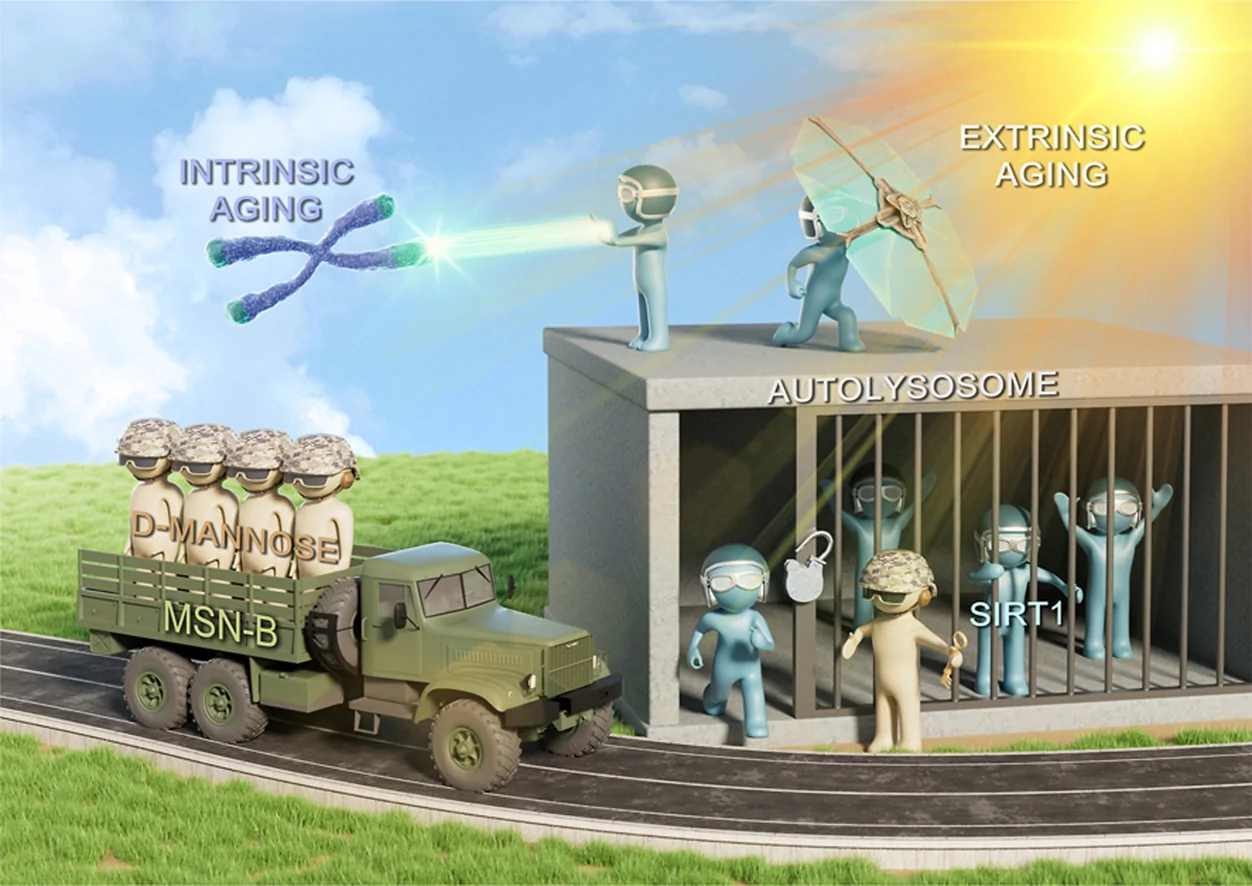
Female C57BL/6J mice aged five to six weeks underwent a six-week experiment modeling skin aging caused by ultraviolet light. Researchers applied 1% D-mannose, a sugar, or a 1% D-mannose-loaded nanoparticle formulation to their backs twice weekly after light exposure. D-mannose reduced signs of senescence, a state in which cells stop dividing, and restored deposits of the material surrounding cells. The nanoparticles kept the sugar in skin longer and reduced senescence signs more than D-mannose alone.
In human skin fibroblasts—connective-tissue cells from a cell line grown in the lab—D-mannose bound to SIRT1, a protein involved in cell recycling, and prevented its breakdown. The authors linked this to activation of autophagy, the cell’s recycling process, and reduced senescence.
Why it matters
Skin aging can impair the skin’s physical function and raise the risk of age-related skin disease. The authors propose topical D-mannose delivery as a potential approach to alleviating skin aging.
Caveats
The mouse experiment modeled ultraviolet-induced skin aging in young females, not naturally aged animals. The formulation was tested in human cells grown in the lab, not in people.
The paper
Southern Medical University
Materials Today Bio, Aug 21, 2026, Open access


