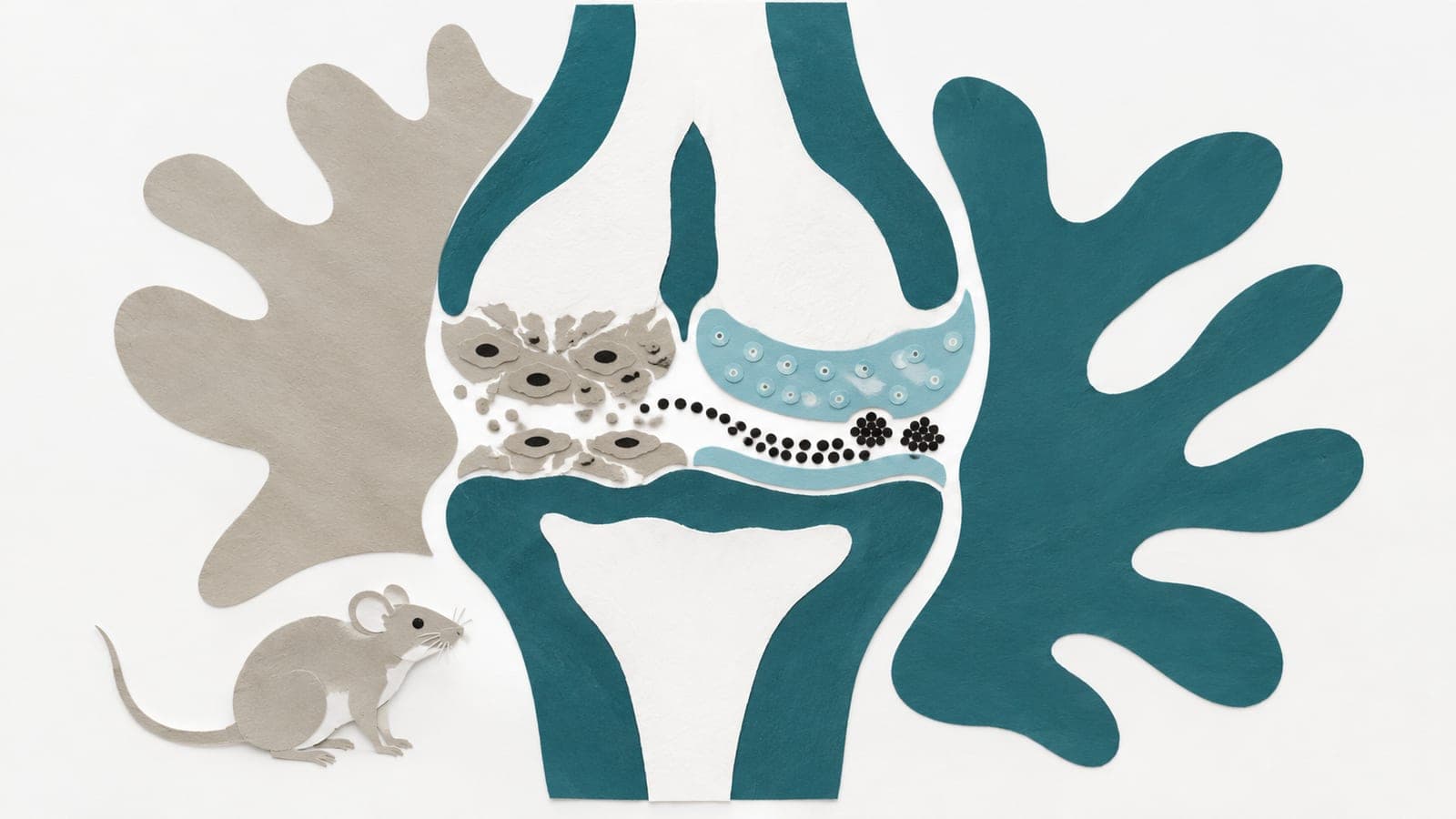
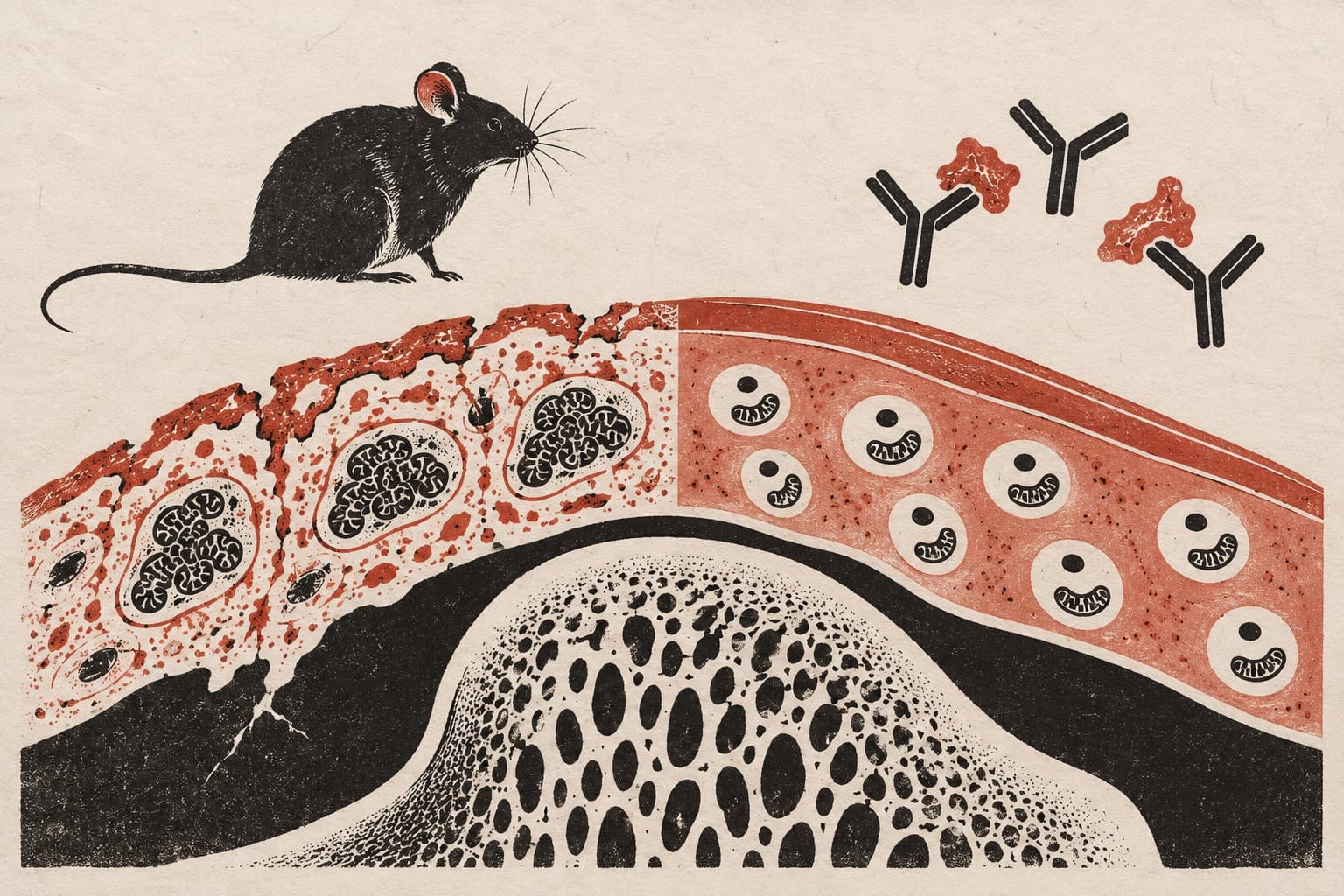
Nanoparticles slowed osteoarthritis progression in mice
Particles targeting cells’ energy-producing structures reduced joint inflammation and cartilage damage in a mouse model of the age-related disease.
Limit: Adverse effects were not reported
Edited by Boris Djordjevic · AgingResearch.News
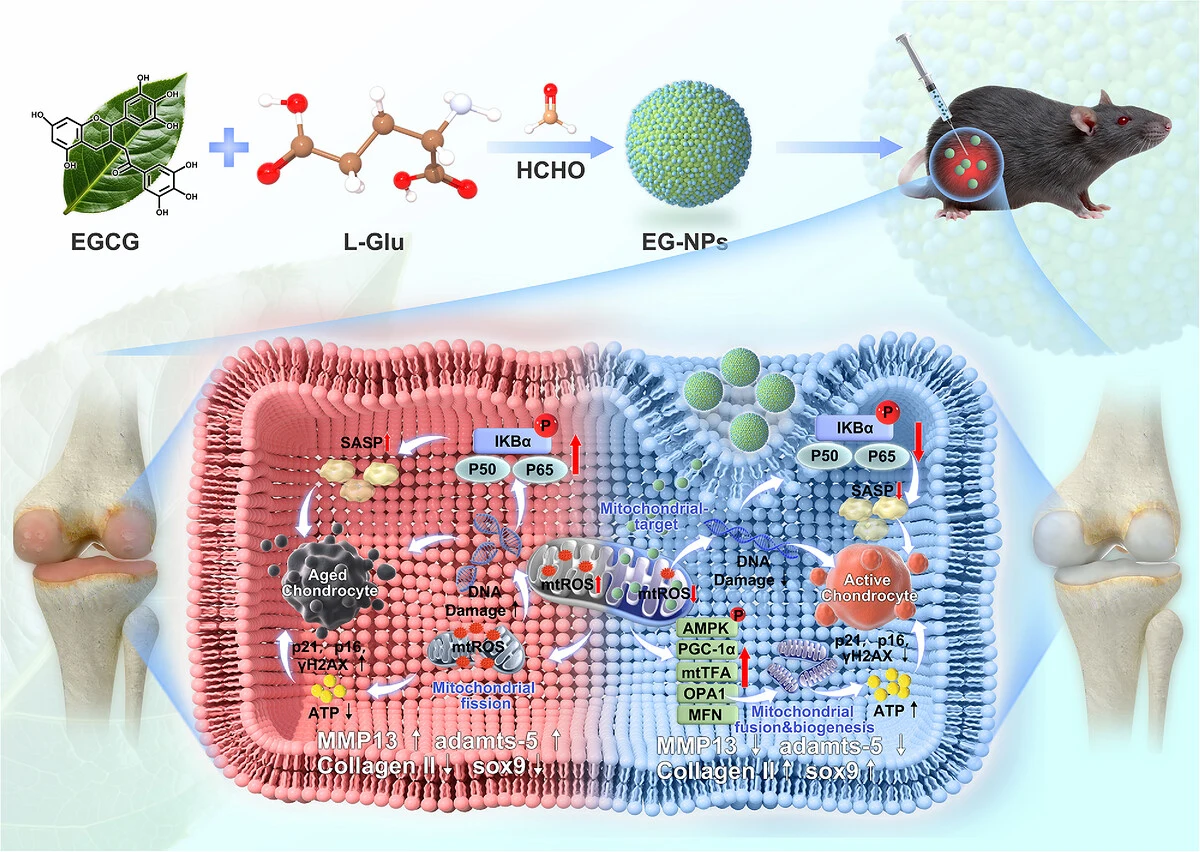
In an animal experiment, mice used to model osteoarthritis, an age-related joint disease, received nanoparticles designed to reach mitochondria, the energy-producing structures inside cells. The particles assembled themselves from two compounds, epigallocatechin-3-gallate and L-glutamic acid. They reduced inflammation in the joint lining, cartilage damage and breakdown of the material surrounding cartilage cells. They also eased abnormal changes in bone beneath the cartilage and slowed osteoarthritis progression.
In experiments with chondrocytes, the cells that make and maintain cartilage, the particles reduced reactive oxygen molecules in mitochondria and DNA damage. They also reduced cellular senescence, a state in which cells stop dividing, and its associated inflammatory secretions. The particles promoted production of the material surrounding cartilage cells.
Why it matters
For osteoarthritis, an age-related joint disease, the findings support exploring mitochondrial function as a target for therapies aimed at senescent cartilage cells.
Caveats
The findings came from a mouse disease model and cartilage-cell experiments, not studies in people. The abstract did not report animal numbers, doses, treatment duration or adverse effects.
The paper
Zhongnan Hospital of Wuhan University
Advanced Healthcare Materials, Oct 22, 2026