Blocking growth hormone extended lifespan in mice
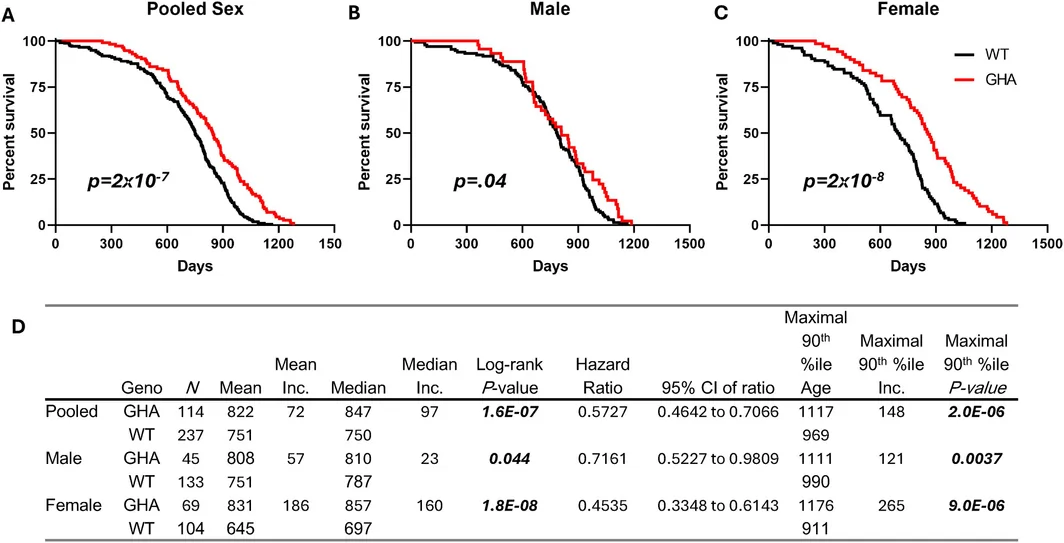
Maximum lifespan increased by 186 days in male mice and 265 days in females genetically engineered to block growth hormone activity.
Limit: Mice were genetically engineered; lifespan after pegvisomant treatment was not measured
Edited by Boris Djordjevic · AgingResearch.News
Genetically engineered mice that produced a growth hormone blocker lived longer in an animal experiment. Researchers measured survival in a mouse line maintained in their laboratory since 1991. Both median and maximum lifespan increased in males and females. Maximum lifespan increased by 186 days in males and 265 days in females.
In a separate group of 2-year-old mice, males and females were less frail and had stronger grip despite having more body fat. The experiment did not involve giving mice pegvisomant, an approved growth hormone-blocking drug. That drug binds poorly to rodent growth hormone receptors, the cell proteins through which the hormone acts.
Why it matters
The authors see growth hormone blockers as potential ways to improve healthspan, the years spent in good health.
Caveats
The experiment tested genetically engineered mice, not drug treatment or effects in people. The abstract does not report sample sizes or describe the comparison groups.
