Online clock uses liver gene activity to estimate age in mice
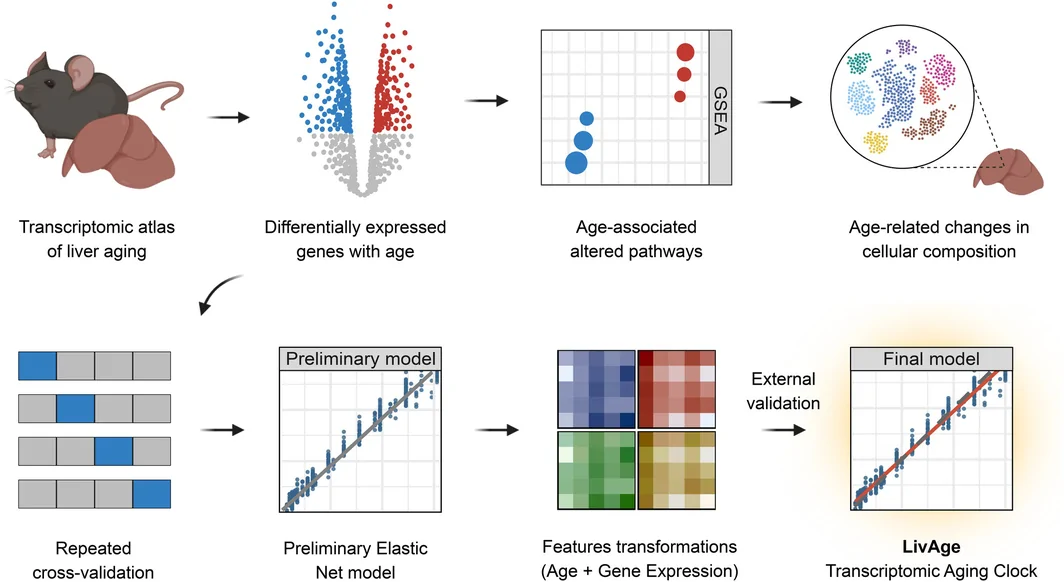
Researchers built the model using 432 liver samples from mice aged 1 to 30 months and tested its final version on 134 separate samples.
Limit: Batch effects and technical artifacts can distort the clock's age estimates
Stake: Authors hold a patent on this work.
Edited by Boris Djordjevic · AgingResearch.News
Using liver RNA data from C57BL/6 mice, researchers developed LivAge, an online model that estimates age from gene activity. They analyzed existing experimental data rather than conducting a new animal experiment. The development dataset contained 432 samples from 23 studies, including 365 males and 67 females. They tested the final model on 134 samples from four studies excluded from model development and optimization.
The clock predicted age in healthy mice and gave higher estimates in mouse models of accelerated-aging syndromes. Several genetic interventions lowered estimated age. Some dietary interventions and the drug rapamycin also lowered estimates in specific contexts. Not every intervention produced a clear change: eight months of 40% calorie restriction yielded a decrease that was not statistically significant, while two months produced no detectable shift.
Why it matters
Age-related changes in gene activity may help researchers evaluate interventions intended to slow biological aging. The authors propose LivAge as a tool for studying aging biology and assessing such interventions.
Caveats
The clock’s estimates reflect liver gene activity, not a direct test of longer life or better health. Its development samples came from mice with a C57BL/6 genetic background and were predominantly male.
Caloric restriction is part of Bryan Johnson's Blueprint

