Exercise-induced osteoimmune crosstalk: a virtuous cycle between bone remodeling and immune regulation
Abstract
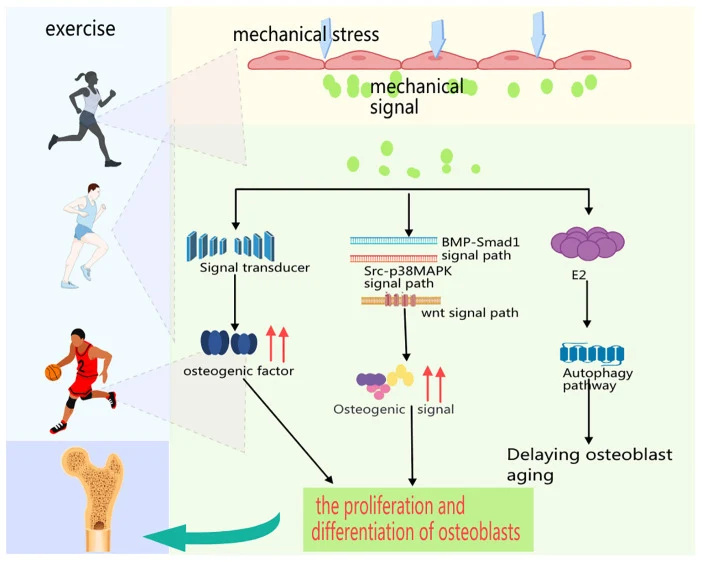
As an interdisciplinary field investigating the skeletal and immune systems, bone immunology has revealed that these two systems share the bone marrow microenvironment, interacting with and regulating each other. Exercise, as a non-pharmacological intervention, has been demonstrated to provide a favorable environment for bone homeostasis by modulating the dynamic balance between osteogenesis and bone resorption. Furthermore, exercise enhances the body's anti-inflammatory capacity by regulating various immune components, including immune cells and cytokines, thereby optimizing overall immune function. This article systematically reviews how exercise may initiate a feed-forward osteoimmune circuit in which mechanical loading activates osteocytes and osteogenic progenitors, reshapes the bone marrow niche, promotes anti-inflammatory immune polarization, and subsequently favors bone formation over bone resorption Ultimately, this creates a virtuous cycle of bone immunology, offering novel therapeutic strategies for the prevention and treatment of bone metabolic diseases such as osteoporosis.
The paper
First Hospital of Jilin University
Frontiers in Endocrinology, 29 Jul 2026