Exercise linked to changes in more than 3,000 proteins in men
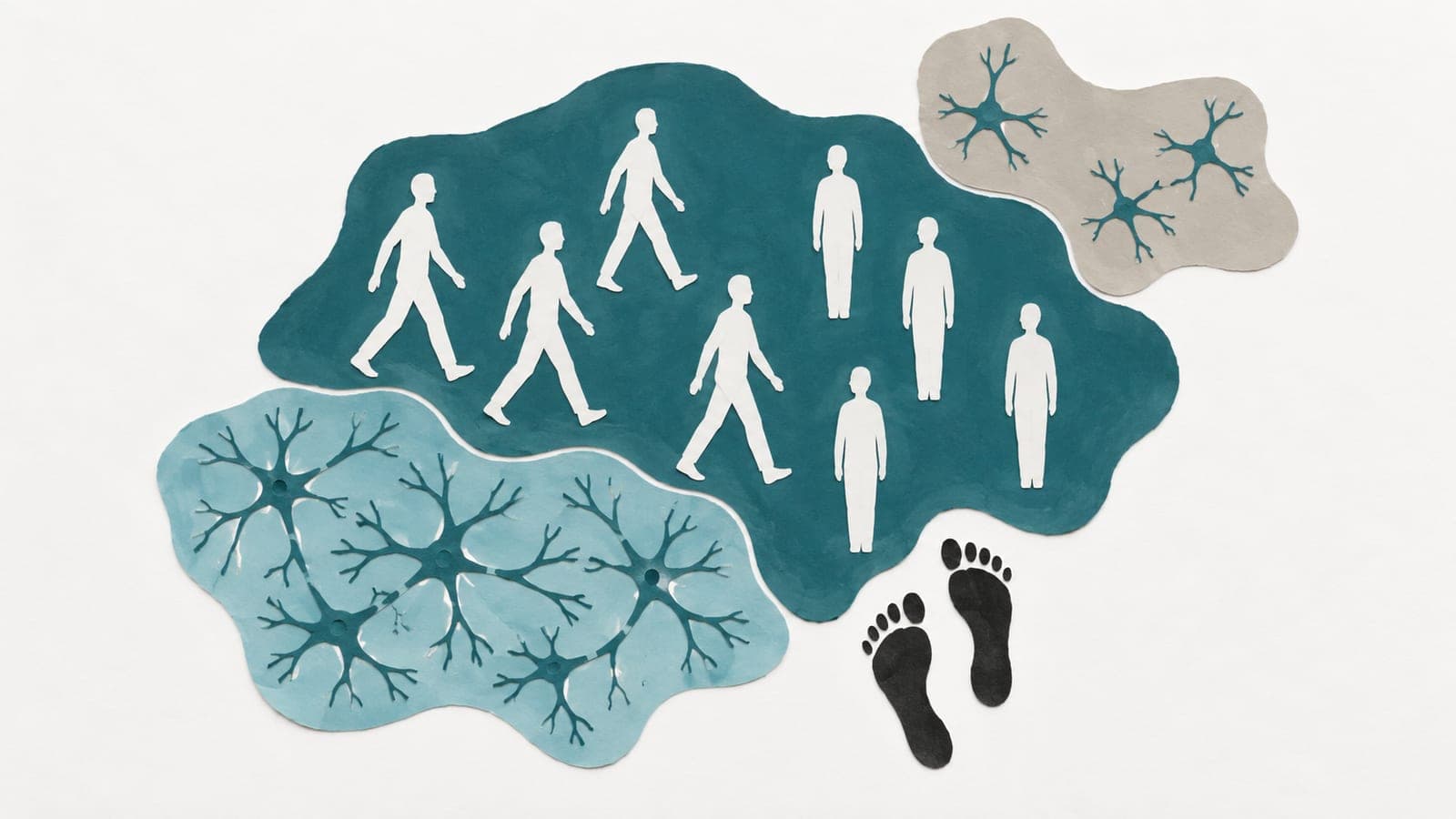
More than 3,000 proteins changed after exercise in samples of blood plasma, saliva and urine from 25 healthy men.
Non-randomised trial, independent replication
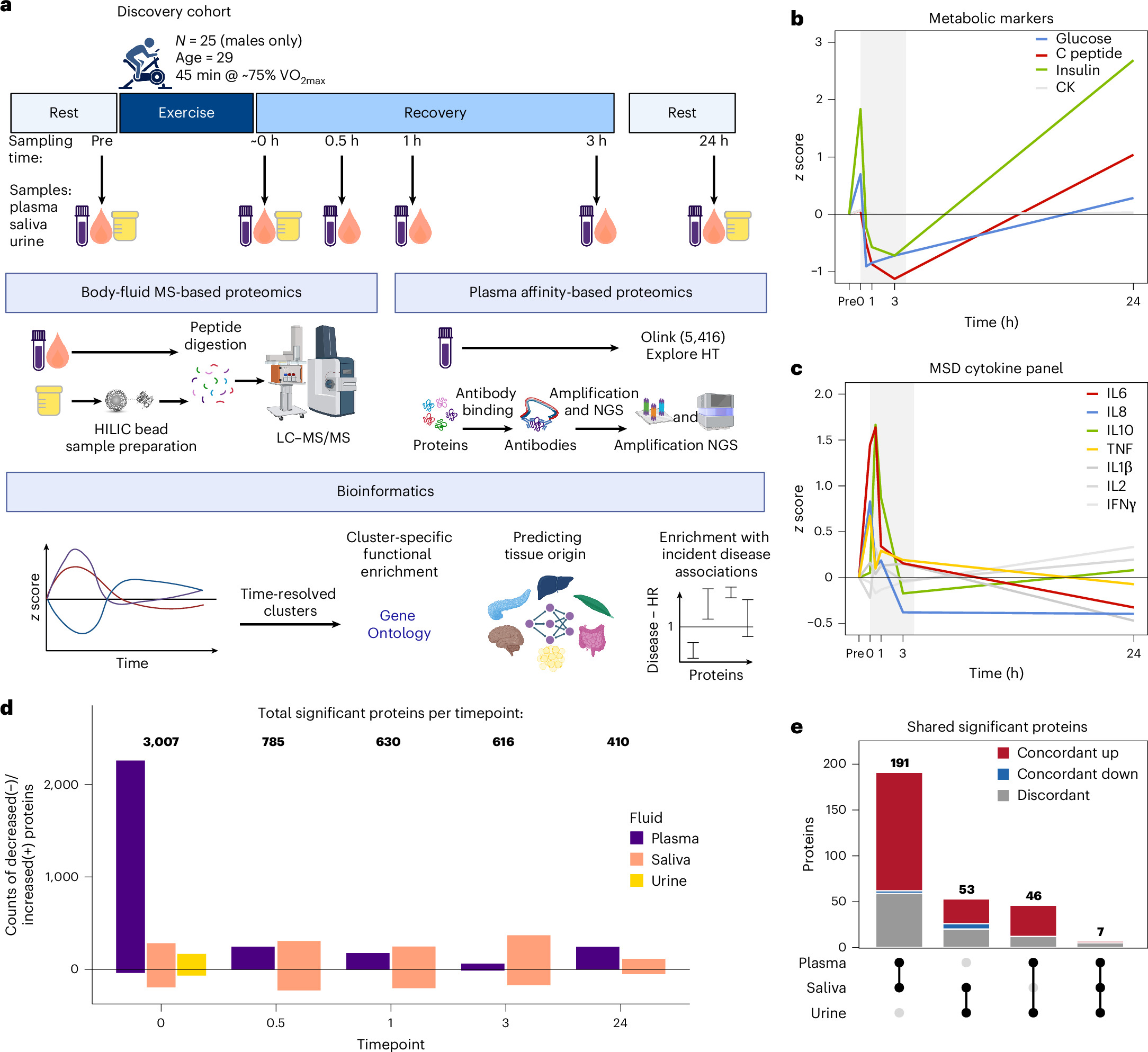
In 25 healthy men, researchers mapped protein responses over time to acute exercise in plasma (the liquid part of blood), saliva and urine. More than 3,000 proteins changed, with distinct patterns over time in each fluid. Their analysis pointed to coordinated changes in protein release, the material surrounding cells and immune activity.
In an independent group, many exercise-responsive plasma proteins showed consistent responses across ages, sexes and exercise types. Human genetic data linked exercise-responsive proteins released by cells to diseases affecting the heart and metabolism. Separate experiments in fruit flies supported roles for selected proteins released by muscle in endurance, behaviour and metabolism.
Why it matters
Metabolic health is relevant to healthy aging. The atlas offers candidates for investigating the still-unclear protein signals that may mediate exercise’s benefits.
Caveats
The human observations did not establish that the protein changes mediated exercise’s health benefits. The initial atlas covered 25 healthy men, and the functional experiments used fruit flies.
The paper
Systemic proteomic dynamics of acute exercise reveal genetic links to health and disease
University of Copenhagen
Nature Metabolism, 12 Oct 2026