Endocrine, Metabolic, and Skeletal Muscle Proteomic Responses During Energy Deficit With Concomitant Aerobic Exercise in Humans
5 days
Abstract
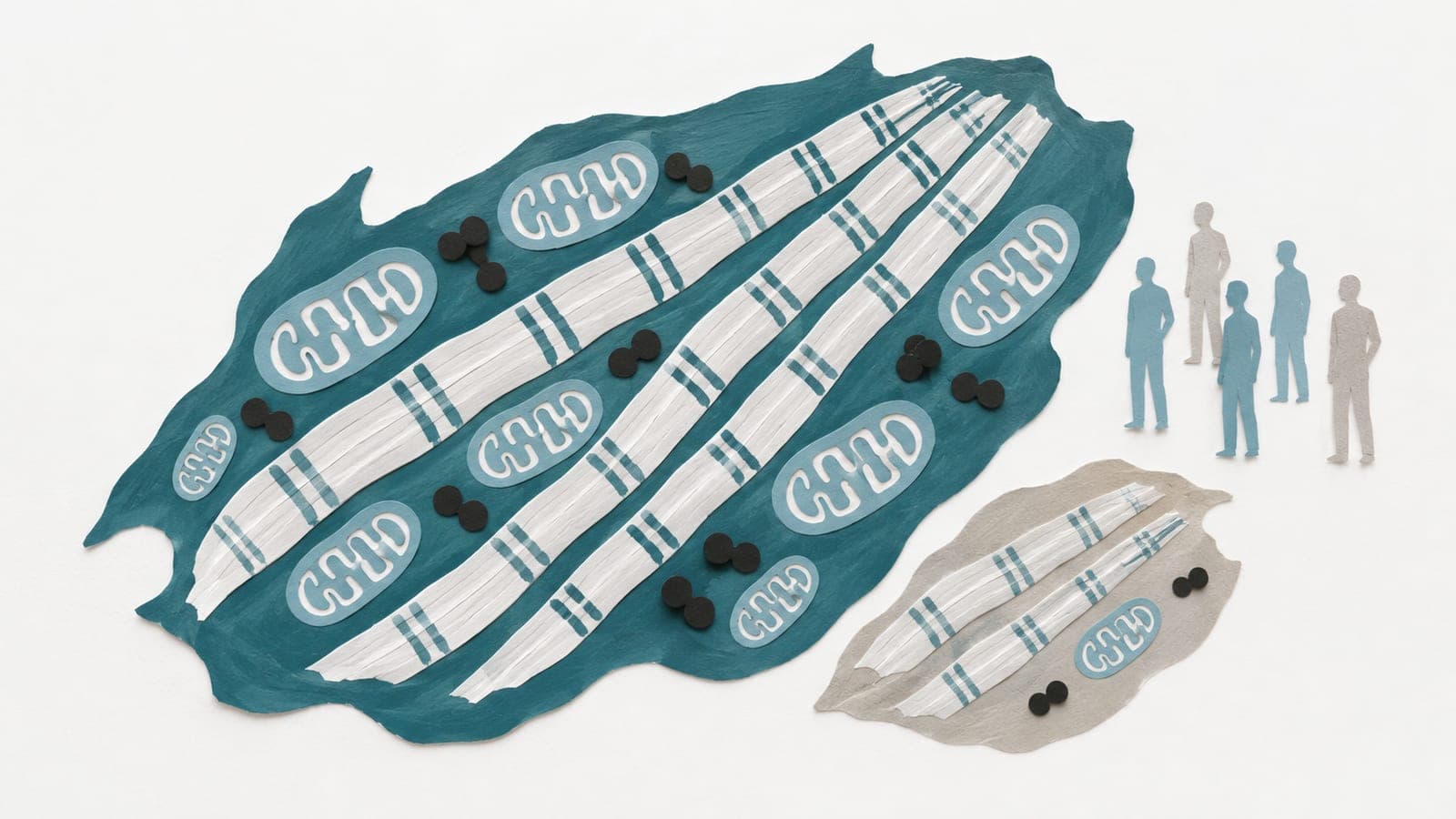
Energy deficit is a potent physiological stressor that has shaped human evolution and can improve lifespan and healthspan in a wide range of species. Preserving locomotive capacity was likely essential for survival during the human hunter-gatherer period but surprisingly little is known about the molecular effects of energy deficit on human skeletal muscle, which is a key tissue for locomotion and metabolic health. Here we show that after a 5-day 78% reduction in energy availability with concomitant aerobic exercise in healthy men there was a profound modulation of skeletal muscle phenotype alongside increases in fat oxidation at rest and during exercise and a 2.1 ± 0.8 kg loss of fat free mass and 0.8 ± 0.6 kg of fat mass. We used stable isotope (D₂O) labelling and peptide mass spectrometry to investigate the abundance and turnover rates of individual proteins. Abundance (1469 proteins) and synthesis rate (736 proteins) data discovered a shift toward a more oxidative phenotype and reorganization of cytoskeleton and extracellular matrix structure during energy deficit. Mitochondrial components: TCA, electron transport chain and beta-oxidation, were prominently represented amongst proteins that increased in abundance and synthesis rate, as well as proteins related to mitochondrial proteostasis, remodeling and quality-control such as BDH1 and LONP1. Changes in muscle metabolic pathways occurred alongside a reduction in extracellular matrix proteins, which may counteract the age-related muscle fibrosis. Our results suggest that muscle metabolic pathways are not only preserved but positively affected during periods of concomitant low energy availability and exercise.
- Caloric restriction
- Aerobic exercise
- Extracellular matrix remodelling
- Fatty acid β-oxidation
- Extracellular matrix proteins
- Humans
The paper
Liverpool John Moores University
FASEB Journal, 3 Nov 2025