Activin A is linked to muscle stem cell shifts in human ageing
Transcriptomic profiling of human skeletal muscle paired with cell experiments identified inflammatory macrophages and Activin A signaling as candidate regulators of altered muscle stem cells.
International Journal of Molecular Sciences
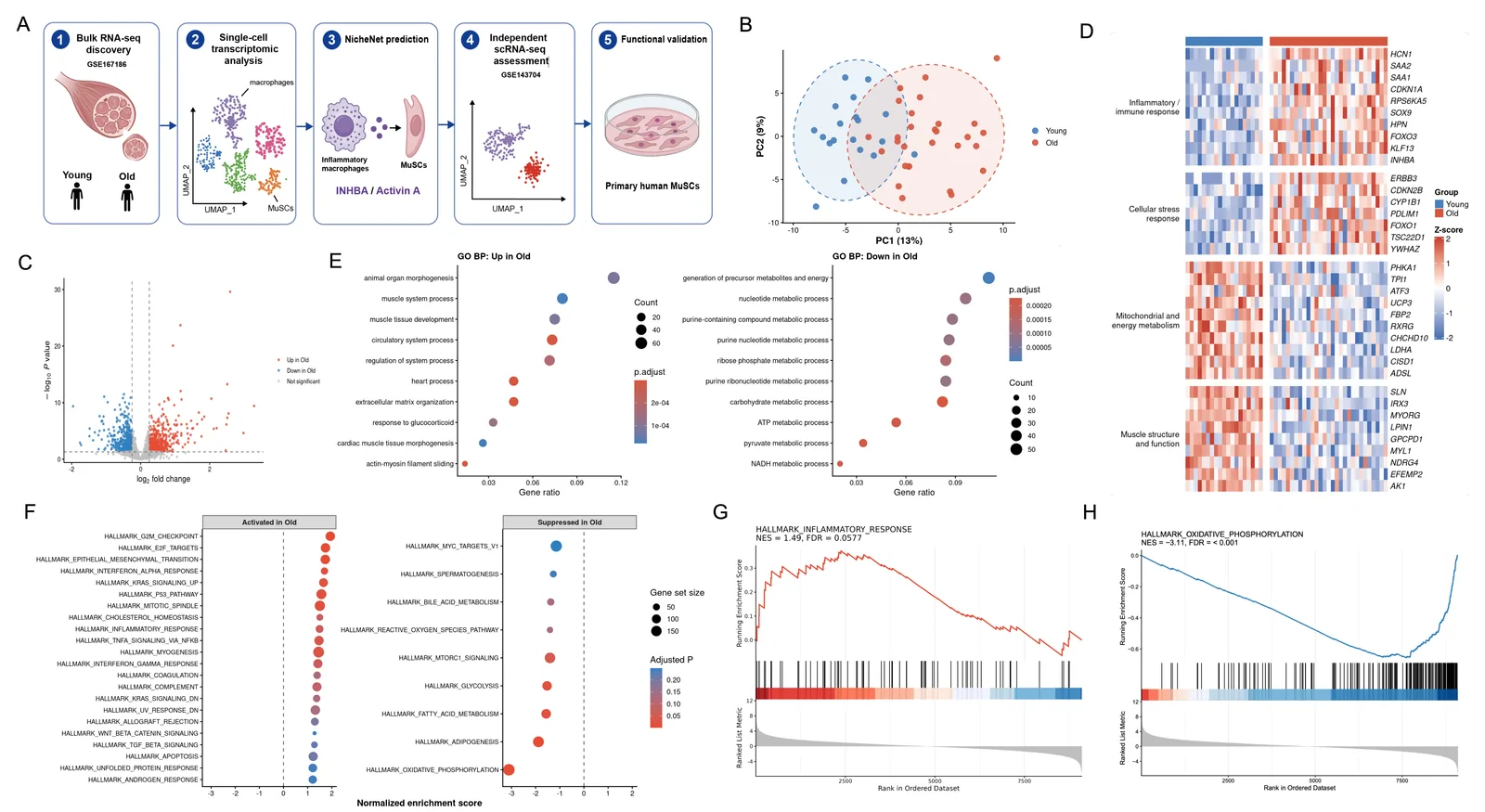
Analyzing bulk and single-cell RNA-sequencing data from human skeletal muscle, researchers characterized age-associated cellular shifts, including inflammatory activation, diminished metabolic programs, and increased macrophage-associated signatures. Inflammatory macrophages from aged muscle showed the highest SenMayo senescence scores, while early-primed muscle stem cells displayed age-associated remodeling involving inflammatory, interferon-related, and extracellular matrix programs.
Ligand-target modeling prioritized inhibin subunit beta A (INHBA), or Activin A, as a candidate signal connecting inflammatory macrophages to this stem cell remodeling, a pattern supported in an independent older adult cohort. In cultured primary human muscle stem cells, Activin A suppressed myogenic regulators and induced Activin-responsive genes, changes that were attenuated by the ALK4/5/7 inhibitor SB431542.
Why it matters
The findings suggest a candidate mechanism by which immune niche remodeling may contribute to declining regenerative capacity in aging human muscle.
Caveats
The initial signaling links were derived from observational, cross-sectional transcriptomic datasets, and functional tests were limited to primary cell cultures outside their native tissue context.
The paper
Chinese Academy of Medical Sciences & Peking Union Medical College
International Journal of Molecular Sciences · 17 Sep 2026 · CC BY