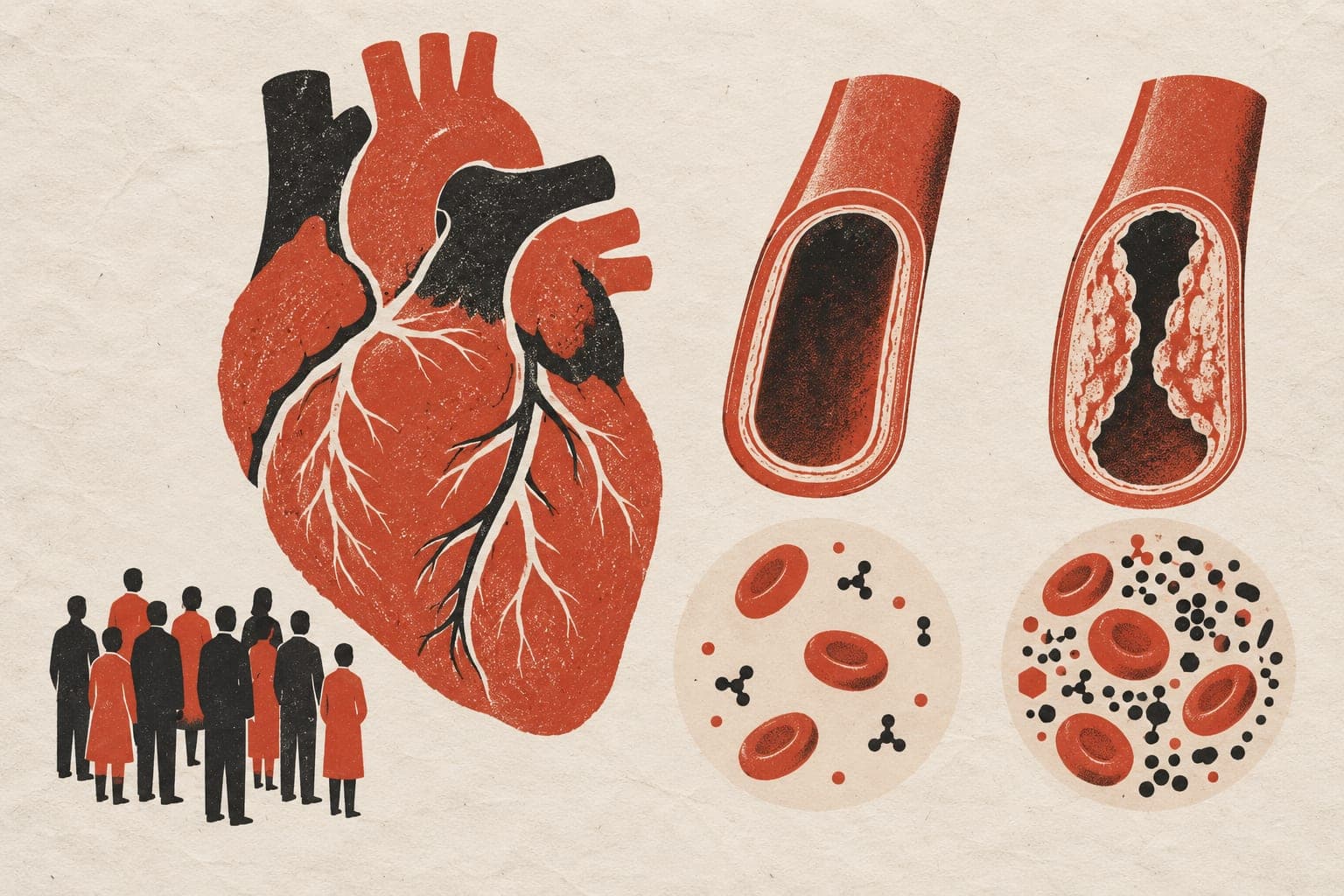
Spermidine is linked to higher fitness in coronary artery disease
Each doubling of spermidine intake was associated with 2.6 millilitres per kilogram per minute higher peak oxygen uptake in older people with coronary artery disease.
In an observational study, researchers assessed 187 older people with coronary artery disease, who had a median age of 72 years and were 80% men. They examined how dietary intake of spermidine, a naturally occurring compound, related to physical performance, body composition, and mitochondrial function. Each doubling of dietary spermidine intake was associated with a higher peak oxygen uptake of 2.6 millilitres per kilogram per minute. This link remained after adjusting for age, sex, and physical activity. Higher intake was also associated with a lower body fat percentage and more lean mass relative to body mass index. In a subgroup, higher spermidine intake was linked to greater mitochondrial respiration, the oxygen-using process by which cellular powerhouses generate energy.
Why it matters
Coronary artery disease becomes more common with age. The findings bear on whether dietary spermidine interventions may influence physical and mitochondrial function in older patients with the condition.
Caveats
The study was observational, meaning it cannot show whether spermidine intake caused the differences in fitness or body composition. In addition, the link to mitochondrial respiration was examined only in a subgroup of participants.
The paper
Show 9 more authors
Andreas Bugge Tinggaard, Mogens Johannsen, Jakob Hansen, Christian Lodberg Hvas, Charlotte Lock Rud, Roni Ranghoej Nielsen, Jakob Wang, Jean Farup, Niels Jessen,Aarhus University
European Heart Journal Open, 21 Sep 2026