Aging shifts artery cell gene activity in high-cholesterol mice
An experiment comparing young and older mice found an immune-cell-like profile in artery muscle cells only when aging and high cholesterol occurred together.
Our read
Mechanisms- Studied:
- Experiments in young and aged mice, against young high-cholesterol and aged normal-cholesterol mice
- What changed:
- Macrophage-like artery muscle cell profiles appeared only in aged high-cholesterol mice, not young high-cholesterol or aged normal-cholesterol mice
- The catch:
- Diet and genetic background differed between groups, complicating attribution to aging and cholesterol
- In the record:
- One of 752 papers on hypercholesterolemia on record: 86 with results in people, 8 in animals.
- Why it’s aging research:
- It studies organisms or tissues that aged naturally.
Editor of record: Boris Djordjevic · AgingResearch.News
Young and aged mice with normal or high cholesterol were compared in an animal experiment measuring gene activity in individual cells from the aorta, the body’s main artery. The groups differed in age, genetic background and diet.
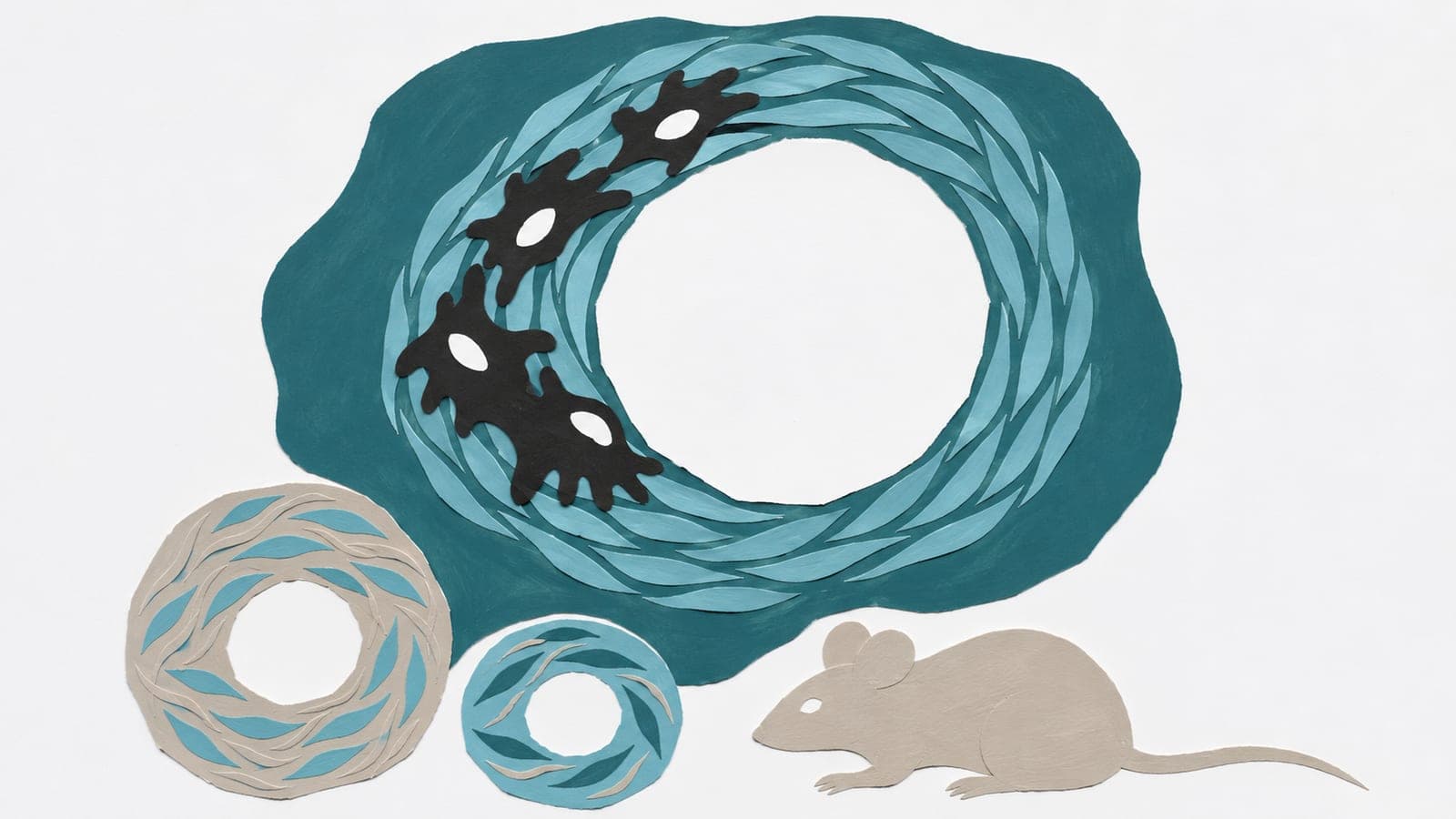
A distinct group of smooth muscle cells—the artery-wall cells that contract—had profiles resembling immune cells called macrophages only in aged mice with high cholesterol. This group was absent in young mice with high cholesterol and aged mice with normal cholesterol. High cholesterol increased gene activity linked to depositing supporting material around cells. Aging alongside high cholesterol further increased activity linked to DNA-damage responses and cellular senescence, a state in which cells stop dividing. These patterns suggested that aging shifted the muscle cells’ response toward inflammation rather than collagen deposition.
Why it matters
Atherosclerosis involves fatty plaques in artery walls. Understanding how aging alters artery muscle cells may help clarify why this disease becomes severe in older people.
Caveats
The proposed transitions between cell states rested on gene-activity patterns and inferred paths, rather than direct evidence of cells changing identity. The findings came from mice and were reported in a conference abstract.
The paper
Individual and Synergistic Roles Played by Aging and Hypercholesterolemia on Atherogenesis
Tulane Univ
AHA Scientific Sessions 2026 Abstract, Nov 2, 2026
Presented at AHA Scientific Sessions 2026, abstract 15976
Comments
Be the first to comment.