Human blood vessel cells show age-linked gene activity shifts
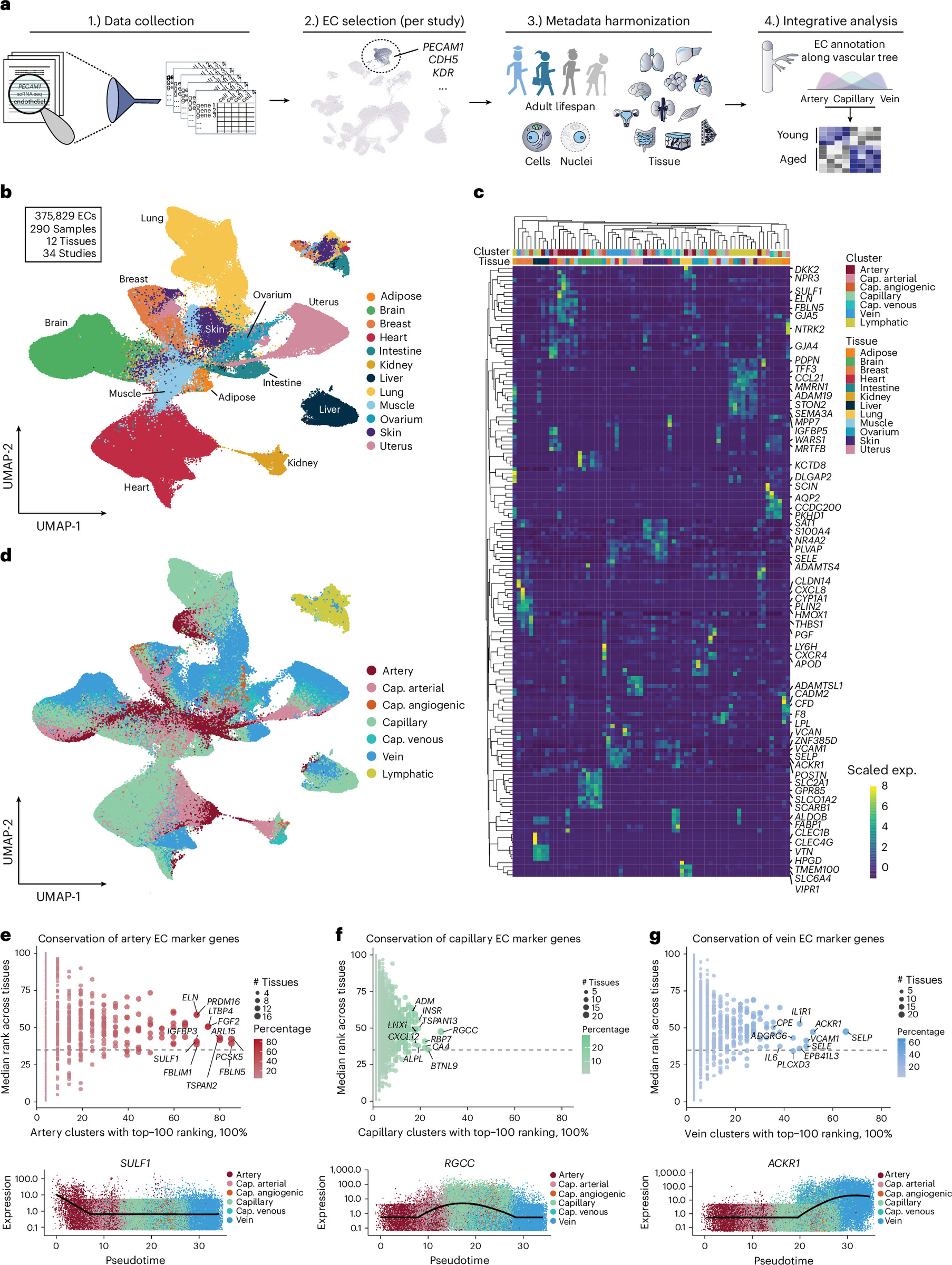
An observational analysis combined data from more than 375,000 human blood vessel cells across 12 tissues to map gene activity throughout adulthood.
375,000 participants
Limit: Unreported lifestyle, medication use, and comorbidities could account for some age-linked gene differences
Edited by Boris Djordjevic · AgingResearch.News
An observational analysis examined more than 375,000 human endothelial cells—the cells that line blood vessels—from 12 tissues across adulthood. Researchers combined measurements of gene activity from individual cells into the Human Aging Endothelial Cell Atlas, a reference for comparing these cells across tissues and ages.
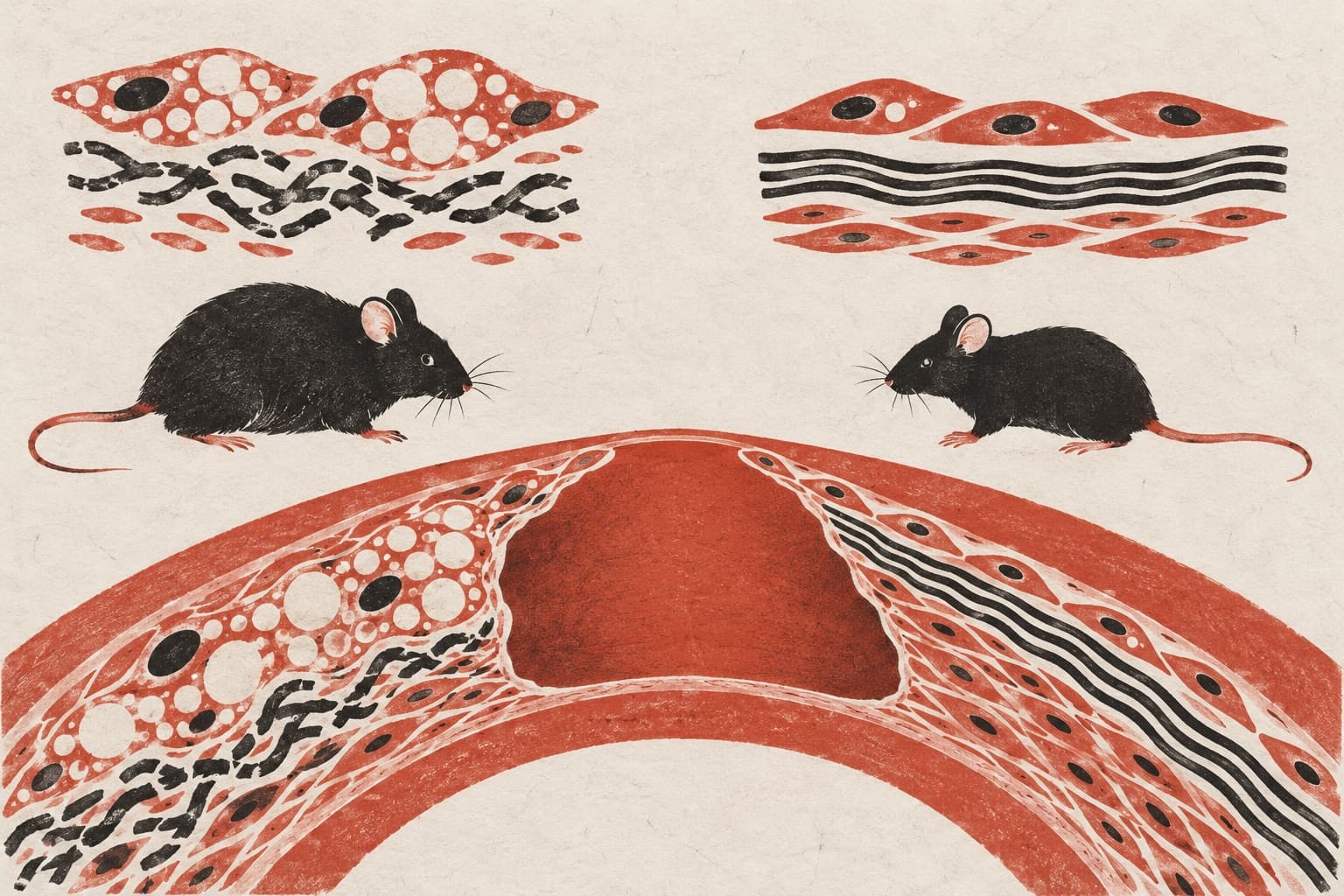
Older age was associated with lower activity of genes involved in new blood vessel growth in cells lining veins. The analysis also found widespread age-linked changes in gene activity related to the material surrounding cells and how cells sense physical forces.
Why it matters
Age-related blood vessel dysfunction increases susceptibility to cardiovascular disease. The atlas offers a reference for investigating how aging differs among the cells lining vessels across tissues.
Caveats
This observational analysis cannot establish that the age-linked gene activity shifts caused blood vessel dysfunction. The abstract did not report donor numbers or age ranges beyond adulthood.
From the paper
- Limitation
We acknowledge that our findings are limited by study, tissue and age-bracket cohort sizes and by unreported confounders, including demographic factors, comorbidities, lifestyle and medication.
Quoted word for word from the full text on nature.com.
- Resources: datasets, atlases and tools
- Single-cell omics
- Angiogenesis
- Cellular senescence
- Angiogenic gene expression
- Humans
The paper
CeMM Research Center for Molecular Medicine of the Austrian Academy of Sciences
Nature Aging, Oct 23, 2026