Proteomic age clock

Papers on proteomic age clock

53 papers5 new in 30 days

Monday, November 9

AHA Scientific Sessions 2026 Abstract

Exenatide lowered protein-based age scores in people

Over 12 months, exenatide lowered six organ-related age scores and limited a liver score’s rise compared with placebo in people with type 2 diabetes.Over 12 months, exenatide lowered six organ-related age scores and limited a liver score’s rise compared with placebo in people with type 2 diabetes.
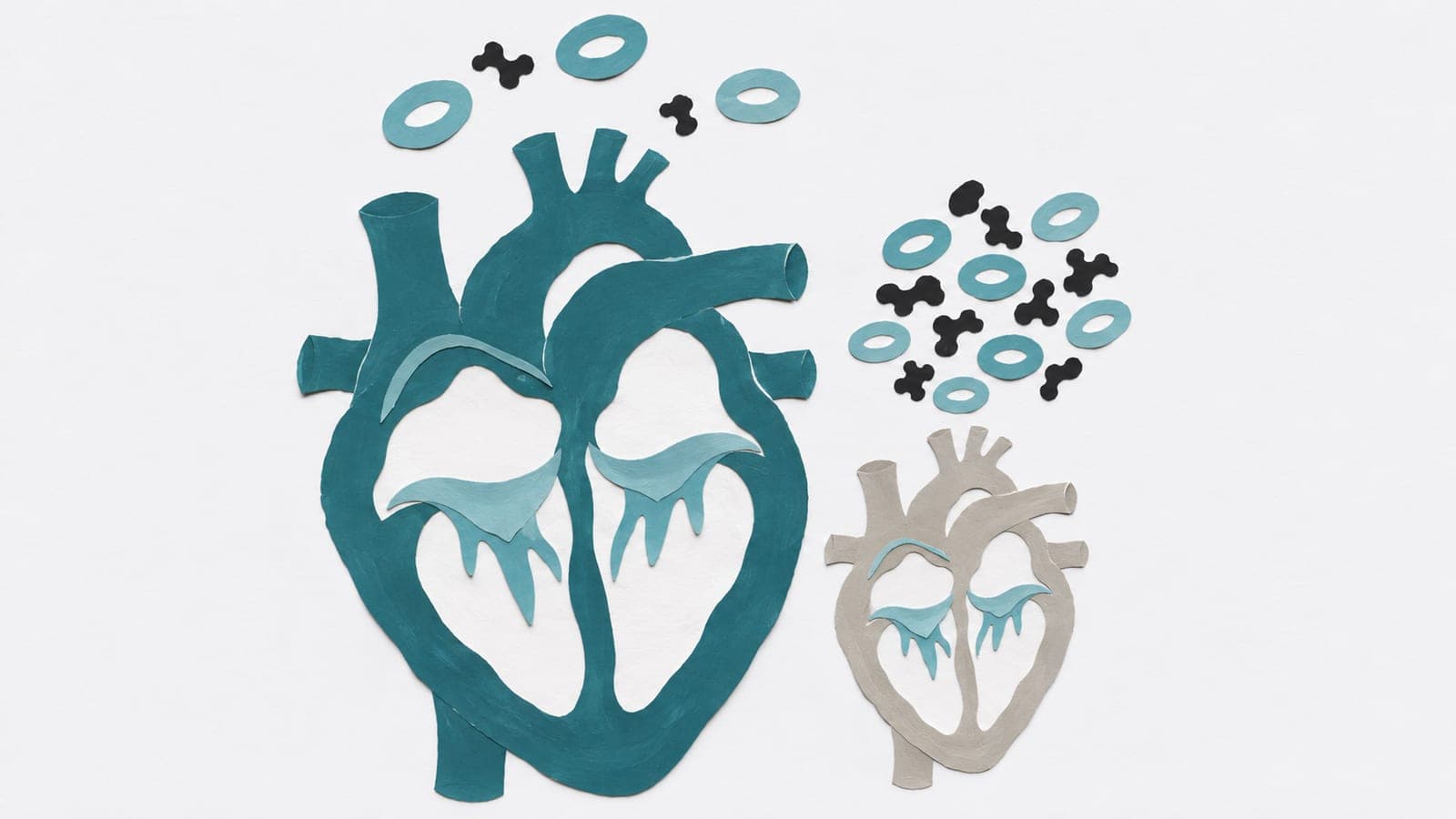
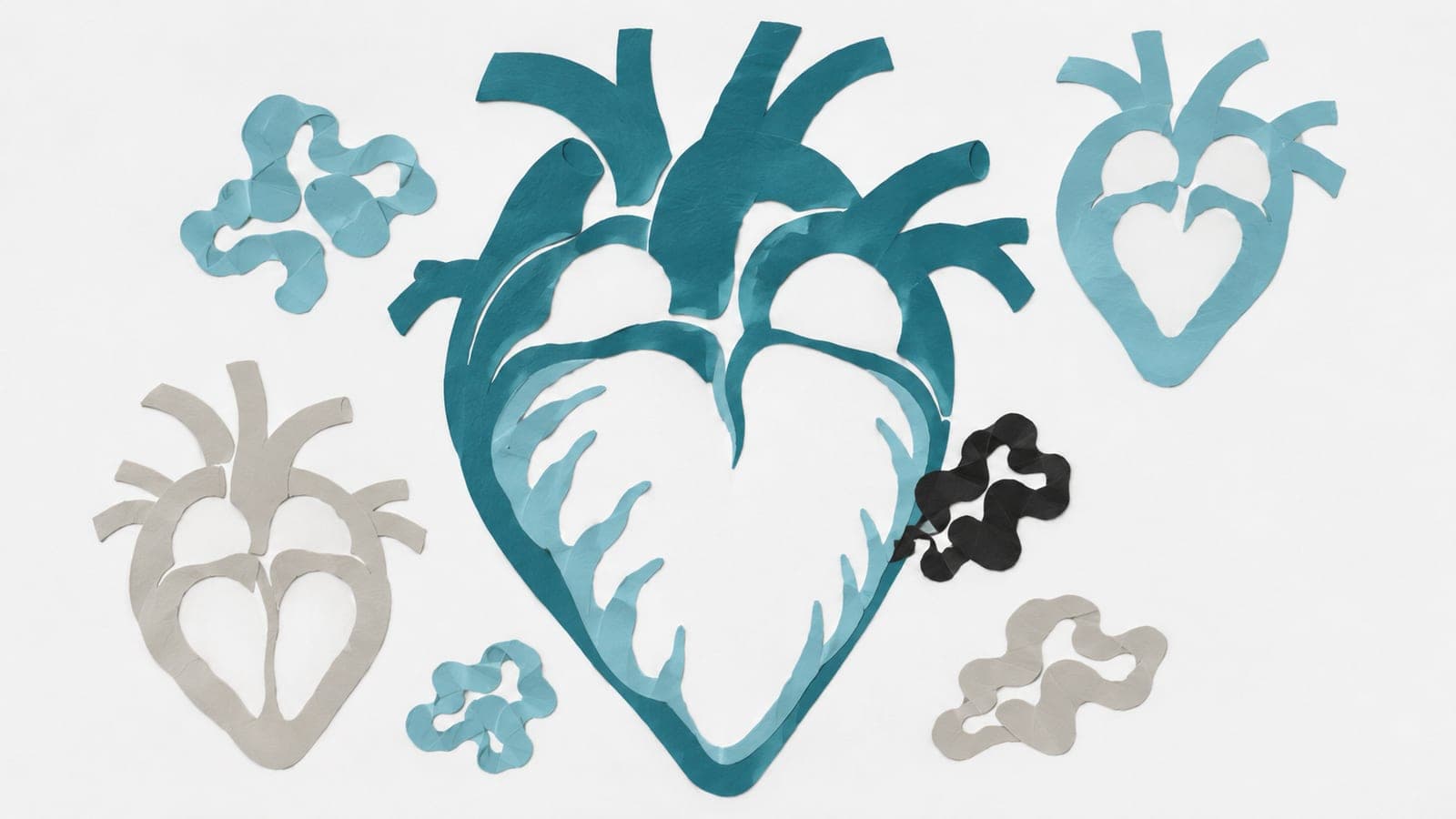
Heart cross-sections, one large and dark blue-green, one smaller and gray, sit beneath blood cells with sparse versus dense protein fragments.
Randomized trial · 3,973 peopleExenatide

Saturday, November 7

AHA Scientific Sessions 2026 Abstract

Protein-based age measures differ by heart failure type

A retrospective comparison of 269 people with one heart failure form, 275 with another and 186 controls found different protein-based aging patterns.A retrospective comparison of 269 people with one heart failure form, 275 with another and 186 controls found different protein-based aging patterns.

A heart cutaway with enlarged chambers and thin walls sits beside smaller, thicker-walled hearts and scattered folded proteins.
Cohort studyHeart failure

Friday, October 30

Thursday, October 29

bioRxiv

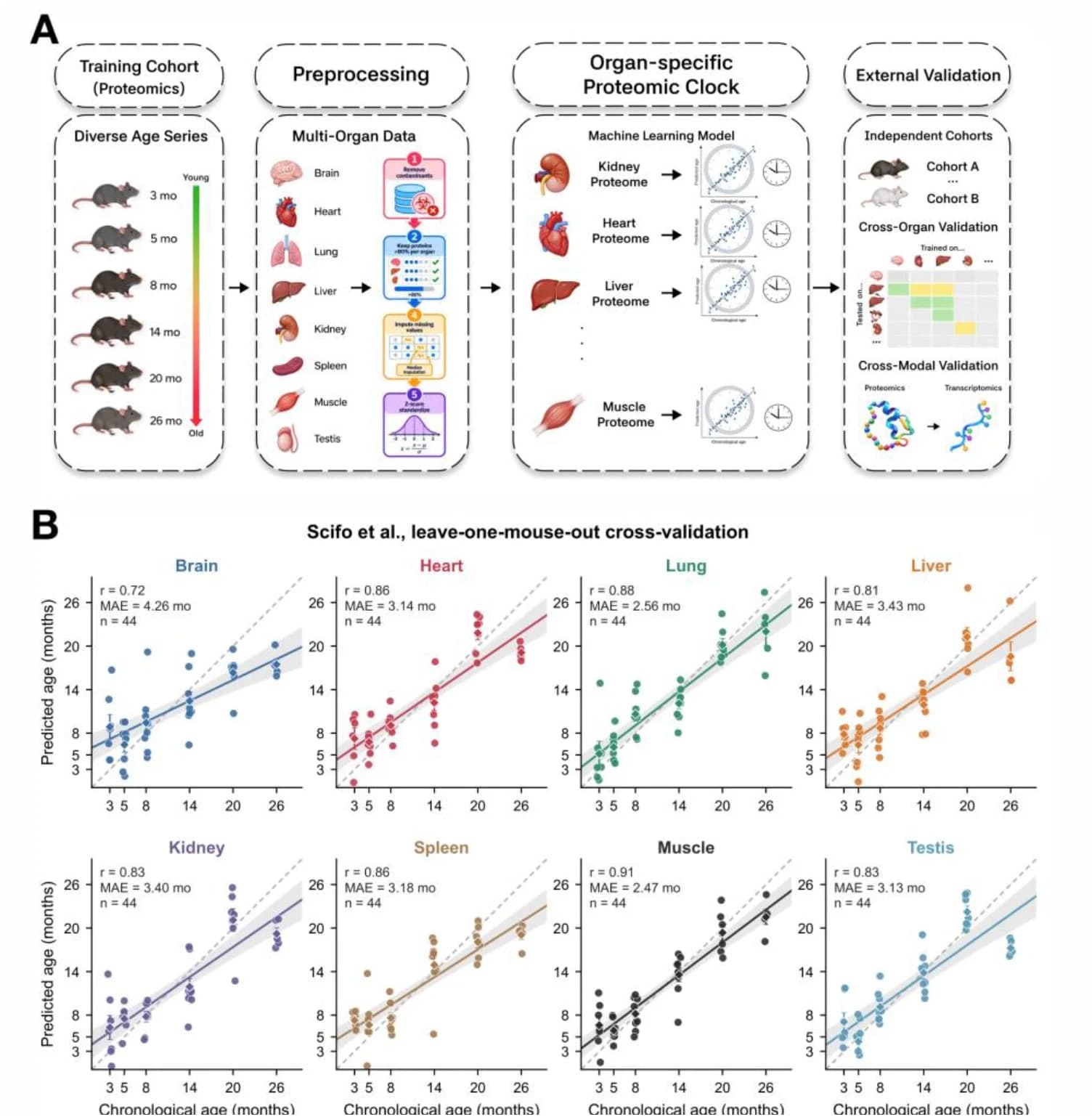
Age-linked protein patterns differ among organs in mice

Models built from protein measurements in eight mouse organs tracked age in independent groups but transferred poorly from one organ to another.Models built from protein measurements in eight mouse organs tracked age in independent groups but transferred poorly from one organ to another.

Organ-specific proteomic clocks predict chronological age.
Preprint: computational studyBiomarkers

Tuesday, October 27

Thursday, October 15

medRxiv

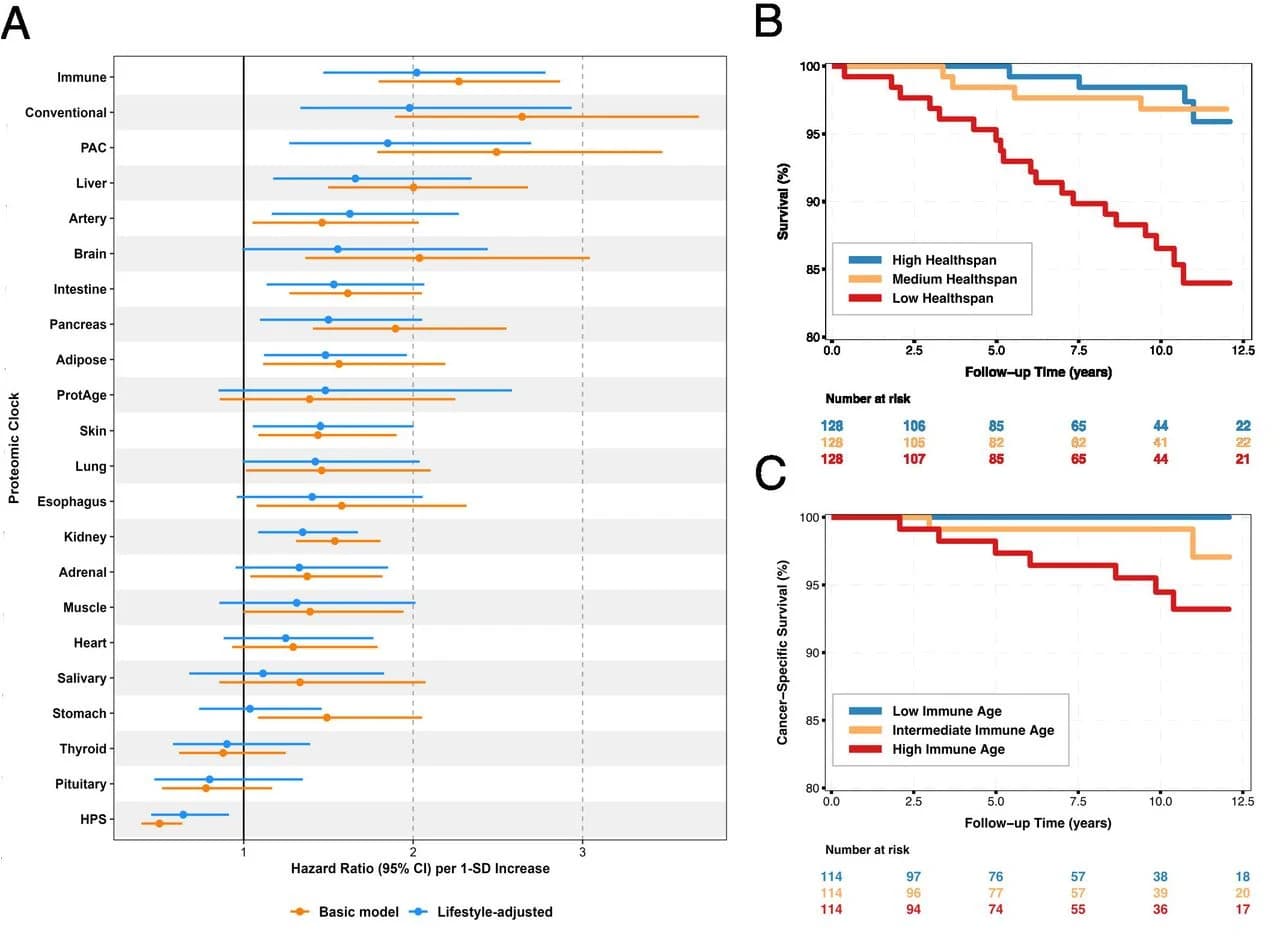
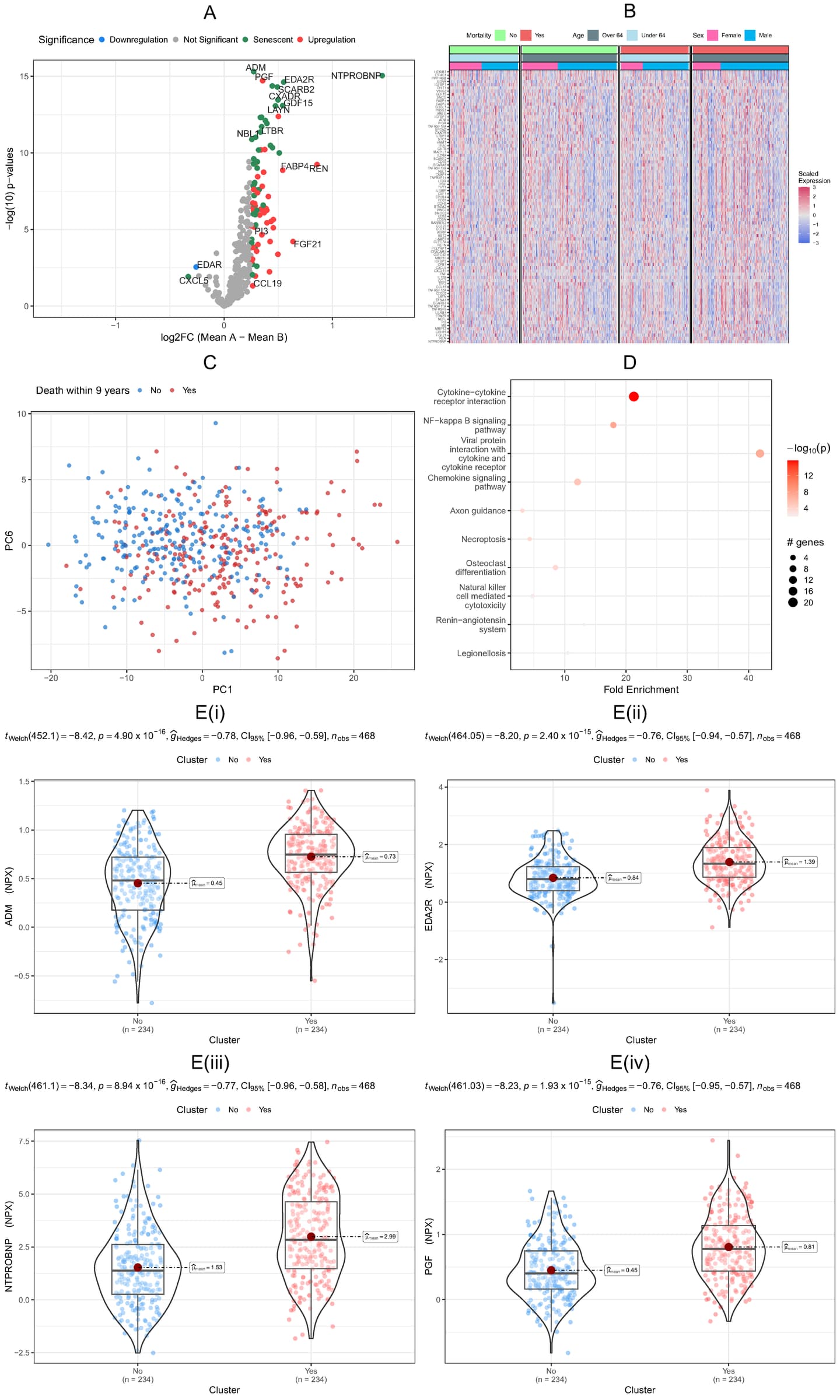
Protein-based aging clocks linked to death risk in Finnish twins

Fifteen protein-based aging clocks were linked to death from any cause; 11 remained associated after lifestyle adjustment in 401 Finnish twins.Fifteen protein-based aging clocks were linked to death from any cause; 11 remained associated after lifestyle adjustment in 401 Finnish twins.

Systemic and organ-specific proteomic aging clocks in relation to survival outcomes.
Preprint: cohort · 401 peopleBiomarkers

Tuesday, October 13

bioRxiv

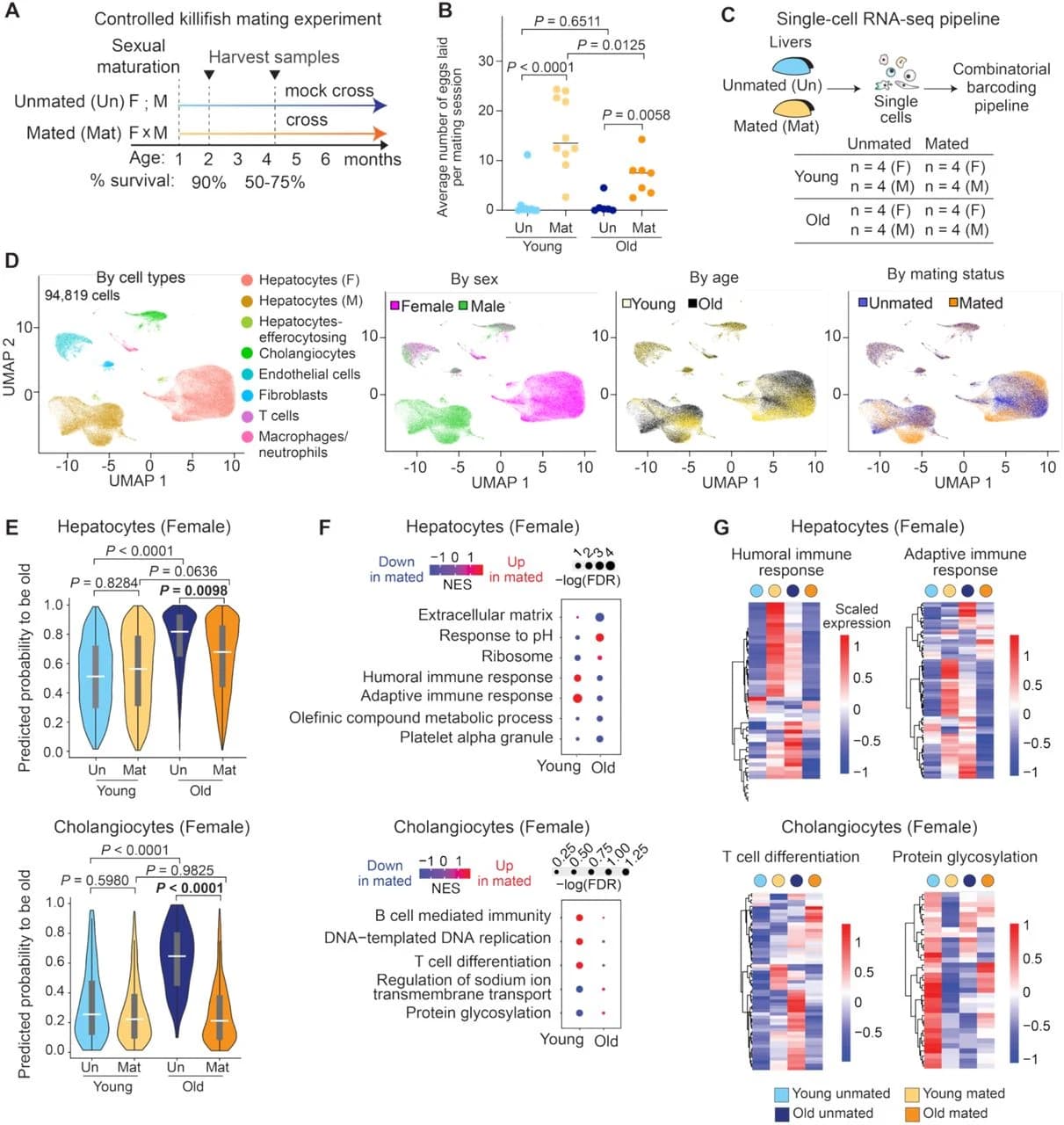
Lifelong mating reshaped liver aging in short-lived killifish

In killifish experiments, lifelong mating reduced inflammation in old females’ main liver cells, while models based on gene activity predicted “younger” ages for several…In killifish experiments, lifelong mating reduced inflammation in old females’ main liver cells, while models based on gene activity predicted “younger” ages for several liver cell types.

Mating ‘rejuvenates’ liver transcriptomes in a sex- and cell-type-specific manner.
Preprint: fish studyInterventions

Tuesday, October 6

bioRxiv

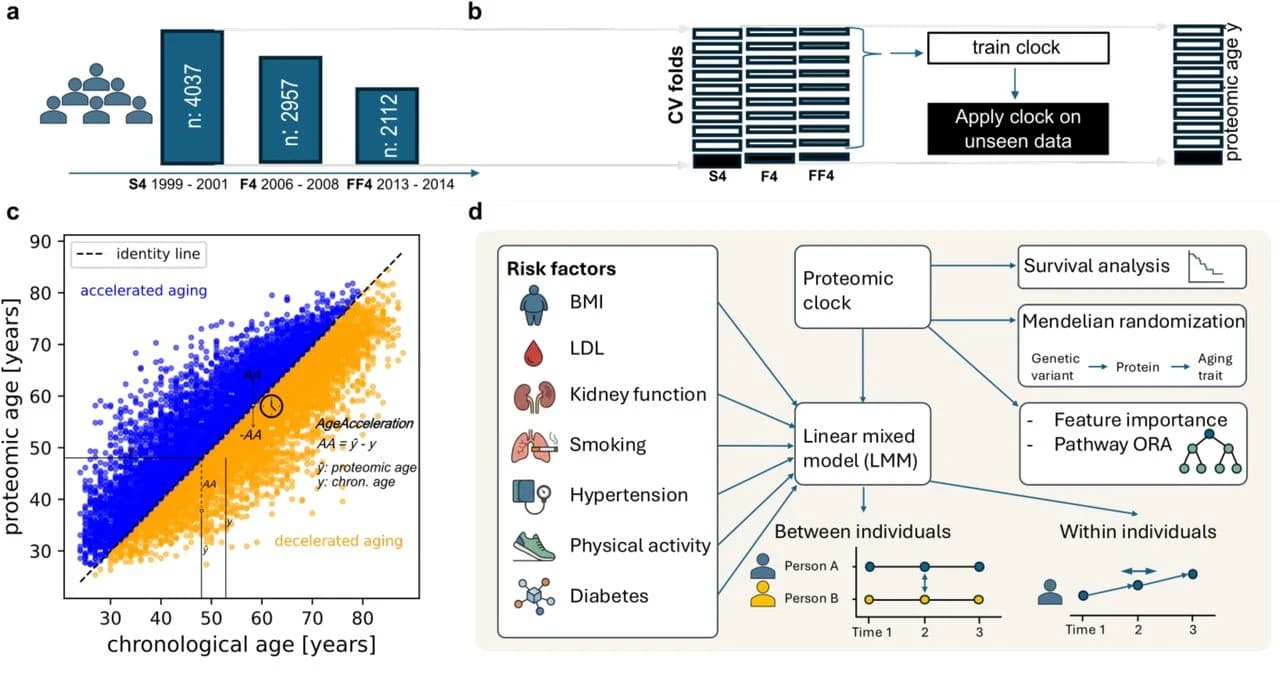
Blood protein clock tracks shifts in health risks over time

In an observational study of 4,100 people, accelerated blood protein aging tracked worsening kidney function, blood lipid imbalances, and a higher risk of death.In an observational study of 4,100 people, accelerated blood protein aging tracked worsening kidney function, blood lipid imbalances, and a higher risk of death.

Overview. a KORA proteomics cohort: timepoints S4 and the two follow-up time points F4 and FF4 and their numbers of samples.
Preprint: cohort study of 4,100 peopleBiomarkers

Tuesday, September 29

Thursday, September 24

Tuesday, September 15

Tuesday, September 8

Wednesday, September 2

Saturday, August 29

Wednesday, August 19

Alzheimer's & Dementia

Blood protein aging measures linked to poorer cognition

In 153 people without cognitive impairment, protein-based aging measures explained up to 23% of variation in later cognition and blood markers left unexplained by…In 153 people without cognitive impairment, protein-based aging measures explained up to 23% of variation in later cognition and blood markers left unexplained by DNA-based aging measures.

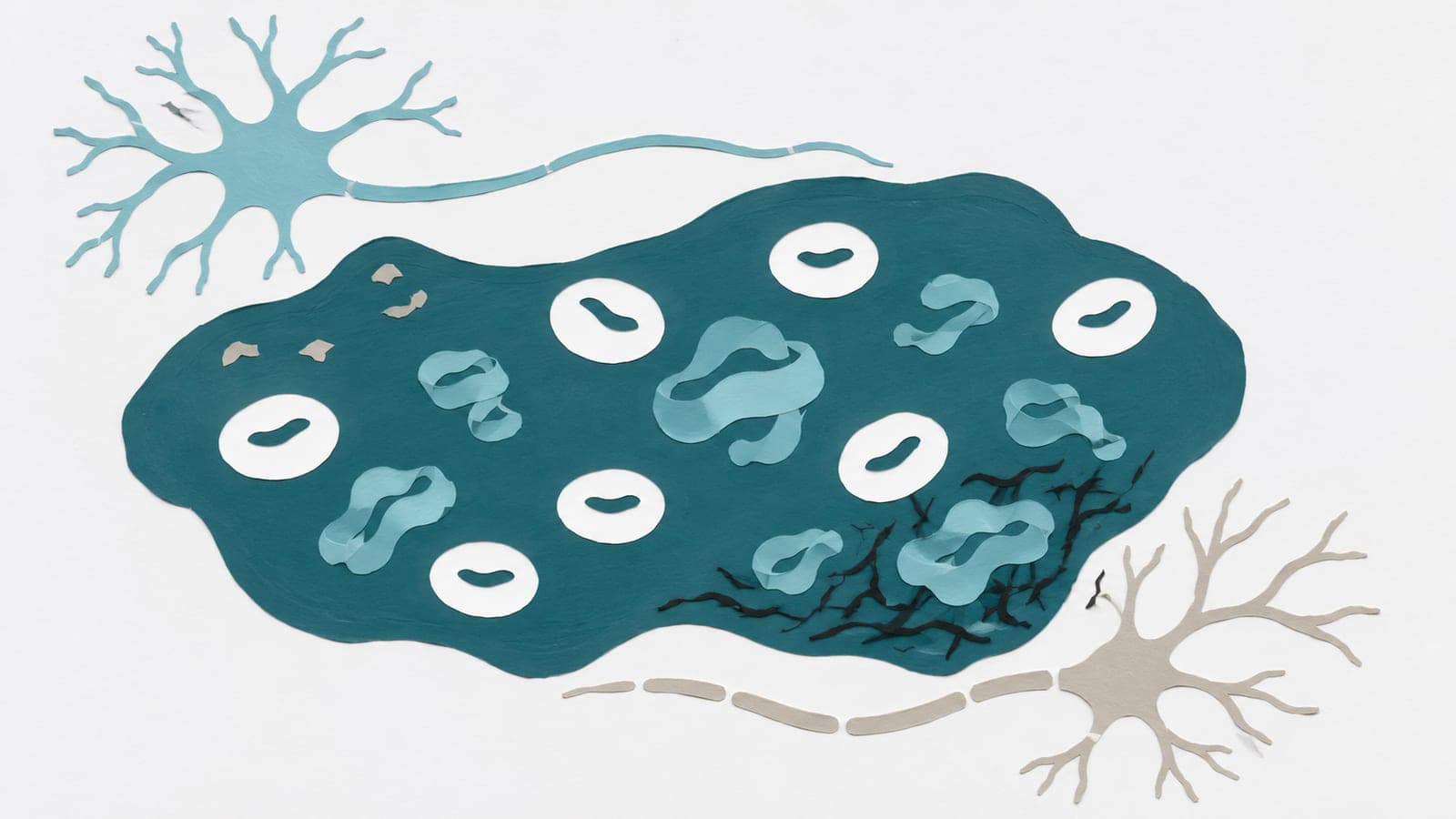
Blood with cells and folded proteins sits between intact and fragmented nerve cells, with dense dark fibers beside the damaged cell.
Cohort · 153 peopleBiomarkers

Thursday, July 9

Tuesday, June 30

Sunday, June 7

NPJ Digital Medicine

Blood protein age estimates linked to eye aging and disease

An observational study of 55,028 people in three UK and Chinese cohorts linked protein-based age estimates to eye aging and future disease.An observational study of 55,028 people in three UK and Chinese cohorts linked protein-based age estimates to eye aging and future disease.

Cohort · 55,028 peopleBiomarkers

Friday, June 5

Thursday, May 21

Tuesday, April 28

Thursday, April 16

Friday, April 10

Thursday, March 26

Friday, February 27

Tuesday, February 3

Thursday, January 29

Saturday, January 3