Lifelong mating reshaped liver aging in short-lived killifish
In killifish experiments, lifelong mating reduced inflammation in old females’ main liver cells, while models based on gene activity predicted “younger” ages for several liver cell types.

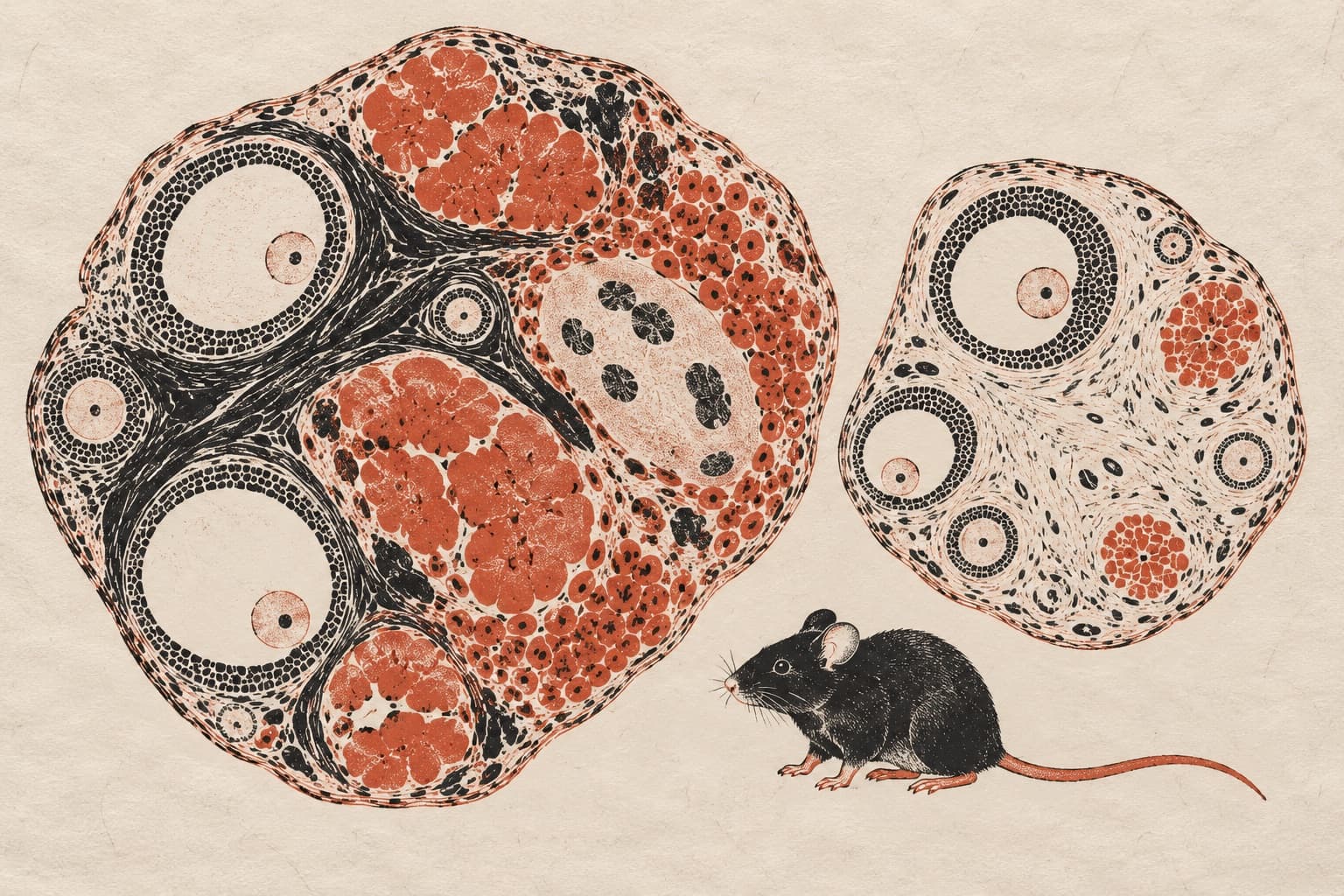
Researchers studied lifelong mating in short-lived killifish in animal experiments on organ aging. Liver effects differed by sex and cell type. In old females, mating dampened inflammation in hepatocytes, the liver’s main working cells, and reduced levels of myeloid cells, a group of immune cells. Models based on gene activity predicted a “younger” molecular age for several liver cell types. Mating also reduced the liver’s accumulation of several types of lipids, or fat-like molecules. It was associated with greater female resilience to acetaminophen, a liver toxin.
Gene activity patterns in the brain and gut suggested that mating may affect organ aging more widely. Separately, analyses of public human datasets linked sexual experience to “younger” age estimates based on blood proteins for several cell types, including hepatocytes.
Why it matters
Sexual reproduction is an understudied influence on organ health during aging. The work points to sexual history as a factor to consider in research on vertebrate aging.
Caveats
The experiments were in killifish; the human analysis was observational and could not establish cause and effect. The study is a preprint and has not been peer-reviewed.
- Mating
- Sexual experience
- Inflammation
- Lipid and ceramide metabolism
- Anti-inflammatory and metabolic rewiring transcriptomic signatures
- Killifish
The paper
Sexual reproduction impacts vertebrate organ aging
Stanford University
bioRxiv, 13 Oct 2026, CC BY-NC-ND, Preprint, not peer-reviewed