Blood protein aging measures linked to poorer cognition
In 153 people without cognitive impairment, protein-based aging measures explained up to 23% of variation in later cognition and blood markers left unexplained by DNA-based aging measures.
Our read
Biomarkers- Studied:
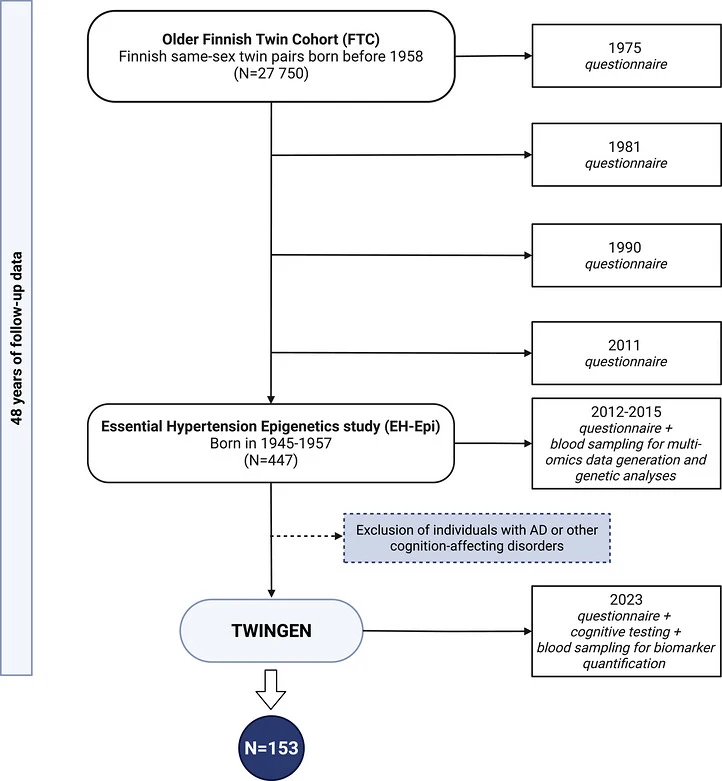
- Cohort study of 153 cognitively unimpaired Finnish twins, about nine years
- What changed:
- Faster whole-body or brain protein aging was linked to poorer thinking skills
- The catch:
- Cognition links weakened after accounting for education and failed the multiple-testing threshold
- Stake:
- An author works for Insitro. An author holds shares in Merck & Co. Authors also declare ties to 1 more company.
- In the record:
- The 8th paper on proteomic aging clock with results in people; 27 on record in all.
Editor of record: Boris Djordjevic · AgingResearch.News
The 153 cognitively unimpaired Finnish twins in this observational cohort study averaged 62 years old when they gave blood samples. Researchers estimated biological aging from blood proteins and chemical marks on DNA, using tools called aging clocks. They measured cognition and Alzheimer's-related blood markers about nine years later.
Protein-based clocks added information beyond DNA-based clocks and factors including age and sex, explaining up to 23% of the remaining variation in these outcomes. Protein clocks indicating faster whole-body or brain aging were linked to poorer cognition and higher levels of neurofilament light chain, a blood marker of nerve-cell damage. Exploratory analyses suggested weaker protein aging–cognition links in people with higher genetic susceptibility to diabetes.
Why it matters
For Alzheimer's disease, an age-related condition, the authors see potential for blood protein aging measures to help detect cognitive impairment and nerve-cell damage early.
Caveats
The cognition links weakened after accounting for education and no longer met the stricter statistical threshold used when testing many links. Participants had no diagnosed Alzheimer's disease or other disorder affecting cognition, so the findings do not describe people with those conditions.
The paper
University of Helsinki
Alzheimer's & Dementia, Aug 17, 2026, Open access


Comments
Be the first to comment.