Cellular senescence

Papers on cellular senescence

9,346 papers325 new in 30 days

Thursday, November 19

Sleep

Oxygen drops changed DNA marks and vessel function in male mice

An experiment with 25 male mice per group compared repeated oxygen drops with room air over 7 to 210 days.An experiment with 25 male mice per group compared repeated oxygen drops with room air over 7 to 210 days.

A coronary vessel with enlarged dark lining cells sits beside an evenly lined open vessel, with a laboratory mouse and blood immune cells above.
Mouse studyMechanisms

Wednesday, November 18

bioRxiv

Mouse spinal cord aging varies by cell type and region

A molecular atlas linked mouse spinal cord aging to declining nerve-signaling gene activity and increasing blood-vessel and immune programs.A molecular atlas linked mouse spinal cord aging to declining nerve-signaling gene activity and increasing blood-vessel and immune programs.

Spinal cord cross-section with branching neurons, a curved blood vessel, and clustered dark microglia contrasting with scattered gray microglia.
Preprint: study in peopleAI & data
Phytomedicine

Compound reduced kidney injury in mice with diabetes

Experiments in mice with diabetes-induced kidney disease found less kidney tubule cell senescence, a state in which cells stop dividing, after receiving procyanidin C1.Experiments in mice with diabetes-induced kidney disease found less kidney tubule cell senescence, a state in which cells stop dividing, after receiving procyanidin C1.

Figure from Phytomedicine
Mouse studyKidney injury
The FEBS Journal

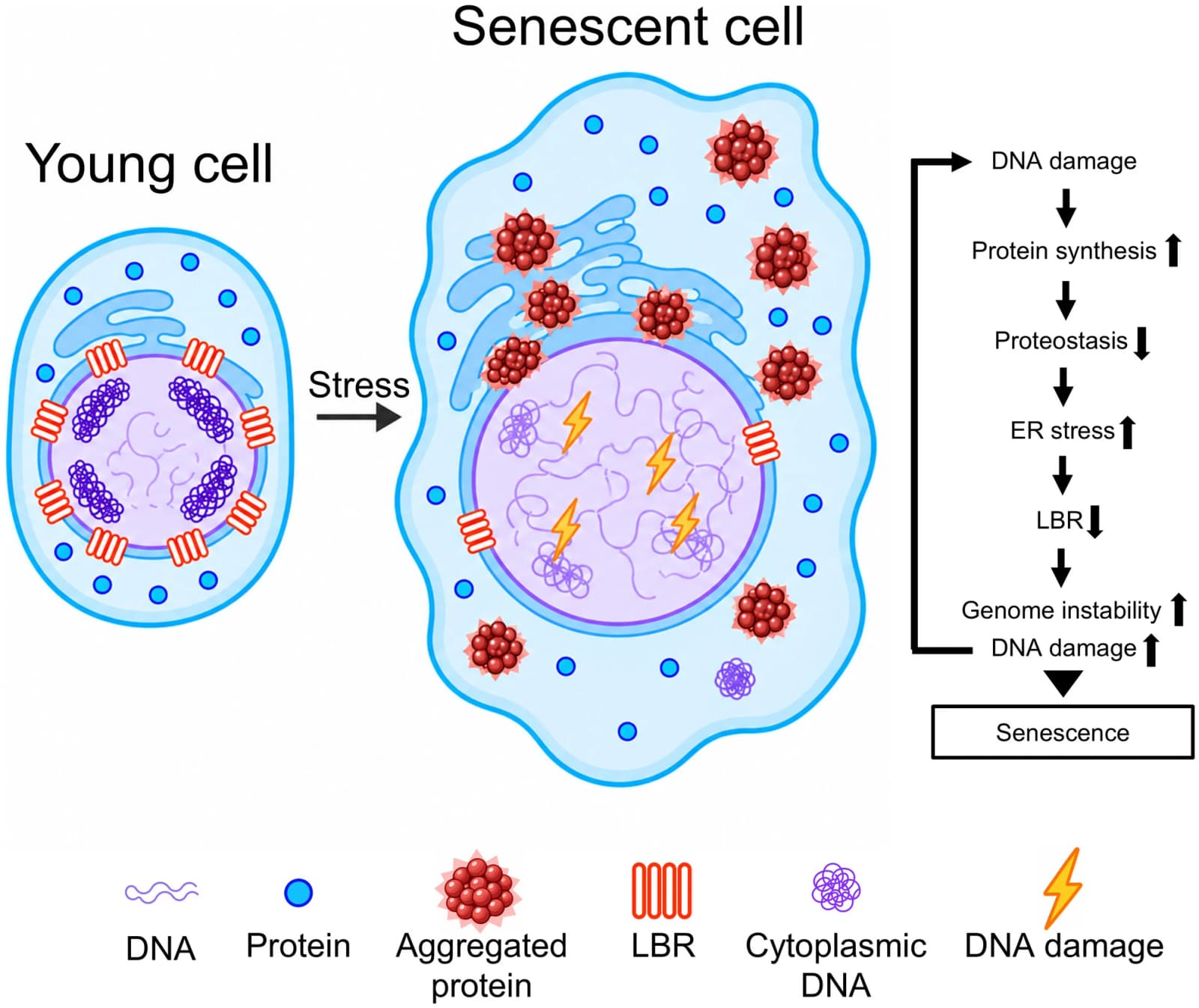
Disrupted protein upkeep may help lab-grown human cells stop dividing

Experiments in lab-grown human cervical cancer cells suggested that disrupted protein upkeep contributed, at least partly, to a permanent halt in cell division.Experiments in lab-grown human cervical cancer cells suggested that disrupted protein upkeep contributed, at least partly, to a permanent halt in cell division.

Figure from The FEBS Journal
Human cell studyMechanisms
Journal of Lipid Research

A fat molecule promotes senescence in human blood vessel cells

Experiments in human umbilical vein lining cells linked a fat molecule to senescence, a state in which cells stop dividing, and damage to energy-producing structures.Experiments in human umbilical vein lining cells linked a fat molecule to senescence, a state in which cells stop dividing, and damage to energy-producing structures.

Figure from Journal of Lipid Research
Human cell studyCellular senescence

Tuesday, November 17

Monday, November 16