Drug improved survival in mice missing the enzyme statins target
In a mouse experiment, the compound also prevented low blood sugar and reduced liver injury after loss of the enzyme blocked by statins.
Limit: Only 8–11 mice per group were studied
Mice engineered to lose HMGCR, the enzyme blocked by cholesterol-lowering statin drugs, received an acylcarnitine-lowering compound in an animal experiment. Acylcarnitines are molecules involved in processing fats for energy. The mice had impaired fat burning in mitochondria, the cells’ energy-producing structures, and accumulated long-chain acylcarnitines in their livers. The compound, methyl-GBB, markedly improved survival, prevented low blood sugar, reduced liver injury and preserved mitochondria’s ability to use oxygen. It also normalized liver long-chain acylcarnitine profiles.
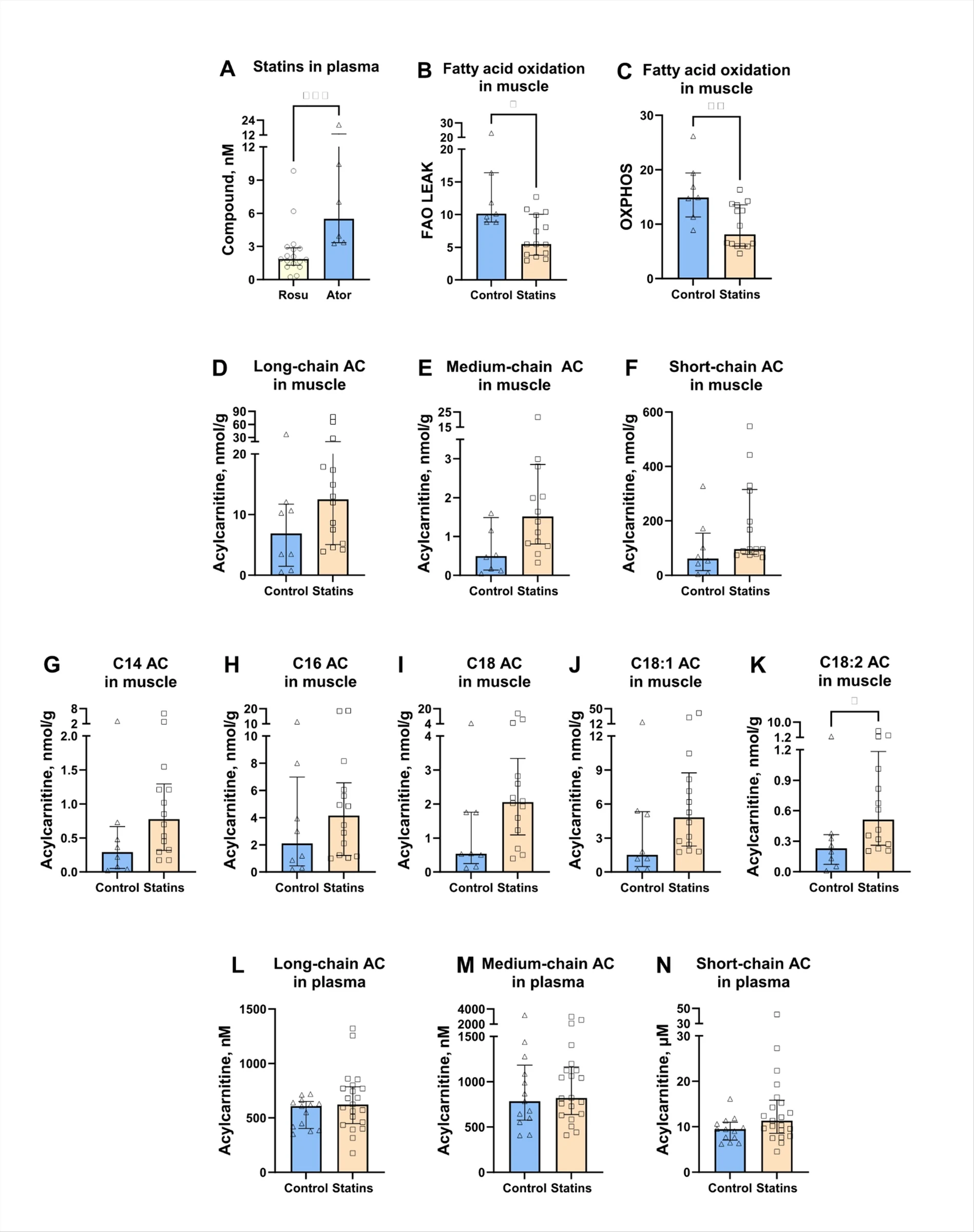
The preprint also reported an observational comparison of statin-treated patients and healthy controls. Patients’ muscle samples showed reduced mitochondrial activity linked to fat burning and higher medium- and long-chain acylcarnitine concentrations. These changes were not evident in blood plasma.
Why it matters
The survival experiment addressed severe metabolic disruption rather than normal lifespan. The authors suggested that acylcarnitine metabolism may offer a therapeutic target for statin-associated adverse effects.
Caveats
The drug experiment used mice with whole-body loss of the enzyme, not people taking statins. The work is a preprint and has not been peer-reviewed.
From the paper
- Harms
Similar to Hmgcr-KO models, liver-specific HMG-CoA lyase-KO mice develop hypoglycaemia and experience 100% mortality within 30 days of KO induction [37].
Results, 3.6 HMGCR deficiency disrupts whole-body energy metabolism and reduces locomotor activity
Quoted word for word from the full text on researchsquare.com.
The paper
Riga Stradiņš University; Latvijas Organiskās Sintēzes Institūts
Research Square, Oct 18, 2026, Open access, Preprint, not peer-reviewed

