Blocking an enzyme improved muscle strength in mice
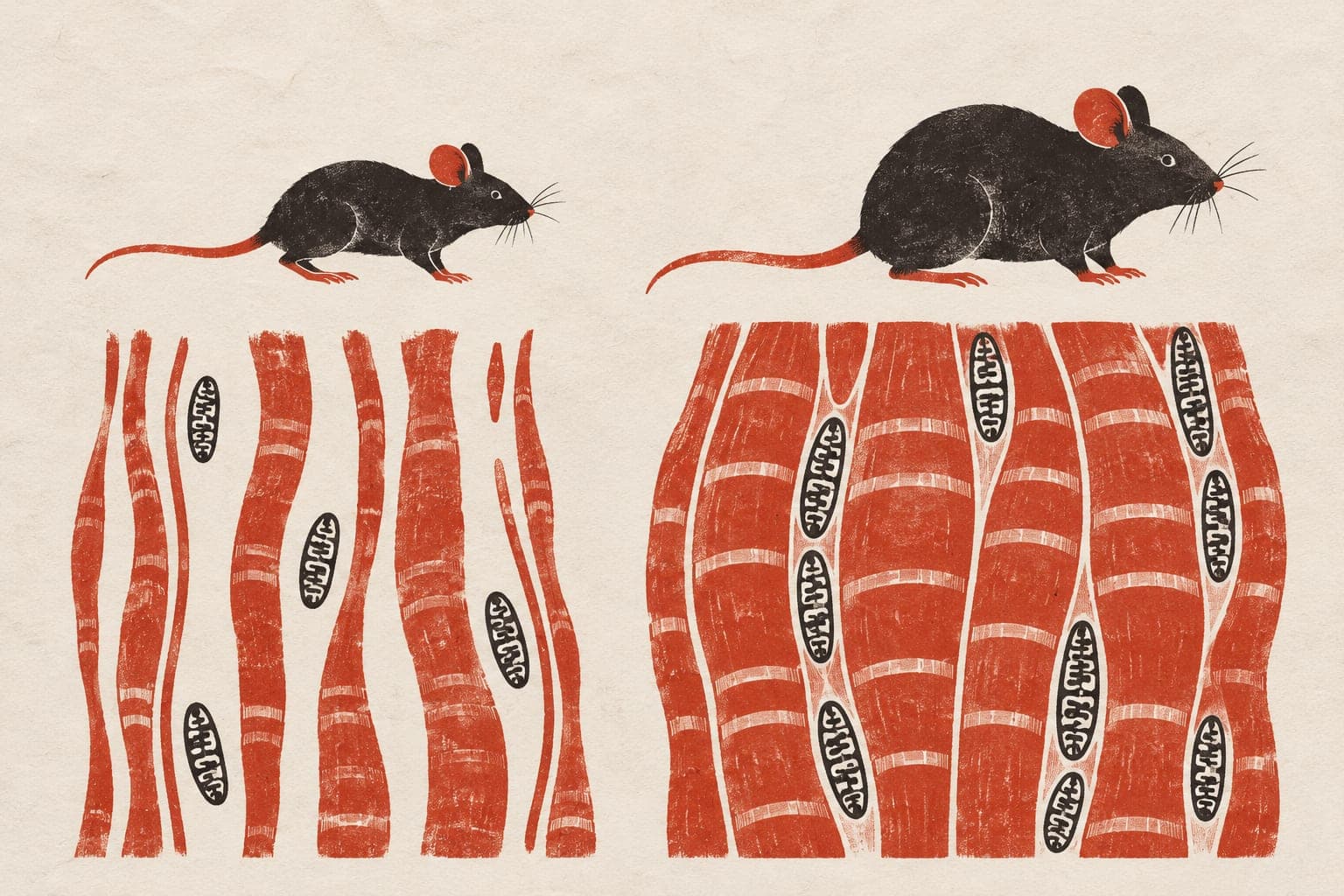
In an experiment in mice with features of premature aging, a compound improved the performance of mitochondria, the energy-producing structures in muscle cells.
Aging Cell
Researchers gave CB-839, a compound that inhibits the enzyme glutaminase, to progeroid mice, which show features of premature aging, in an animal experiment. The compound increased levels of protein complexes that mitochondria, cells’ energy-producing structures, use to produce energy. It also improved mitochondrial respiration, muscle structure and muscle strength.
The researchers also studied skeletal muscle myoblasts, cells that develop into muscle fibres, grown in the lab. Senescent myoblasts—cells that had stopped dividing—had higher glutaminase activity and levels. This led to a build-up of urea, a waste product, inside the cells that impaired mitochondrial function. Inhibiting glutaminase reduced urea levels, restored levels of energy-producing protein complexes and improved mitochondrial function.
Why it matters
Sarcopenia, the age-related loss of muscle mass and function, is closely linked to problems with mitochondria. The findings suggest that targeting glutaminase may offer a strategy to address this decline by restoring mitochondrial health.
Caveats
The experiments used lab-grown cells and a mouse model of premature aging, not people or mice undergoing typical aging. The abstract did not report sample sizes, doses or treatment duration.
The paper
University at Buffalo
Aging Cell · 1 Oct 2026